Category: Public Engagement

  • FAQ on The Ultimate Virtual Public Involvement Checklist Webinar

    FAQ on The Ultimate Virtual Public Involvement Checklist Webinar

    Our first webinar of 2023 was a success!  

    Dave Biggs hosted The Ultimate Virtual Public Involvement Checklist webinar to share details on our latest eBook release alongside Emily Margitan, one of the Customer Success Managers here at MetroQuest.  

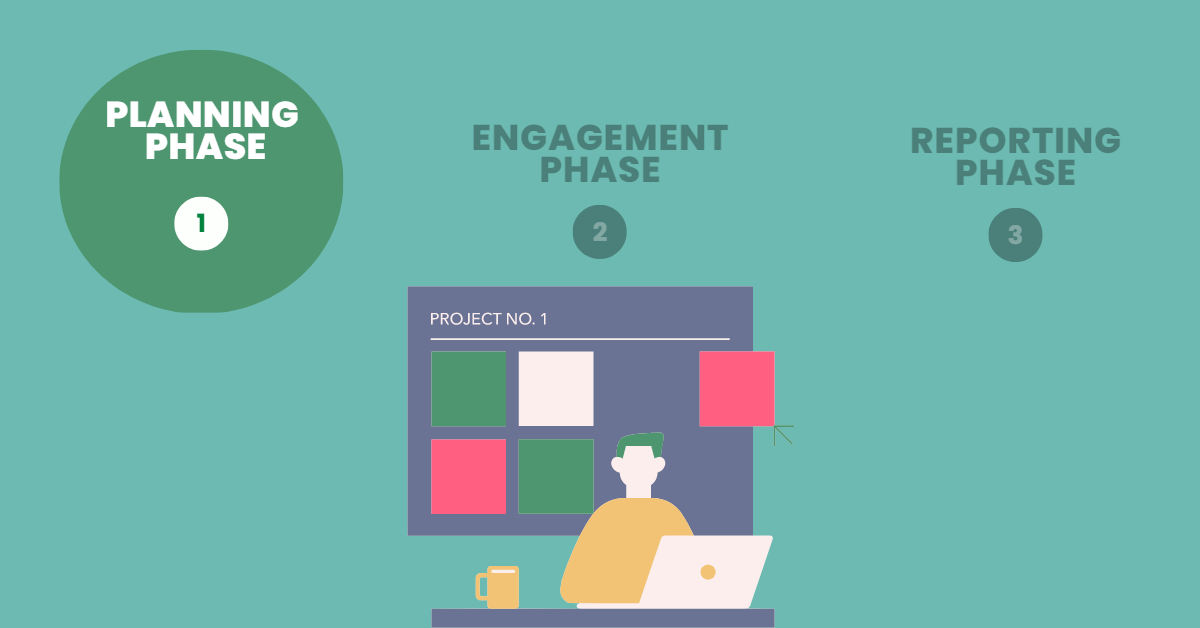
    MetroQuest partnered with AASHTO, AMPO, TXDOT and COMPASS to compile a list of 101 questions to consider throughout the planning, engagement and reporting phases of every project.  

    In this webinar, we unveil key aspects of our new Checklist for Success and explore how asking the right questions can help your team deliver great virtual public involvement results on every project!  

    Here are a few clips from our live Q&A…  


    https://vimeo.com/796721338

    [scroll-box]Dave: Emily, Our team is new to VPI. What training or support does MetroQuest provide for customers to help them get started?

    Emily: Yeah, that’s a really good question. It’s something I’m quite involved in, in my role. And so, when new companies are onboarded at MetroQuest, we offer virtual training sessions essentially, and we can go through in detail with the software live with the team. Depending on how large the team is, sometimes it’s broken up into a couple of sessions and then we work really closely with those teams.

    So often we might even have typically a kickoff call with senior leadership to really talk about what are their goals, what are they hoping to get out of MetroQuest. And then we do the actual training of the software, a demo, and we go through and often it’s very customized depending on the organization in terms of what they’re looking to get out of MetroQuest.

    And then essentially I’m kind of their primary contact as they get started. I used to work in public engagement and design surveys, and so I love getting to work with teams closely on their surveys they’re working on. And so, you can kind of expect when you’re getting started that we will hold your hand along the way and help you get a sense of the software.

    And then to our support team is fantastic. They are really good at answering questions and a bit of a sneak peek: We have a live chat feature that’s going to be coming up soon! I think our new customers are really going to love that because when you, you know, there’s little things, it’s sometimes writing a whole email out seems really formal, so you can easily quickly pop up the chat and kind of talk to your team in real time.[/scroll-box]


    https://vimeo.com/796806092

    [scroll-box]Dave: What do you think are the biggest barriers to participation? So, maybe I’ll weigh in on this because I’ve got an acronym for this because I’ve been asked this question so many times. My acronym is TACK: Time, Awareness, Connection, and Knowledge. People lack often the time. People are working two or three jobs, you know, their time is of the essence. Public meetings are completely out of the question for a lot of people. So, keeping it short.

    Awareness: they might not even know that this project exists. They might not be connected to the agencies or follow them on Facebook and all that sort of thing. So just awareness raising is so important. Connection means: do they feel like the outcomes of this are going to impact their lives?

    Do they feel connected to it like it’s they’ve got some skin in the game in terms of the outcomes, and then knowledge is do they feel comfortable weighing in? Some people feel like, well, I don’t have any experience with transportation, so I don’t know if my opinions are valid. A lot of people kind of discount their own ability to have a priority about something. And so, giving people the confidence to participate is so important. [/scroll-box]


    https://vimeo.com/796806143

    [scroll-box]Dave: What suggestions do you have regarding hybrid engagement? Hybrid engagement has been the topic of the post-pandemic, if we can call it post-pandemic, period. So very quickly from me… if you’re going to have face-to-face engagement with virtual public engagement, the things to keep in mind are if you’re going to ask questions face-to-face, make sure that they’re the similar or the same questions that you’re asking online so you can actually combine the answers together.

    Oftentimes, with face-to-face engagement, you can go into more detail with people. You can really get the kind of a face-to-face experience and really get more information about the underlying concerns that people have about different options going forward. And so it’s an opportunity to really expand on what you might be hearing in volume online with some more nuance.

    So really take advantage of that discussion time with people to be open to what is it about this that makes you afraid or concerned? What is it about this other option that attracts you and gets the nuance around it? Emily, anything to add about hybrid engagement?

    Emily: I think you said that perfectly, Dave, and in my experience, often projects benefit in most cases from both because you’re going to have those stakeholders that are really, really invested in the project. Maybe there’s someone that lives right next door to where it’s happening and they’re going to want that forum to really get their opinions out and whether that’s, you know, around a table where you’re talking that can be really effective.

    But then you’re going to have people that don’t want to spend their evening coming to a meeting and they want to just quickly do a survey online. So I think, yeah, in most cases, it’s really going to be beneficial in many different ways.[/scroll-box]


    https://vimeo.com/796806165

    [scroll-box]Dave: Dave, if a project is controversial, does VPI open the agency to even more resistance? I’ve got a short amount of time here. I’ve got more to say on this. But essentially, the short answer is virtual public engagement actually does the opposite. By making engagement more difficult, you’re essentially filtering out all the people who aren’t angry at you, who aren’t willing to give up 2 hours to shake their fist at you.

    So, by making it really easy for people to participate, you’re actually expanding the range of people that participate to the people that are less motivated and typically less angry. Especially if you have a controversial project, you want to make it as easy as possible for people to participate so you can hear the full range of opinions and not just the people that are so fired up that they’ll go to any lengths to give you a piece of their mind, as it were.[/scroll-box]


    Access The Ultimate Virtual Public Involvement
    Checklist webinar now!

  • The Future of Electric Vehicles in Transportation Planning: An Interview with Andrea Noel

    The Future of Electric Vehicles in Transportation Planning: An Interview with Andrea Noel

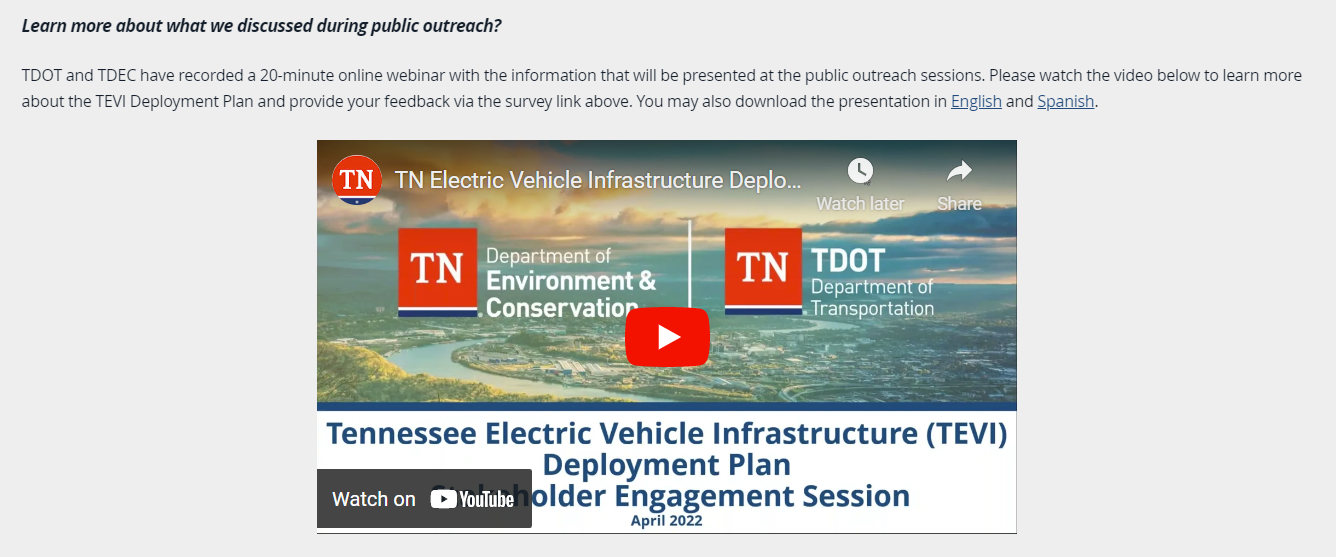
    The planning industry always needs to consider evolving modes of travel, and electric vehicles are climbing up the list. I recently had the opportunity to connect virtually with Andrea Noel, the Planning Supervisor for the Tennessee Department of Transportation (TDOT). The agency most recently developed a plan as part of their commitment to support electric vehicle technologies. Andrea gave us a complete breakdown of the Electric Vehicle Infrastructure Deployment Plan, which will support Tennessee’s mission to create a network of electric vehicle charging stations along key routes in the state.  

    Here at MetroQuest, we were intrigued to learn how the team at TDOT utilized our software for understanding the future of electric vehicles in transportation planning, and excited by the successful engagement efforts made by Tennessee DOT to gather public input on the plan! In our conversation, Andrea shared why MetroQuest was so useful for this project and discussed the strategies they implemented for their public outreach, how the results affected the plan, and what, in her opinion, the future holds for electric vehicles in transportation planning. 

    Continue reading to get all the details…  


    Why did you choose MetroQuest for your Tennessee Electric Vehicle Infrastructure survey?  

    Well, that was easy. We want to use MetroQuest for all our planning surveys because it provides such a good visual for people. With other software, sometimes people can’t answer the question exactly how you had it, or sometimes they don’t even understand the content. 

    “It’s kind of like when you go to the voting station, right? And you’re like, oh, I didn’t read up on that guy. I don’t even know if I should vote for him or not. When you’re taking a survey, it’s similar. MetroQuest really gives you the ability to see it on a map and see where it is.”

    I love that section where you can put a list of things and add a description and picture. I think that helps people answer questions with knowledge. I think that it is important to be able to give participants the information within the survey. That’s the part I love about it the most. I feel like it’s more than just a survey. It’s a way for us to give them information and educate them. 

    What strategies did you use to gather public participation?  

    Our whole public engagement plan was to use several methods for participation. We wanted to be able to go to people in person and also have a survey for those that didn’t show up. We traveled around the state, and we did nine locations in person. Our first step was doing a webinar and putting it on the website. And then we did the survey, which was open and collecting public input from May 1st until May 30th. 

    “We just wanted to have a lot of different things so that everybody that wanted to participate could. We got 1,014 responses in that 30-day period.”


    We did have a social media campaign. We used Facebook, Twitter, and sent out reminders. We also had an email blast. We sent out over 7,000 emails to our stakeholder group. We sent the link to the survey and the dates and locations of where we were going to be.  

    During the in-person session, we had little cards printed with a QR code so they could click on them and be taken to the survey directly. At in-person events, they wanted to ask questions, but we didn’t feel like we were getting the answers we needed. The survey is what really gave us their prioritized choices. 

    What were you hoping to achieve by using MetroQuest? 

    We had two goals. Our first goal was to find out what people wanted when they drove up to a charging station. We gave them a list of ten things and said, “which four things are the most important for you when you go to a charging station?” The top concern turned out to be safety. But then we even broke safety down into, what do you want out of safety? People wanted to know that there would be lights 24 hours a day and cameras in case something happened.  

    “When we start writing the guidance this week, safety is our number one priority. That’s going to be a requirement now because that’s what we got out of the survey. We’ll be putting their priorities into action.”

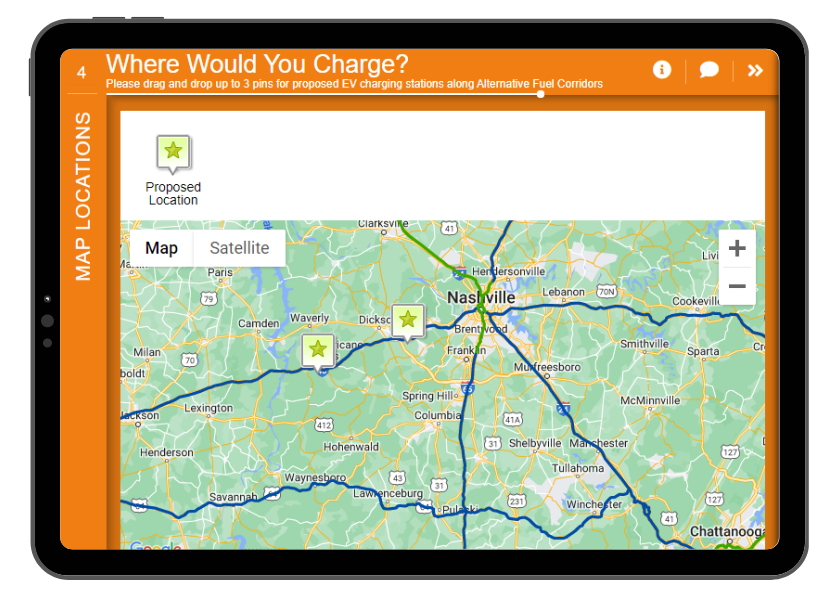
    The second goal was to identify specific locations stakeholders thought would be good for charging stations. On our last screen of the Survey, we had an interactive map activity. We built-in a location buffer because the charging stations must be within a mile of the exit. We buffered the map so that they could only click in a within a mile of that buffer. We wanted to know, where do you want to see the stop? Where would you stop if you were driving from one side of the state to the other? 


    How did the public participation results impact your plan priorities?  

    We didn’t even think about the plan. We didn’t think about the guidance. All we did was think about how to engage the public first. As the month went along, we looked at in-person and online comments and saw a lot of safety concerns. At the next meetings, we would say if safety were your first priority, what exactly does that mean to you? We were able to delve deeper into it. No one had any preconceived decisions or notions; we let the public decide for us what those priorities would be. 

    What results did you achieve on launching the survey, and what were the outcomes that came from the data?  

    The survey closed on May 30th, and during the first two weeks of June, we analyzed the data, which was easy because MetroQuest had already given us the map showing where people took the survey to see if it was relevant to where we had our in-person meetings. 

    We did find that the highest participation levels were also where we had our in-person meetings. We think going in person and promoting the survey helped boost those numbers.  

    Looking at the data, we discovered only 2% of participants identified themselves as being from the freight industry. I’m attending a statewide freight advisory group meeting to present again about the plan. We will meet them in person and ask for their opinions to put into the guiding document. 

    Having the Survey data helped us focus on who we think we missed.  

    What do you think the future holds for Electric Vehicles in transportation planning?  

    I don’t think it’s going away. We have to think about how it’s going to change how we plan because people can move differently now. We’re going to have to start thinking about where people are going to charge their electric vehicles. What are they going to be near when they charge? Are they going to stop and have dinner?  

    In five years, things are going to look so much different. As planners, we have to keep our minds open to the next thing because in likelihood, these chargers are not going to be here in 20 years. They’re going to be outdated in five, and then we’re going to have to be thinking about the next thing. We need to really start looking at our plans as being like five-year increments, more so than we used to do. 


    Congratulations to Andrea and the entire team at TNDOT! We’re so inspired by your public engagement efforts and looking forward to seeing how your impressive survey results shape Tennessee’s electric vehicle infrastructure planning!  

    For more ideas on successful public outreach, read our past interview with Adrienne Heim, the Public Information Officer for San Francisco Municipal Transportation Agency: An Interview with Adrienne Heim: Engagement Strategies, Tips and Techniques to Help enhance Your Public Outreach. Need help reaching diverse crowds? Read our latest blog 5 Equitable Community Engagement Tactics: What to Expect from #VPET22.  

  • How to Host a Dynamic Virtual Event For Community Engagement Success

    How to Host a Dynamic Virtual Event For Community Engagement Success

    Grace Lau is the Director of Growth Content at Dialpad, an AI-powered cloud communication and computer telephony integration (CTI) platform for better and easier team collaboration. She has over 10 years of experience in content writing and strategy. Currently, she is responsible for leading branded and editorial content strategies, partnering with SEO and Ops teams to build and nurture content. Here is her LinkedIn.


    The changing world has led to the rise of virtual events, yet hosting one for the first time can be daunting. Fortunately, although different, hosting a virtual event is more similar to the physical events we’re familiar with than many of us realize. Public meetings, for example, have shifted to hybrid or virtual versions with success.

    That being said, there are certain important things to consider to make sure your virtual event is as engaging and dynamic as possible. This guide has been created to help you with this.

    Virtual Events: Are They Here to Stay?

    Despite the in-person world beginning to open up again, people have now discovered that some things actually work better online. From book festivals to training conferences and even intimate concerts, it seems virtual events will be sticking around in one form or another for a while longer.

    After all, they have the unique benefits of being globally accessible, requiring fewer set-up costs and traveling fees, and of being easily recorded for future viewing. Those are not benefits to be scoffed at.

    Virtual events, managed well, can also increase your opportunity to interact with and engage the community, build a longer-term relationship, and develop a feedback loop that benefits both planners and community members. By being online, the transition from the build-up to post-event can be made much smoother.

    For this reason, among others, many are looking ahead at virtual events as here to stay!


    The Pre-Event: Six Ways to Get the Community Involved

    So, where to begin? There’s no need to wait for the event to get going before starting successful online community engagement. From your first point of contact, open the conversation with participants and get them involved. Encourage them to promote your event and to get others excited too. Community-driven engagement is very effective.

    Let’s look at how you can do this:

    1. Set clear goals from the start

      Why have you decided to host a virtual event? It might seem an obvious question, but having a clear idea of this can help you get your planning team on the same page. Deciding on a goal will identify which parts are essential to your aim and which are bonuses and perhaps don’t need the same level of planning energy.

    2. Choose the right platform to host your virtual event

      Each platform has pros and cons and is suited to different types of events. The perfect platform for putting your team’s virtual celebration ideas into action may not be as ideal for a three-day conference.

      Is screen sharing something that’s going to come in handy or is space for discussion more essential? Looking at your event goals will help pinpoint the features you most need from your virtual event platform and make sure everything runs smoothly.

    3. Choose the right time for your event

      Just because you don’t have to factor in travel time, doesn’t mean any time of day will work. Depending on your audience, different times of days will be more effective. If you’re trying to reach working parents, for example, weekday afternoons will be difficult: consider where your participants likely are, and choose times that you know will work for them.

      Likewise, don’t forget to set timings for your event – allocating time for Q&A sessions, presentations, and breaks will make your event even slicker.

    4. Send out engaging activities before the actual date

      Don’t wait for the big day to get participants involved. Send out social media posts, utilize your email list to share questionnaires or online surveys, or launch a competition ahead of time as part of your marketing strategies, to get participants excited and talking about your event. Set the stage and make it interesting for participants to learn about your virtual event before they even get there!

      Getting your staff and event team involved will make their faces known and help to build that all-important sense of community.

    5. Promote your virtual event

      No one will come to your event if they don’t know it’s going on. Promote it across your channels and encourage those signed up to do the same. Cognitive automation can make this simple by working out where promotions will be most visible and when to publish them.

      Include information that will draw in the audience you want, such as key speakers, workshop topics, and clear directions on how to register. If you’re trying to generate attendance among hard-to-reach communities, use tactics like partnering with community groups, targeted social advertising, or even mix it up with some in-person promotions at community centers, at transit stations, or other public places in the neighbourhood.

    6. Prepare backup plans

      We all know technology doesn’t always go to plan. All it takes is a weak internet connection or badly timed update and the best-planned virtual event can fall to pieces.

      Prepare alternatives for these worst-case scenarios, including sharing plans for workshops with multiple co-leaders, testing your conference call services beforehand, and providing clear guidance on what participants should do if worst comes to worst. Ensure a top-notch customer experience platform.


    Here’s How You Make Virtual Events Engaging:

    Onto the event itself. You may be familiar with ‘virtual meeting fatigue’. The last thing you want is for that to set in.

    By keeping things exciting and engaging, you should ensure everyone stays awake and paying attention. But how?


    Get moderators for your event

    You can employ moderators for all aspects of your virtual event, from corresponding with speakers or fixing mic echo to keeping an eye on chat rooms for unsavory comments, encouraging participants to share their input, and helping educate on how to use various engagement tools. Essentially, their role is to make sure the event runs smoothly.

    It’s likely you already have members of your planning team taking on moderator roles; however, you may want a few extra people on hand on the day.

    Have a fun, engaging program

    If you look at your program and yawn, you can only imagine what participants are going to think. Intersperse talks or seminars with activities that require audience participation or response, and make sure your event is suitable for a range of attention spans.

    You might want to set challenges or activities that can be peppered throughout longer presentations or allow time for reflection after a particularly jam-packed session.

    Involve your speakers and audience equally

    Q&As are super popular ways to foster discussion within the group, helping everyone to get the most from your virtual event. The depth and breadth of opinions and knowledge sat in the audience may surprise you.

    By providing space for conversation, questioning, and sharing ideas, you may find your speakers come away having learned something too!

    Have an “ask me anything” (AMA) session at the end

    AMAs started as part of a subreddit but have risen to fame due to the interest they bring and the opportunity they give askers. They encourage questions not directly related to the topic and can lead to really interesting answers.

    Where appropriate, an AMA session after the event where participants can ask additional questions can provide a place of transparency and ongoing communication that your team can monitor and respond.


    It All Starts With a Virtual Event…

    By now, you should see that virtual events aren’t all quizzes and “I think you’re on mute”. All it takes is a bit of planning to host a dynamic event and engage your community.

    Although the event is a key part of the process, it’s not the only part. Ultimately, community is built through the bits in between events and how you keep people interacting. Developing this takes time and consistent effort but is well worth it in the long run.