Category: [CONFERENCE]

  • 5 Equitable Community Engagement Tactics: What to Expect from #VPET22

    5 Equitable Community Engagement Tactics: What to Expect from #VPET22

    The last two years have sparked important conversations regarding equity and equality in the planning industry. As the world increasingly leans more into virtual experiences, community engagement strategies should naturally become more creative, diverse and inclusive.

    At MetroQuest, we are interested in having critical and educational discussions surrounding the future of public engagement. We are living in a pivotal moment when conversations surrounding equity are being pushed to the forefront of community engagement projects. The use of in-person and online engagement strategies is more essential than ever.

    To support that ongoing conversation, we’re excited to host our second Conference on Virtual Public Engagement Planning for Transportation Planning (#VPET22), kicking off this month! We’ll have speakers from NCDOT, TxDOT, WSP, HDR, Broward Metropolitan Planning Organization and more share their case studies, challenges, and lessons learned around public engagement. As we look forward to the discussions and best practices for implementing ways to reach underserved and marginalized communities, I want to share 5 tactics that will help you better engage your community and achieve equitable results. Let’s get started…


    Valuable equitable community engagement tactics:


    Get To Know the People You Serve

    The key to equitable decision-making relies on knowing the priorities of the people in your community. Pay attention to all demographics in your community regardless of race, age, or gender identity, and create avenues to include their input meaningfully. Look into their preferred communication methods, whether it be online through social media or if they value face-to-face interactions through community meetings. Do they have their own meeting areas and networks in place? Going out of your way to engage with your audience is a great first step to establishing trust and transparency between both parties and leads well into other equitable community engagement tactics.


    Increase Accessibility

    Lack of inclusion leads to inequitable results. Consider the different types of people in your community and how to give everyone an equal opportunity to participate. Increasing accessibility means more than offering in-person and online surveys. Barriers such as language, disabilities, transportation, socioeconomic status, access to technology and time often prevent people from engaging. Look at your initial survey results, for example, and analyze the data to understand which parts of the community are underrepresented in your public engagement so far. Brainstorm alternative methods that allow more people to participate in ways that are best suited for them. As a result, your engagement will be more inclusive, and you’ll end up with more robust data from more of the community.


    Hold Yourself Accountable

    Reflect on past community engagement projects and review the responses. Do these results reflect all the demographics in your community? Were there unconscious barriers that prevented participation? The journey to inclusive outreach and equitable engagement means reflecting on missteps in the past to inform future strategies. Crafting a survey that is equally effective and comprehensible is important, but maybe the language was still too opaque for the audience you wanted to reach. Developing a culture of engagement in communities, such as diversified meetings, events and promotional campaigns, is another important tactic for equitable community engagement, but maybe the choices offered weren’t right for your area. Confronting flaws in past engagement projects and bettering them will lead to better outreach, input that’s more representative of your community, and ultimately more thoughtful planning and sustainable decision-making.


    Build Community Trust

    Building trust in a community that has been historically underserved or disadvantaged takes time. But, as always, actions speak louder than words. If underserved or marginalized populations in your community feel mistreated or neglected, prove to them that you are listening. Showcase your results so members can see firsthand how their input is implemented into transportation plans. Become a trustworthy presence in your community by showing their needs are being prioritized in official planning.


    Create New Traditions

    Planners can no longer rely solely on traditional public engagement methods and instead must be as adaptable as possible. Remember, community engagement tactics are never one-size-fits-all. Get creative and embrace the inevitable changes as we shift to more hybrid engagement planning, particularly as we strive for equitable community engagement. Equitable results are a sign of strong community engagement efforts. They are increasingly achievable as the planning industry develops more robust tactics and shares best practices during this crucial development period in virtual engagement.


    We’ll have case studies, best practices, and more tips for equitable community engagement, tools and techniques for success, and more at VPET22! For more information on the Conference on Virtual Public Engagement for Transportation Planning, check out our conference website.

    If you haven’t already, click here to register to attend! If you have any specific questions, please don’t hesitate to reach out directly to us at events@metroquest.com.
  • TRB 2022 Annual Meeting: Through the Lens of the AJE40 Committee

    TRB 2022 Annual Meeting: Through the Lens of the AJE40 Committee

    Jeff Moore, AICP, is the chair of the Committee on Public Engagement and Communications with the Transportation Research Board. He has been active with the TRB since 2004. Jeff has also served as a planner with the Division of Planning at the Kentucky Transportation Cabinet, District Three Office, Kentucky for over 31 years. He is currently employed as a transportation planner for Michael Baker International.


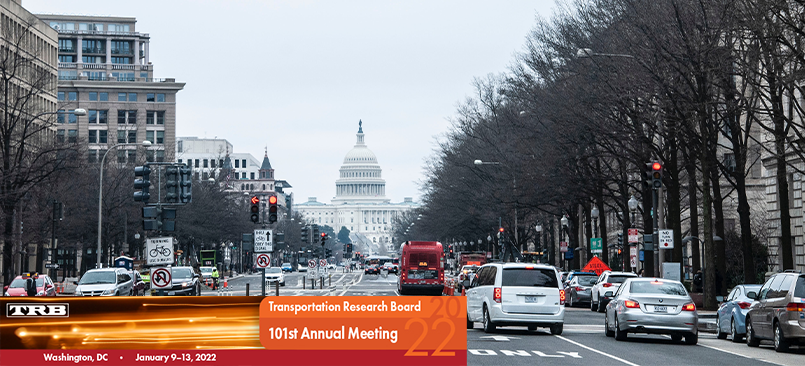
    As less than 9,000 attendees cautiously gathered into Washington this past week, we approached this year’s return to an actual in-person TRB Annual Meeting with an attitude of “Grace and Gratitude.”

    As many of the committees, sessions, and workshops struggled with missing presenters and key committee members, COVID19 safety protocols and attempts to virtually reach out to those not able to attend, we approached each of these challenges with a sense of grace that best efforts were made and at times worked well, and other instances were at least brave attempts. At the end of the experience, we all were filled with a sense of gratitude for the opportunity to reconnect with long-missed friends and colleagues, the ability to share our lessons learned, and the realization that many of us are making it to the other side of the past two years’ worth of difficulties.

    “Despite some sessions being canceled, it still turned out to be a great conference. It was great to see colleagues I haven’t seen in 2 years”

    — Jamille A. Robbins, Public Involvement, Community Studies & Visualization Group Leader, N.C. Department of Transportation


    Identifying the Goals of the 2022 TRB Executive Committee

    With an eye toward the beginning of the second century of TRB and in response to the massive societal and economic shifts resulting from the past two years of difficulties, the TRB Executive Committee is commencing early work on the identification of the Critical Issues in Transportation.

    This effort will focus on five broader societal goals:

    1. Safety and Security;
    2. Public Health;
    3. Economic and Societal Vitality;
    4. Climate Change; and,
    5. Equity.

    Additionally, TRB is embarking on a new Strategic Plan. Goals for the plan include:

    1. Preparing to address current and future issues;
    2. Expanding TRB’s impact; and
    3. Assuring continued creativity, resilience, and sustainability.

    Despite the lower attendance, the TRB 2022 Annual Meeting program contained 350 sessions and workshops and more than 300 committee meetings.


    Activities of the AJE40 Committee at the TRB 2022 Annual Meeting

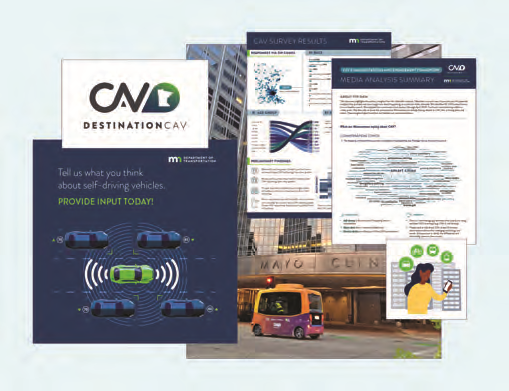
    The AJE40 Committee provided a session spotlighting the winning and runner-up entries to the 15th Annual Communicating Concepts to “Jane and John Q. Public Competition”. Presenters at this session shared communication efforts in support of connected and autonomous vehicles, a re-imagining of an urban interstate highway corridor, a series of on-line chats in support of a MPO long-range transportation plan, and the creative melding of a local poet’s work into a video designed to inspire participation in the planning for a bus rapid transit line. The winner of this year’s competition was “Let’s Talk About CAV: Understanding Minnesotans’ Perspectives of Connected and Automated Vehicle Technologies” presented by Katie Caskey of HDR and Tara Olds of Minnesota DOT.


    The AJE40 committee assembled a poster session that included several informative posters received during the call for posters and posters spotlighting the competition winner and the other five noteworthy projects featured in the “Jane and John Q. Public Competition” session.

    • Competition Winner: Let’s Talk About CAV: Understanding Minnesotans’ Perspectives of Connected and Automated Vehicle Technologies; Katie Caskey, HDR and Tara Olds, Minnesota DOT
    • Runner up: PAVE Virtual Panel Series; Tara Andringa, Partners for Automated Vehicle Education
    • Runner up: Tuesday Traffic Jam; Corinne Tucker, Sarasota/Manatee Metropolitan Planning Organization
    • Honorable Mention: Lowcountry Rapid Transit Video; Samantha Dubay, HDR and Sharon Hollis, Berkeley-Charleston-Dorchester Council of Governments
    • Honorable Mention: Interstate 680 – Effective Communications Backed by Behavioral Science; Linsey Willis, Contra Costa Transportation Authority and Rebecca Krawiec, Convey, Inc.

    To learn more about some of these projects, check out the Award Recipients highlights.

    The committee partnered for this year’s annual meeting with AME60 (the Committee on Historic and Archeological Preservation in Transportation), AME80 (the Committee on Community Resources and Impacts), and AME10 (the Committee on Equity in Transportation) to produce an interactive workshop in which participants worked collaboratively in small groups to develop public engagement plans for two project scenarios that involved possible impacts to historic or archeological resources such as Native American burial sites, an established artist collaborative, and historic neighborhoods. Much effort went into the planning and execution of the workshop under the collaborative leadership of Michael Garua (Kimley-Horn) and Rusty Ennemoser (Florida DOT) from the AJE40 Committee and Linda Henderson (Texas DOT) and Rebekah Dobrasko (Texas DOT) from the AME60 Committee.


    “The focus of the workshop was to learn from each other about the slice of public engagement each of us does in our daily work and create a roadmap for communicating with the public about our projects from planning through construction. The primary takeaway is that early outreach and communication is imperative to identify what’s important to the community so that solutions can be identified before the project schedule is impacted.”

    —Session Co-Presenter Michael Garau, P.E., Kimley-Horn

    In addition to the sessions and workshop, the committee was able to meet in-person with many of its members and friends.


    Upcoming Work on Equity, Online Public Engagement Tools, and more

    One of the major topics of discussion during the meeting of the AJE40 committee was the success of the Conference on Advancing Transportation Equity (CATE) which had been held in early September of 2021. The committee was one of the three key sponsoring committees for the conference and plans are underway to move toward on-going efforts to address the issue of equity and would include a regularly scheduled major conference event.

    The agenda of the committee included reports from the committee task forces on Research and on Education. The Research Task force included updates on Project 08-142 Best Practices for Using Online Tools in Public Involvement Processes, which is currently underway with Rutgers University as the principal investigator and a targeted completion in the spring of 2024; and on the implementation of NCHRP Report 905: Measuring the Effectiveness of Public Involvement in Transportation Planning & Development. The 905 Implementation project is in progress with the DOTs of North Carolina, Georgia, Utah, Texas, and Arizona participating. A report will be compiled with the findings from the implementation of the tools developed as part of the NCHRP 905 project.

    NCHRP 08-161: Identify Emerging Approaches for Public Engagement to Meaningfully Involve Minorities, Low-Income, and Other Vulnerable Populations is another committee-sponsored research project that is anticipated to be underway soon. Additionally, the AJE40 committee is currently collaborating with the Committee on Visualization in Transportation to propose a synthesis project to examine the current state of the practice of using visualization tools and techniques in public engagement and communications.

    The committee’s task force on Education shared their work on the development of a possible public engagement curriculum module for university-level engineering and planning students. A survey was conducted of engineering and planning faculty to understand the need for educational resources on public involvement. One insight learned from the survey is that college professors and educators understand the need for students to learn about public engagement, and that there is a desire to use educational resources developed by others.

    During the upcoming year, the task force will work to complete a Public Involvement 101 video presentation that could be used in engineering and planning courses. The video would focus on answering the following questions: What is public involvement; Why it is important; How it could affect your project; and What does public involvement look like. The task force also developed conceptual definitions of “engagement” and “communications” which have been incorporated into the forthcoming Triennial Strategic Plan for the Committee.

    Additional information on the activities of the TRB AJE40 Standing Committee on Public Engagement and Communications can be found through the committee website.

  • Showcasing Digital Transformation at the First Conference on Virtual Public Engagement

    Showcasing Digital Transformation at the First Conference on Virtual Public Engagement

    This September, we’re so excited to be partnering with the APA and NCDD to host the first annual Conference on Virtual Public Engagement for Transportation Planning. The one-day event is the only Conference of it’s kind, covering digital community engagement with a focus on transportation planning.

    From keynote sessions to early bird registration, here’s everything you need to know about this groundbreaking event that we’ve got planned for you and your team this fall…

    A few important details to start:

    • The one-day conference will take place virtually on Tuesday, September 28th from 10:00 am to 4:00 pm EST.
    • This event will be geared towards DOTs, MPOs and consulting firms active in transportation planning.
    • Our conference website is LIVE and early bird registration is now open until Saturday, August 14th. Secure your spot today!
    • We have special pricing for groups, so you can bring your whole team!
    • Sessions will be eligible for AICP certification maintenance credit, available through the APA.


    A deep dive into the transforming landscape of digital community engagement.

    Events in the last year and a half have showed planners nationwide that it’s not only possible for public engagement to go digital, but that it can address some of the challenges that in-person engagement has always faced. Increasingly, it’s a shift that’s here to stay.

    With a reputation for top-notch educational content, and a responsibility to stay on top of best practices in this exciting industry, it gives us great pleasure to host this conference and guide a deep dive into the transforming landscape of online engagement.

    From tools, strategies and best practices for large-scale and inclusive public participation, to effective techniques for measuring success and reporting on community input, this one-day conference will uncover how to develop actionable and equitable plans that align with community needs and help get projects approved with the backing of strong public support.

    Throughout the day, you can look forward to:

    • Attending interactive sessions uncovering the most effective techniques for virtual public engagement
    • Learning from practical case studies from state-level DOTs, local agencies, and consulting firms
    • Engaging with leading planners and engagement practitioners
    • Networking with hundreds of peers in transportation planning
    • Earning AICP CM credit


    Speakers & sessions:

    Featuring industry experts from DOTs, state and local agencies and some of the nation’s top planning firms, the conference will feature a diverse line-up of speakers telling their success stories and lessons learned. 

    Throughout the day, our hosts will guide you through several thought-provoking sessions related to four core topics in the realm of online engagement:

    1. Digital Community Engagement: Community engagement has shifted in the last year and a half, with restrictions of the pandemic creating innovation and a rapid shift into the online space. Agencies and firms across the nation have been faced with new challenges and measures of success around community engagement.
    2. Data Analysis and Insights: The growing role of data in public engagement, particularly as it relates to actionable insights and impact on planning, bears examination. Data from public input to demographic data that leads to an equitable balance of outcomes, can be more easily gathered and analyzed in the digital age.
    3. Equity and Diversity: Systemic inequalities have been pushed to the forefront of public awareness. With understanding of the mandates of public engagement around equity and Title VI, public engagement practitioners and planners need more ways to address underserved populations and unequal access.
    4. Promotional Strategies: As the increasingly virtual engagement landscape complicates and provides new tools for planners, new and old strategies around promotional tactics have emerged. Social media, physical mail and community partnerships are just some strategies to reach your community.


    Don’t miss out! Join us in September to reap the benefits of a whole day of guided exploration, networking opportunities, sessions with top industry experts and actionable takeaways that will support your team in its virtual engagement journey.

    Stay tuned for more information about how to make the most of a virtual event, conference speakers, sessions and more.

    If you have any questions concerning the conference, please don’t hesitate to reach out.

    Registration for Conference on Virtual Public Engagement for Transportation Planning

    Early Bird Pricing Now Open!

  • The Evolution of Public Engagement at APA NPC19

    The Evolution of Public Engagement at APA NPC19

    Each year at the American Planning Association’s National Planning Conference, when I’m not presenting a session, I can be found in the crowd at any public engagement related session. And each year, I share my thoughts and lessons learned following the conference. 

    Compared with past years, on the surface, public engagement seemed less prominent at NPC19. A deeper dive reveals that the dialog about public engagement was woven into a sophisticated treatment of equity and inclusion. This trend was first noticeable at NPC18 in New Orleans. This year’s NPC took it to the next level. 

    There are too many sessions to cover comprehensively, so I will focus on the sessions that inspired me the most. The first session that got me scribbling notes featured Kim Lundgren of Kim Lundgren Associates, Inc. (KLA) in her talk, “Beyond the Usual Suspects: How to Deliver Ongoing, Equitable Engagement.” She described KLA’s approach to reaching beyond the usual suspects using a toolbox approach in recognition that each audience group may require a different tool or engagement technique. This session was a refreshing move away from the one size fits all solutions we’ve seen in past years.  

    My second inspiration came from the description of the role that the City of Loveland, Colorado’s Youth Advisory Commission (YAC) was playing in the city’s transit planning. The most exciting takeaway for me was the part of the process where YAC conducted peer-to-peer engagement to influence the city’s transportation master plan. I’ll be following the YAC carefully as this demographic is so critical and has been the most challenging to reach for many communities.

    I darted out mid-session to catch Darlene Flynn, from the City of Oakland, California, talk about “Strategies Toward Racial Equity in Planning.” I’m glad I did. Her powerful presentation about her work in Seattle and later in Oakland on racial equity in planning and city policy made it clear that it plays a central role in some of the most challenging issues facing cities and regions. She, and her co-presenters, encouraged the audience to look at the legacy of historical policies and planning decisions whose affects still linger across the country. The session dove deep into displacement, gentrification, economic inequality, criminal justice, and health disparities and connected these issues to historical planning policy so clearly that it changed the way I see cities. She made quite a few new fans that day, myself included.  

    I rushed from there to my own presentation on “Community Engagement Therapy” based on Pecha Kucha talk I gave at the Rail~Volution conference in Denver. 

    I offered a lighthearted and self-deprecating look at how vulnerable public engagement processes can be to vocal minorities and how new technologies can play a role in creating more balanced and safe ways for meaningful community dialog. 

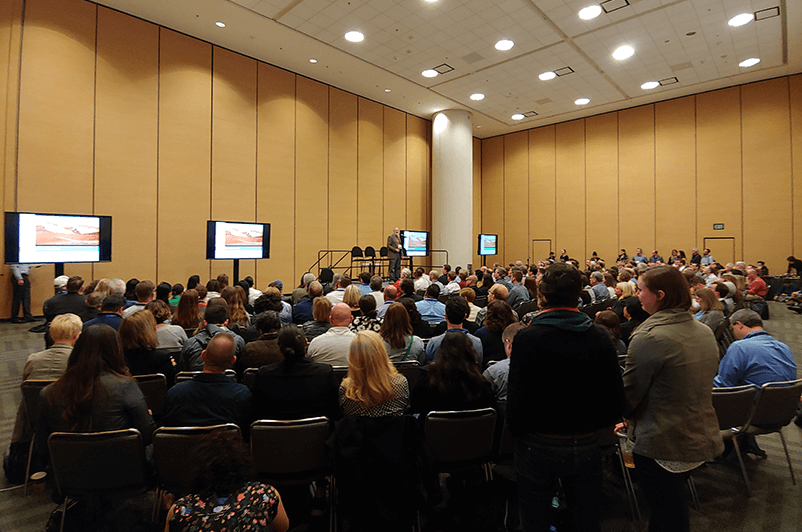
    APA NPC19 Session

    This “Fast, Funny, and Passionate” session was part of a series that the APA has been offering for a few years at the NPC and it is clear that they need larger rooms for these popular sessions. Our room seated 250 and organizers had to close the doors after well over 300 people crowded in!  

    Next up was an inspiring story about Akron, Ohio who is collaborating with community members to co-create public spaces to develop trust and inspire healing in this mid-size Rust Belt city. Citing increased polarization, segregation, social isolation, and economic inequality, this partnership with the national Reimagining the Civic Commons initiative is reinvigorating a civic pride and engagement in a way that can serve as a model for cities across the country.  

    Gabrielle Lyon of Lyon Strategies talked about the Chicago Architectural Foundation’s (CAF) Meet Your City initiative to engage with youth. As part of this initiative, CAF hosted a design competition and published a 144-page color graphic novel to help youth understand their role as city stewards and to encourage active participation in the planning process.  

    The passion and creativity of these planners to deeply understand and address the needs of all demographic groups in the communities where they work is inspiring. 

    I’ll use this inspiration to look more deeply into online engagement case studies to reveal best practices for reaching traditionally underrepresented populations. I’ve already found three excellent examples, so stay tuned for upcoming articles, case studies, and webinars.  

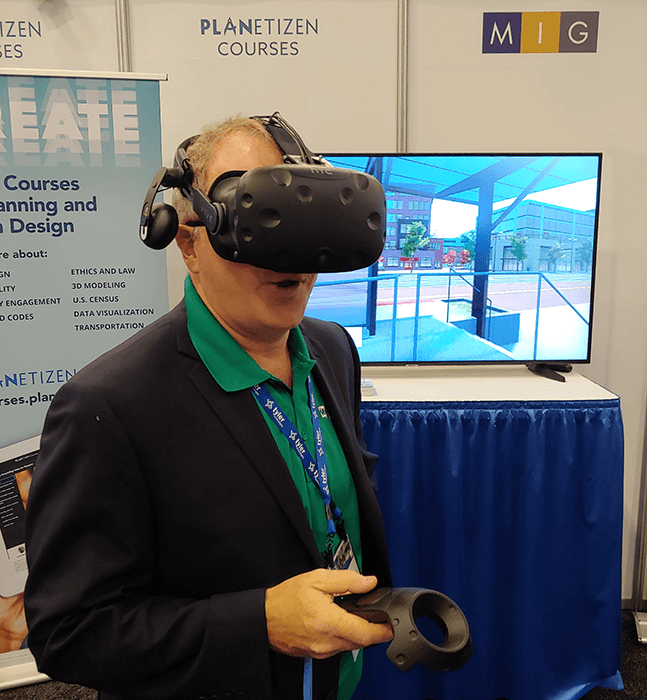
    I did manage to sneak in some fun time in the mist of all these amazing sessions. I had a great time playing with the Planetizen/MIG virtual reality setup.

     VR glasses

    Many thanks to the APA conference team for curating another thoughtful array of presentations and sending me home inspired to continue raising the bar for public engagement. I can’t wait till APA NPC20!

  • [CONFERENCE] Public Involvement Excellence Showcased at 2019 TRB Annual Meeting

    [CONFERENCE] Public Involvement Excellence Showcased at 2019 TRB Annual Meeting

    The Annual Meeting of the Transportation Research Board (TRB) is always one of the best events of the year for transportation professionals. With over 12,000 attendees, a bewildering array of panel sessions, committee meetings, and social gatherings, DC is the place to be in early January.

    Jefferson Grimes, TxDOT at TRB 2019
    Jefferson Grimes, Director, Public Engagement, TxDOT, poster session at TRB.

    This year, MetroQuest was honored to be showcased at the poster session by Jefferson Grimes, the Director of Public Involvement for the Texas Department of Transportation. Jefferson did a wonderful job highlighting their success using MetroQuest surveys on wide variety of projects at all scales throughout the state of Texas.

    With so much going on at the five-day meeting, for those of us focused on community engagement, the TRB Public Involvement Committee (ADA 60) provides a great opportunity to collaborate and learn from peers.

    The high level of dialog between committee members and friends, the quality of the sessions, accompanied by the frank and productive exchanges that occur at these conferences serve to remind me that the TRB Public Involvement Committee is a very special gem.

    This year marked many significant changes to the leadership of the committee, including Claudia Bilotto, Vice President at WSP USA, who will be stepping aside after years of exceptional service as Committee Chair. We look forward to the new leadership coming online soon and thank all those who have volunteered so many hours to create such a rich and rewarding TRB experience for public involvement professionals.


    This year, ADA 60 offered an exciting and informative array of research and best practice sessions including:

    • Panel presentation – “What Crowd-sourcing and Social Media Tell Us About Public Engagement: Recent Research”
    • Innovative competition – “Communicating with John and Jane Q. Public” focusing this year on transportation resiliency and sustainability
    • Co-sponsored panel presentation – “Facilitating Equitable Outcomes: The Intersection Between Public Engagement and Equity in Transportation”
    • Poster session – “Innovations in Public Involvement Research and Practice”


    MetroQuest was thrilled to help organize the annual ADA 60 dinner social at the amazing Espita Mezcaleria, just steps from the Walter E. Washington Convention Center.


    A large crowd of public involvement professionals enjoyed delightful conversations and custom designed culinary delights. It was fun to spice things up and chat among friends. Thank you to all the wonderful people who joined us.


I came away from this year’s TRB conference with three insights focused on online engagement.

1) For years the debate was on about online tools vs.  face-to-face engagement. Now online engagement is no longer talked about as an alternative to face-to face-meetings, but as complimentary – a critical way to extend and broaden the outreach.

2) In past years, social media was being explored as an online engagement platform with limited success and sometimes disastrous results. Social media is now being discussed primarily as a way to advertise public involvement opportunities and promote project communications. This seems like a more appropriate use of social media for public involvement for transportation agencies.

3) The definition of traditionally underrepresented populations continues to broaden to include more than low income and minority populations. It now extends to many others including people who are just too busy to attend meetings or individuals with a low level of awareness of the issues. This is causing public involvement professionals to lower the barrier to participation dramatically, using “go to them” strategies and focusing more energy on educating people about choices and trade-offs.

Overall, it was another enlightening TRB Annual Meeting that left me re-energized. Looking forward to working with you in 2019 to help foster great community engagement.