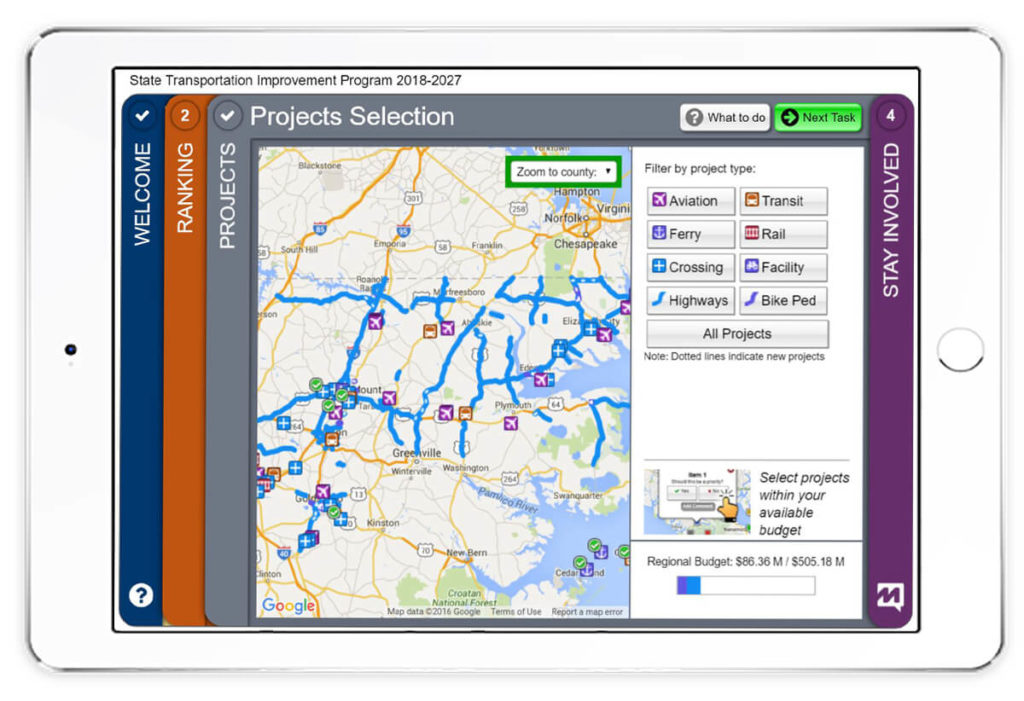
The COVID-19 pandemic has led to substantial change for public engagement. As restrictions on gatherings and mandates for social distancing remain in effect, agencies and firms nationwide are faced with the decision to either postpone public meetings or shift their public engagement strategies online.
The good news is that many who have transitioned to online platforms have achieved better results compared to their traditional outreach strategies. The wide range of online tools available have enabled planners to develop engaging online experiences that broaden and diversify their reach and gather more informed and data-driven input.
However, online engagement is unfamiliar territory for many. Outlined below is a list of t he leading online public engagement tools and complementary strategies to help you choose the right solutions, maximize results and navigate this ‘new normal’ in 2020!
Considerations Around Switching to Online Public Engagement
Before we explore the specific tools and strategies, it is important to recognize that solely relying on one platform will likely not guarantee meaningful or effective public engagement. Online platforms each fulfil different needs and often are complimentary or used at different stages of the project lifecycle. Regulations and requirements also vary from agency to agency.
As a result, we strongly recommend selecting a variety of complementary tools to create an online engagement toolbox that supports your specific projects and goals.
Virtual Public Meetings as an Alternatives to Traditional Town Halls
With barriers that prohibit in-person events, thousands of agencies have turned to online tools to host public meetings virtually. This has become a very effective solution for sharing information in real time and gaining public involvement and feedback during all stages of the planning process.

The leading video conferencing tools include Webex, GoToMeeting and Zoom. All three solutions are designed for real-time events and are compatible on a variety of devices to help you increase participation and diversity your reach. With features for screen sharing, ‘open-mic’ discussions and structured Q&A sessions, you can also closely monitor feedback and answer participant questions in a very timely manner.
For more information on the three solutions and to help determine which is best suited for your needs, check out this additional article here.
Community Engagement with Online Forums
Online forums are an additional online engagement tool that can encourage community members to openly express opinions about local decisions or upcoming projects. Wix is a popular forum platform that encourage community discussions and action with features allowing members to like, comment and share posts. Please also find attached links to the 10 best forum softwares and the most popular third-party comment systems.
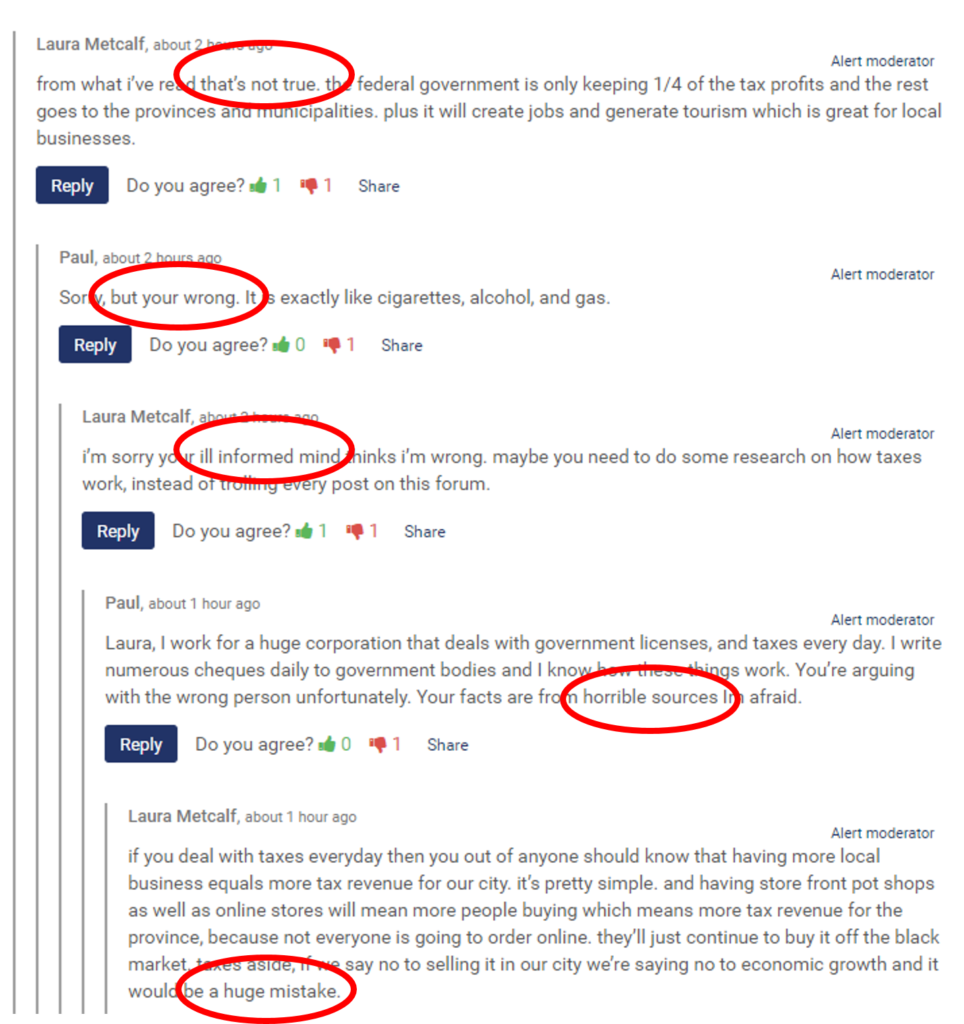
While forums can be useful for promoting dialogue within the community, we recommend using this type of platform only during the early stages of the planning process. The open-ended dialog on these platforms can provide insight into community priorities and concerns to inform planning solutions.
Similar to platforms such as virtual public meetings and social media, it is important to be aware of the drawbacks that accompany the open nature of these platforms. Open-ended comments can be useful to gauge the public’s opinions, but oftentimes can generate biased input as participants influence and often intimidate others. These solutions can also make it difficult for planners to summarize comments into data-driven or quantifiable results.
Using Online Surveys to Gather Informed Public Input
To defeat the shortcomings of solutions with open-ended comments, planners have turned to online surveys to better understand community priorities and concerns and obtain informed and data-driven results for all types of planning projects.
MetroQuest is the leading survey tool and the only public engagement solution purposed-designed for urban and transportation planning. By imbedding micro-learning moments and interactive features into its survey design, agencies and firms have proven that with MetroQuest you can increase public participation, gain informed input and collect actionable results.
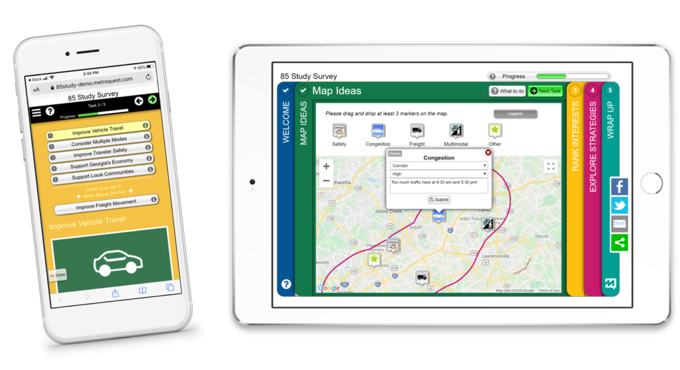
To learn more about online public engagement, visit the MetroQuest resource library and explore MetroQuest’s sample surveys here.
Mapping and GIS Engagement Tools for an Interactive Online Experience
As discussed in our recent webinar, virtual public involvement (VPI) tools that have interactive mapping components are a great way to help the public visualize projects and provide spatial input on plans. Tools like MetroQuest that include mapping survey options help to identify exactly where community issues lie.
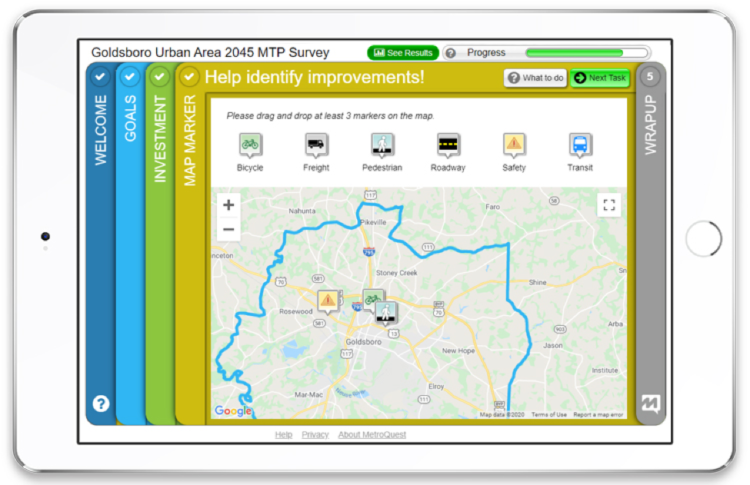
Alongside MetroQuest, additional mapping and geographic information system (GIS) tools that are utilized for community engagement include OpenPlans and Crowdmap.
Engaging Your Community with Social Media
Social media is commonly used by planners as an engagement tool to amplify and target project information and promote participation. It can increase the awareness of upcoming projects, allow planners to connect with a wide group of individuals and encourage open dialogue. Regardless of the platform, communicating frequently, posting information on a variety of platforms and maintaining transparency will help reach a wide and diverse demographic.
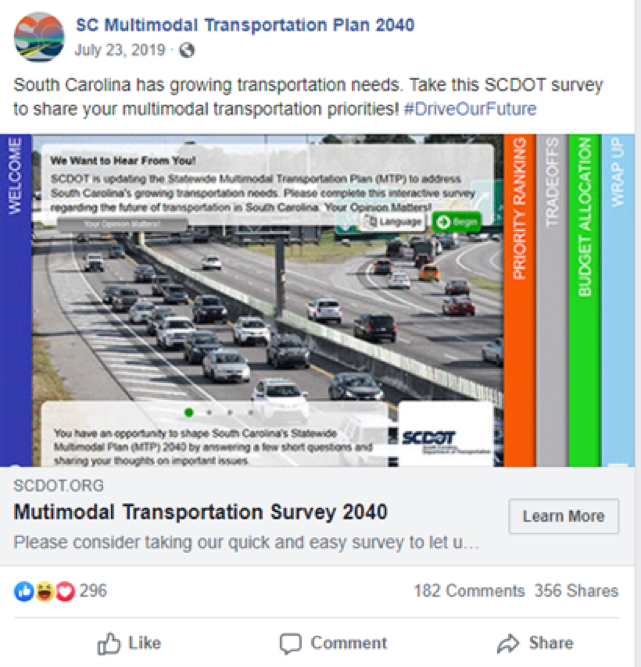
Two specific forms of social media that agencies have used for public engagement initiatives with great success are Facebook and Nextdoor.
Facebook can be an effective platform for agencies to regularly provide updates on projects and communicate with the community by responding to comments and addressing key concerns. We also recommend using Facebook advertising as an inexpensive yet effective tool to promote your main online public engagement efforts. Agencies like SCDOT have utilized Facebook and a customized MetroQuest survey to collect informed input from over 13,000 residents. You can learn more about how you can effectively advertise your community engagement using Facebook boosted posts here.
Nextdoor is a popular platform to connect and exchange information with residents in specific areas and neighbourhoods. Agencies have the option to post text-based messages, polls, events and urgent alerts. And like Facebook, you can also utilize Nextdoor to effectively promote additional public engagement efforts, such as an upcoming virtual public meeting or online survey. Agencies have achieved great success using this platform. The City of Austin engaged over 5,000 local residents using a combination of Nextdoor and MetroQuest. You can check out these 6 tips to learn how you can achieve similar results.
Additional Resources for Online Public Engagement Success
Online public engagement is an ongoing process, and the tools for it are varied and can cater to your specific strategies and goals. Check out these additional resources to learn more about the top online public engagement tools and see what works for your agency:
[GUIDE] Promising Practices for EJ Methodologies
The Promising Practices report is a compilation identified by the EJ IWG as methodologies for EJ considerations in NEPA reviews.
[INSIGHTS] FHWA’s Virtual Public Involvement Spotlight
The FHWA spotlights how agencies can increase meaningful public involvement by integrating virtual tools.
If you have any questions about online public engagement or MetroQuest’s online surveys, don’t hesitate to contact us.
You can also watch our webinar: Essential Online Public Engagement Toolbox for Planning to learn more about the tools and strategies planners have used to achieve online engagement success.
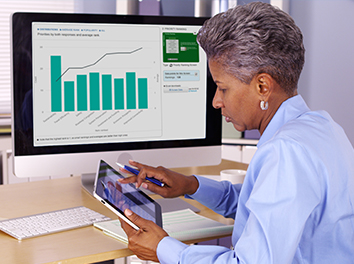
Essential Online Public Engagement Toolbox for Planning
Watch this webinar to learn more about the leading online tools that have helped thousands of planners achieve their best public engagement results!