We’re very excited to introduce MetroQuest Minute: the fastest way to stay on top of online community engagement! Every month moving forward, we’ll post an informative, one-minute video on a latest community engagement trend, an effective strategy, or a tip we think you will find useful.
Hi, I’m Dave Biggs with your MetroQuest Minute: the fastest way to stay on top of online community engagement!
As you know, diversity and equity are critical to great engagement, but it can be difficult to reach certain groups.
Here’s the good news!
Ever since the pandemic began, community groups have been organizing themselves to stay connected online.
They’re a great resource for even the most hard-to-reach audiences.
Whether it’s the Hispanic audience, lower income groups, single parents, you’ll find community groups out there for all of them, with leaders they trust!
Just ask them to add your call-to-action to their next Zoom meeting or email.
They’ll often be very happy to help you engage their audience and they’ll also help you craft a call-to-action that really resonates with the community that they know so well.
Getting big numbers of participants in community engagement for planning has historically been difficult. In 2019, the general consensus was that public meetings were struggling, with some reporting only 94 attendees over 7 meetings, with an average cost of $1,500 per participant!
In 2020, circumstances forced the hand of many planning teams, increasing a push towards virtual meetings and online engagement that quickly showed its efficiency. Several planners actually saw increased engagement over the year!
How can you increase community engagement online? We’ve put together tips from community engagement superstars and identified 3 core concepts:
Build trust with the community
Use software that supports your goals
Innovate and identify a good promotional strategy
Building Community Trust is a Cornerstone of Public Engagement
Asking your community to provide their input every handful of years isn’t enough. It’s vital to build that relationship and trust over time, so that the public feels both listened to and considered. This will make your community valued stakeholders in the processes, helping them to feel that providing input is worth their effort.
Use these tips to build community trust:
1. Reach out to community groups and group leaders
Diverse engagement has always been a critical topic. Title VI of the 1964 Civil Rights Act “prohibits discrimination on the basis of race, color, or national origin in any program or activity that receives Federal funds or other Federal financial assistance.” Planners have to find ways to reach the commonly underrepresented groups that are, oftentimes, disengaged and mistrustful. Reaching out to community groups, instead of only promoting or working with mainstream groups, can help build trust and create mutually beneficial working relationships.
2. Provide the community with safe, secure places to provide input
Oftentimes, public forums such as public meetings become echo chambers for the loudest voices in the room—which isn’t always the majority. Regardless, it’s vital to gather representative input from as many in the community as possible. Using online software such as MetroQuest anonymizes the process of ‘putting up your hand’ to say something in front of dissenters, instead creating safe spaces which encourage the public to be as honest and uninfluenced as possible.
3. Close the feedback loop to show participants their input has an impact
Something as simple as an infographic showing the collected data from community engagement surveys will show participants that their input is being considered. Rather than leaving participants in the dark about what is done with their opinion data—which can lead to feelings of futility—use your channels to show the results of your study. It can do double duty by reaching community members who were not aware of the input opportunity and will now be on the lookout for future opportunities!
Community Engagement Software Needs to Suit Your Goals
Community engagement software has become a must-have with the movement towards virtual engagement. Many of the engagement experts we have spoken to suggest a toolbox, with 3 types of tools, to best support your online engagement goals: a virtual meeting platform (to host video or live streamed townhalls), an online survey tool (to cleanly gather input) and social media (to build a presence/brand and promote engagement opportunities).
In addition, planners need to:
4. Reduce barriers to participation across demographics
When looking to increase the number of people who participate in your community engagement campaigns, first ask the question: why aren’t they already participating? It may be as simple as lack of awareness (see the promotional strategy section below) or abundance of apathy (see the building trust section above), but there could be other factors at play. Your participants may be stuck at work during the public meeting times; or not be able to find childcare; or not feel safe sharing their opinions. Talk to your community to identify barriers to engagement and use software or other tools to mitigate.
5. Isolate the ‘must haves’ and do your research to find the best software
While we have identified 3 elements of the essential public engagement toolbox for planners, not all tools within are one-size-fits-all. For each plan or study, you will have different goals, and what you need out of your tools will differ. Do your research and find the tools that suit each project and its goals.
6. Nominate a team member to become an expert
Software has learning curves, and the ability the use the software will have a major impact on your ability to use it to meet your goals. Lean on the software’s support team, but also make a member of your team a subject matter expert. Empower someone to be the ‘go-to’, learning the ins and outs of the software. This is especially important when you’re first starting to use a software or expect that you’ll need to use it more widely. Once they’re comfortable with the software, ask them to share their knowledge with the rest of the team!
Good Promotional Strategy is Worth the Time
‘Make it and they will come’ no longer applies in our modern era, where content production rapidly outstrips our ability to see it! Promoting the engagement opportunities that you’ve worked so hard on is vital.
Try these methods to get your online survey, virtual meeting, or other engagement opportunity into the eyes of the community:
7. Go where they already are
Simply put, when you know where your audience already spends their time, you can reach them more easily. Perhaps Nextdoor is popular and widely used in the neighborhood; perhaps there is a really active Facebook group. Identify these areas and use them as the starting point. Build a presence there with a page for your agency, and use it to share content, promoting your engagement opportunities when they come up. At that point, you will already have a following that knows where to look!
8. Use paid promotions and target strategically
Paid promotions can be very effective, and usually don’t cost much—especially on social media. Use well-designed, eye-catching ads to drive people to your online survey, or invite them to visit the project page to learn more and share their thoughts. These ads are most effective when you have a strong CTA, or “call to action”. For example, if you’re working on a new bikeway study, invite people to give their opinions on bike lanes in the city, rather than reading about bike lanes. A more active ‘hook’ like that pushes participants to the survey directly, rather than relying on them to read articles and then find the correct link on their own!
9. Get creative! Use old and new methods
Mailers still work. Some of the planners we’ve spoken to have even repurposed real estate ‘post boxes’ at bus stops, using them as one-stop shops where locals can pick up flyers and updates about their community plans! Even though online engagement is picking up traction, getting creative and using a mix of techniques will help you to cast a wide net and get more participants.
Do you have tips for increasing community engagement online? What’s been working for your organization? Let us know in the comments!
Last year was an exciting year here at MetroQuest, to say the least. It was a year full of challenges, changes and opportunities to enhance public engagement in planning. Throughout the year we were engaged in designing, developing and testing our new platform: MetroQuest 2020. Like many of you, we were doing all this as a remote team, working from home and engaging one another online!
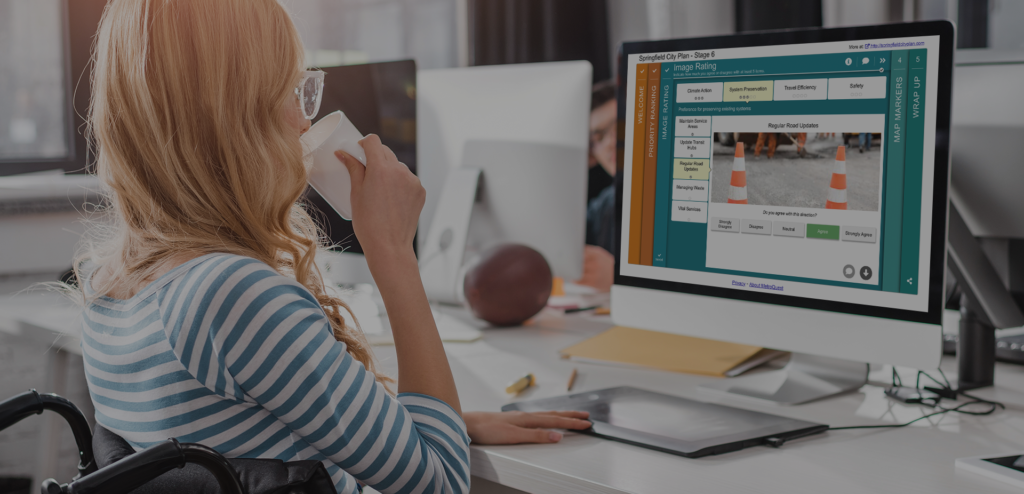
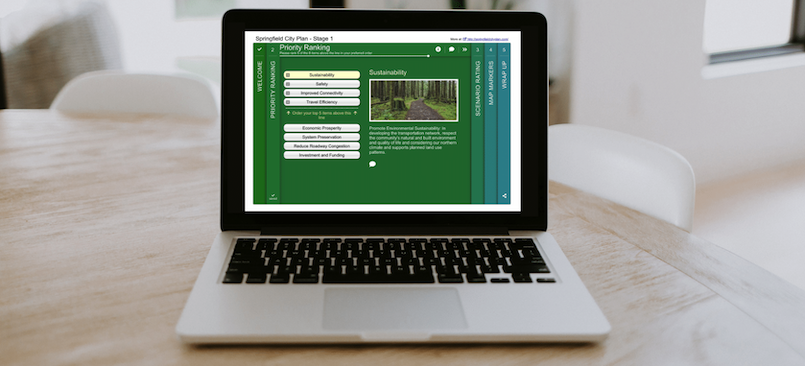
MetroQuest 2020 is a new iteration of our classic, award-winning survey platform for online public engagement, with new features and improved usability. We introduced a number of significant enhancements and improvements for both MetroQuest subscribers and survey participants alike.
We set out to make MetroQuest:
Faster – so you can design, build and run surveys in record time
Less restrictive – so you can have greater flexibility in survey design, including layout, formatting, textual content, and images
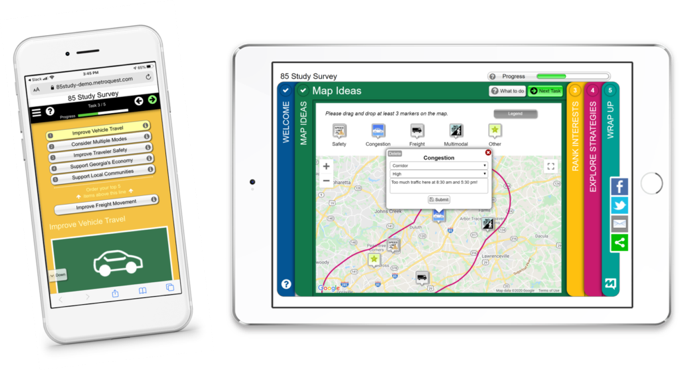
More mobile friendly – so you can engage greater numbers of participants in your communities who prefer to engage on smart phones or tablets
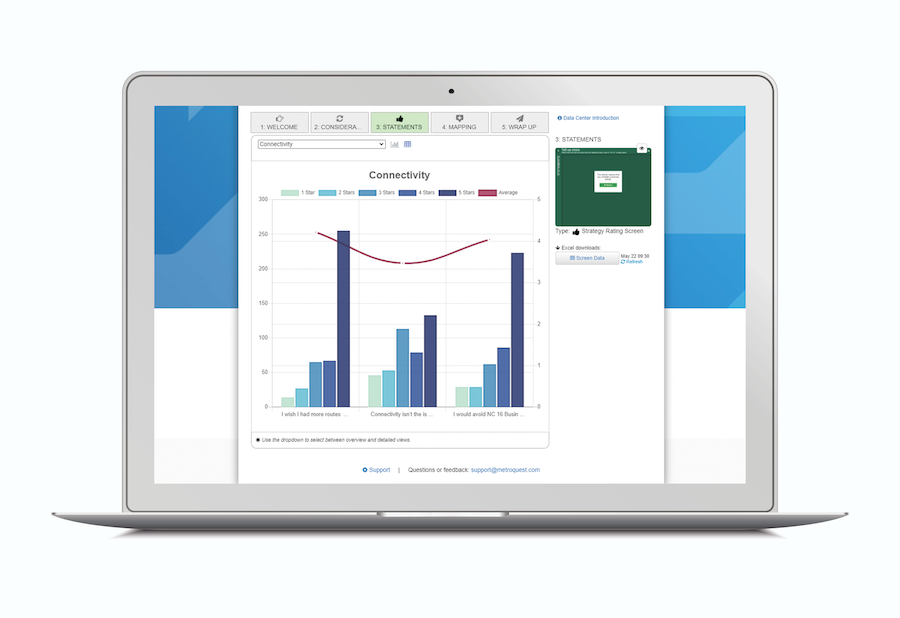
More insightful – with a refreshed Data Center so you can get near real-time reports on participant activity and responses in both graphical and tabular formats
Building a Tool for Planners
The feedback we have received on MetroQuest 2020 to date has been really encouraging. Those building surveys are really pleased with the added flexibility and independence that the new MetroQuest provides. They are finding that they can more efficiently create the surveys that best support their projects.
The new Image Library makes it so much easier to find the images you want and to crop or re-size them with a click of a button to meet your needs. Map management is also dramatically improved, with the ability to easily center a map in the Map Marker screen. The new Data Center with its new charting system makes analyzing and reporting on survey results much easier, timely and graphical, with improved spreadsheet download capabilities. And that is just a highlight of a few of the changes we made since we declared MetroQuest 2020 released this past fall!
Since then, we have focused on taking MetroQuest even further in our objective of enabling you to create delightful surveys that engage record numbers of online participants. Our focus has been on continuing to provide you with the tools to create truly engaging surveys, technology to better understand and analyze survey results and streamline the entire survey lifecycle.
Highlight of New Capabilities in MetroQuest 2020
Embed Video in Surveys via YouTube
Did you know that you can now embed YouTube videos into your screens with the click of a button? Available on any screen with rich text content, this option dramatically enhances the survey experience and information exchange with your survey participants.
Automatic Survey Launch and End
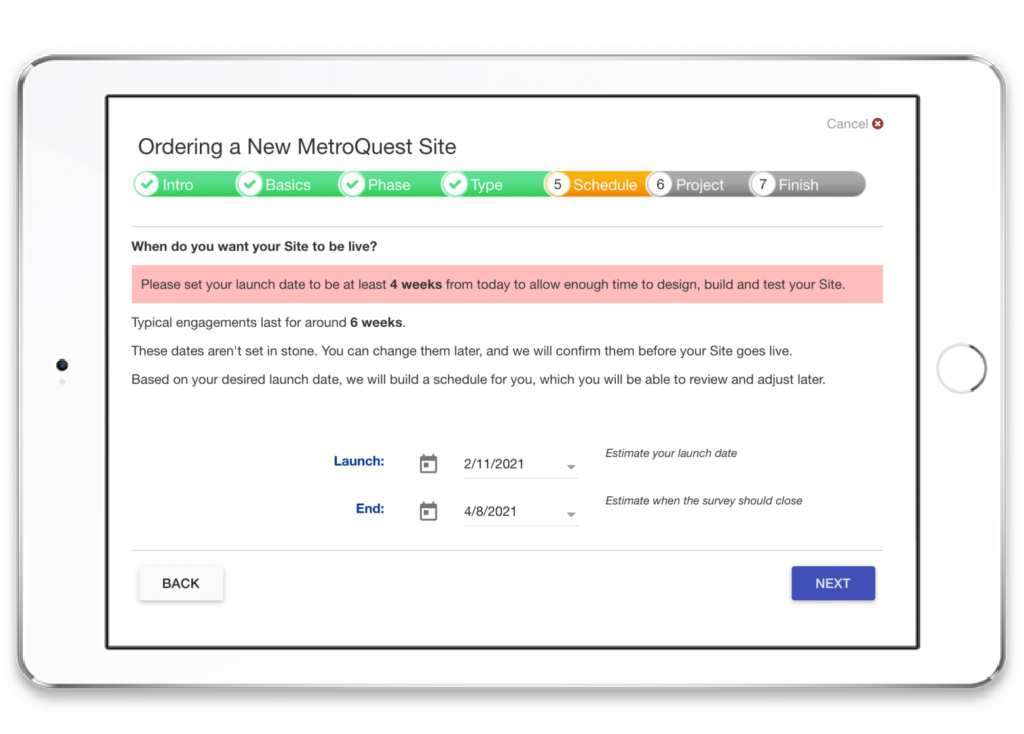
You can now set the Survey Launch and Survey End times in the Create Survey tab in Studio! No need to ask us to do it for you. Surveys will automatically begin to accept data based on the date that you set. The Launch and End times will also be displayed on the Project Overview page in Studio. We’ve also built in the requisite buffer time for Pre-Launch checks to ensure that your survey launches without any issues.
Word Cloud and Sentiment Analysis
As part of our Data Center updates, MetroQuest 2020 introduces Word Cloud and Sentiment Analysis: two new ways of representing participant data with compelling visuals. Word Cloud is a visual representation of word frequency. The more the term appears within the survey question, the larger the word appears in the image – thereby giving you a visual on the key words your participants were using. Sentiment Analysis will also help you gauge public opinion by providing visual feedback as to whether the participant responses are positive, negative, or neutral.
Survey Template Library
One super-exciting development is the new Survey Template Library. This Library offers templates for the most popular types of surveys. Each template uses a combination of screens based on the most frequently used screens for the respective topic, type of project and project phase. Each screen is prepopulated, complete with the appropriate images, text, and other relevant content based on best practices and example surveys of the same type.
In the near future, the library will boast more search functionality to allow survey creators to browse more easily, as well as copying and editing templates to create your own surveys faster!
The library is still under development. Subscribers can currently view the library in “Preview Mode” and provide comments to our Product team.
These are just some of our newest feature releases to kick off the year. Stay tuned. We have plenty more work to do in 2021!
You may have heard the team at MetroQuest boasting about the San Francisco Municipal Transportation Agency’s (SFMTA) public engagement success before; we can’t stop talking about their remarkable outreach efforts and outstanding engagement results!
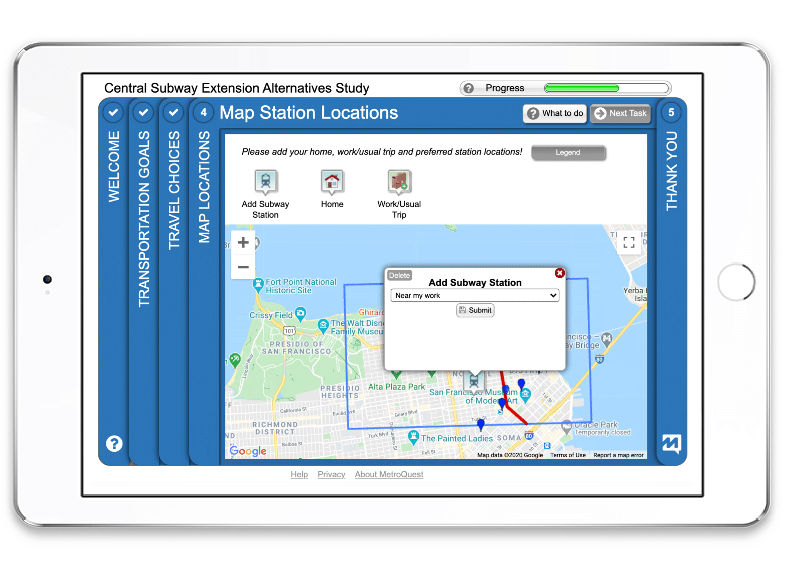
I recently had the pleasure of speaking with Adrienne Heim, the Public Information Officer for the agency’s Communications and Marketing Division. During our discussion, we talked about some of the strategies her team used to engage the collective voices of their community and gather input from over 8,000 citizens online for their Central Subway Extension Alternatives Study!
Today, I am excited to give you an inside scoop and reveal some of the strategies the agency used to achieve this remarkable level of online engagement. Read on as I uncover some of the insights Adrienne shared with me during our discussion.
Can you provide me with a quick overview of SFMTA?
The SFMTA is a municipal transportation agency that is responsible for the management of all ground transportation in San Francisco and has oversight over public transit (Muni), as well as bicycling, paratransit, parking, traffic, walking and taxis. We serve San Francisco by creating transportation options that are constant, practical and everywhere; we connect people with their community to enhance the economy, environment and quality of life.
I work specifically in the Communications and Marketing Division, which is responsible for both internal and external communications that engage and share information with customers, stakeholders, and the public. We oversee things like media and public relations, marketing and special events. We also have a distinct public outreach and engagement team that oversees stakeholder engagement and community outreach activities.
What community engagement challenges was the agency facing prior to switching your public outreach efforts online?
About 5 years ago, we used mostly text-based surveys and online platforms like SurveyGizmo to facilitate our community outreach. Our online platforms were fairly static and really content heavy. We knew we needed a solution that would help participants really get into that decision-making space and provide our team with more direct input so we could make decisions that really reflect what the community needs.
Our Division’s public outreach and engagement team has to develop a detailed communications plan which includes the tactics they intend to use to solicit community input.
“When developing the plan for our Subway Extension Alternatives Study, we discovered MetroQuest and knew we wanted to use it specifically for this project.”
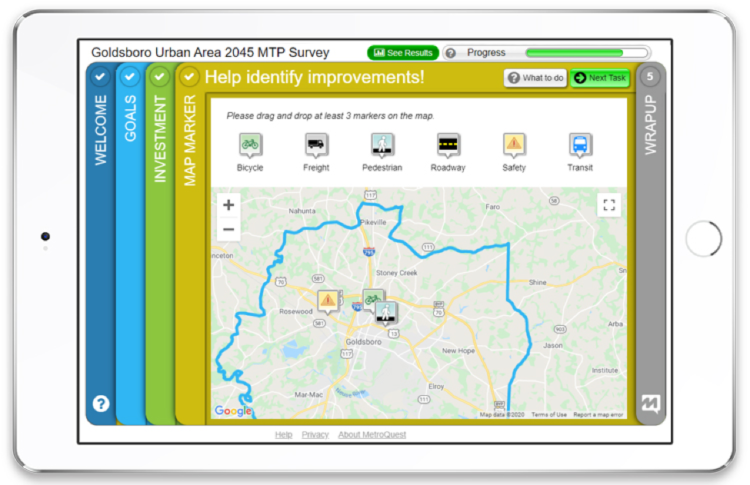
MetroQuest’s map marker screen is something that really stood out to us because it enables participants to pinpoint exactly where they want a subway station as well as their final destination and spots they stop at along the way.
“We knew this mature and engaging platform would help us get feedback from more folks and give our team clear insight into what the community envisions for our subway system moving forward.”
You used MetroQuest for the Central Subway Study to achieve great success, engaging over 8,000 participants. Can you tell us about some of the tactics your team used to achieve such incredible results?
We leveraged social media to help drive traffic to the survey and increase our online participation. We also sent out email blasts with a direct link to the survey and made use of both internal and external blog posts. Leveraging the City’s online portal, we also made project announcements in newspapers and connected with the Board of Supervisors who added the survey link into their newsletters.
We also targeted Muni customers who utilize the bus routes that travel through the Central Subway Extension study area through social media posts to encourage them to participate. This helped us gather input from those that use the City’s transit lines most.
“These tactics helped us reach the individuals who don’t usually attend workshops or monthly neighborhood meetings. While having a physical presence is important, our social media efforts really helped us increase our engagement”
What are some of your top tips for agencies and firms looking to reach their target demographics?
Given the restrictions on public gatherings due to COVID-19, many government entities have had to lean towards more virtual spaces. As a result, I recommend finding out what’s working in your community and especially in specific neighborhoods since many residents’ respondent to certain types of virtual (e.g., Facebook, Instagram, Snapchat, or Zoom) or traditional (e.g., newspaper or radio) spaces. I know that a lot of community groups are hosting online meetings right now. Leveraging signage is another great way to target specific demographics. Installing a multilingual laminated sign about an upcoming project in a distinct neighborhood can help you reach a specific group, for example.
Also, talk to your council members or Board of Supervisors and neighborhood leaders and make them aware of your project efforts. They probably have an even greater network within the community so if they champion your project, you’ll likely reach groups you might not have been able to otherwise. However, I would be seriously remiss to not emphasis that online outreach can never replace in-person engagement. That especially includes our stakeholders with low household incomes and who lack smartphones and/or internet access.
Is there any additional piece of advice you would give to other agencies that are transitioning their public engagement online?
2020 has been such a collaborative moment. We’ve been reaching out to other departments within our city family to help us pinpoint what’s working, what’s not and where we think community engagement is headed. My advice is to talk and learn from others.
“So many people are open to having discussions right now, which can help you find ways to enhance your community outreach and ease your transition to engagement online.”
Congratulations to the entire team at SFMTA and thank you Adrienne for the insight! I hope this discussion inspires you and provides you and your team with some intel into how to facilitate great community engagement.
In case you haven’t seen our case study with Adrienne, I’ll include a link to the 3-minute clip here. Adrienne and her colleague, Tracey Lin, also joined us in a webinar to celebrate some of the brilliant work by women in transit planning! I invite you to watch the on-demand recording. The webinar is packed with strategies to engage thousands online, tips for delivering comprehensive planning proposals and techniques for attaining valuable insights from a broad audience.
Celebrating Brilliant Public Engagement by Woman in Transit Planning
In this webinar, Adrienne Heim and Tracey Lin from SFMTA show us exactly how they exceeded agency expectations by engaging 8,100 residents, collecting meaningful public input to build a data-driven transit extension study!
At MetroQuest, we believe that exceptional public involvement begins with an award-winning solution: and our award-winning solution would not be possible without our incredible Development Team. Today, I am excited to introduce to you Simon Bourdeau, the head of the Development Team here at MetroQuest! Simon leads the team to ensure our survey solution is not only up to date and working reliably but enables agencies and firms nationwide to deliver exceptional public engagement results.
Check out my conversation with Simon below to learn more about his background, what it’s like to lead the Team and to find out what he enjoys doing in his spare time.
Simon, can you give us the 10,000-foot view of your role at MetroQuest?
As Team Lead of Software Development at MetroQuest, my role consists mainly of helping the team work effectively. My main goal is to help ensure everyone on my team has the resources to move our software forward. In order to accomplish this, I try to promote a learning culture so that everyone is aware of new technologies, techniques and processes. This means making myself available to provide mentoring, which typically consists of answering technical questions, performing peer coding or providing direct help. I also spend a good portion of my time thinking about how we want to build the product in a way that gives the most value for our customers, while setting realistic goals for a team of our size. And because of my experience as a backend developer, I also build some of those invisible product pieces myself.
Tell me about your team! What’s it like being the Team Lead for Development?
We have an amazing Development Team here at MetroQuest! While we are small, we are very close and everyone has a lot of fun working together. We care for each other and that makes it important to respect everyone’s perspectives. For me, it’s important to have everyone’s input before changing any processes or making long term decisions on our technology. In the end, MetroQuest is not simply a place to punch in and punch out, but a place to have friends to talk to and do fun things together.
What’s your background as a software engineer?
I have a Bachelor’s Degree in Software Engineering from Montreal where I grew up. Following school, I worked for a couple of small firms as well as some larger ones such as IBM, Avanade, Boeing and Pearson. Throughout the years, I found myself working primarily on backend technologies like Oracle Database or SQL Server, which became my specialty. Since then, and through my time at MetroQuest, I’ve become a much more versatile developer. I now find myself working on C#, JavaScript, Angular, Python and, most of all, on public cloud infrastructure. This has been a very beneficial shift for me. I find myself not only working on projects I love, but expanding my skillset with new projects as well.
What do you see as the most valuable aspect of MetroQuest for the public engagement industry?
To me, what differentiates us at MetroQuest is our proven track record. We have a proven technique that has helped countless planners obtain the information they need to move forward with their projects and plans. We offer a product that is flexible while making sure our customers can leverage true value from our survey platform. We provide images and visual charts so that the surveys that our customers make are truly engaging. Not only does this help guide planners who might be new to MetroQuest, it does a better job at informing and engaging citizens. Because of that, I believe our survey platform conducts citizen engagement the right way.
How do you believe technology is changing the world today and in the future?
Technology is changing society in a variety of ways, most of all by optimizing and automating a lot of tasks. While I don’t believe that technology can replace human interaction and support, it does help streamline some of the cumbersome tasks associated with our jobs. Think about driving, shopping and making financial transactions, for instance. These are examples that have and will continue to radically change. Governments do great work in this era and are still the backbone of a healthy economy. They are essentially building the required foundation for societies to move forward. Planning public works needs to be a transparent process in 2020. The age of information requires it. Our product lets governments do just that. I consider our product to be technology for good and for progress, and I am very proud of that.
What do you like to do outside of work?
Family is where I love spending my time but when I’m not enjoying a board game at home, I love playing ultimate frisbee, skiing and cycling.
The COVID-19 pandemic has led to substantial change for public engagement. As restrictions on gatherings and mandates for social distancing remain in effect, agencies and firms nationwide are faced with the decision to either postpone public meetings or shift their public engagement strategies online.
The good news is that many who have transitioned to online platforms have achieved better results compared to their traditional outreach strategies. The wide range of online tools available have enabled planners to develop engaging online experiences that broaden and diversify their reach and gather more informed and data-driven input.
However, online engagement is unfamiliar territory for many. Outlined below is a list of t he leading online public engagement tools and complementary strategies to help you choose the right solutions, maximize results and navigate this ‘new normal’ in 2020!
Considerations Around Switching to Online Public Engagement
Before we explore the specific tools and strategies, it is important to recognize that solely relying on one platform will likely not guarantee meaningful or effective public engagement. Online platforms each fulfil different needs and often are complimentary or used at different stages of the project lifecycle. Regulations and requirements also vary from agency to agency.
As a result, we strongly recommend selecting a variety of complementary tools to create an online engagement toolbox that supports your specific projects and goals.
Virtual Public Meetings as an Alternatives to Traditional Town Halls
With barriers that prohibit in-person events, thousands of agencies have turned to online tools to host public meetings virtually. This has become a very effective solution for sharing information in real time and gaining public involvement and feedback during all stages of the planning process.
The leading video conferencing tools include Webex, GoToMeeting and Zoom. All three solutions are designed for real-time events and are compatible on a variety of devices to help you increase participation and diversity your reach. With features for screen sharing, ‘open-mic’ discussions and structured Q&A sessions, you can also closely monitor feedback and answer participant questions in a very timely manner.
For more information on the three solutions and to help determine which is best suited for your needs, check out this additional article here.
Community Engagement with Online Forums
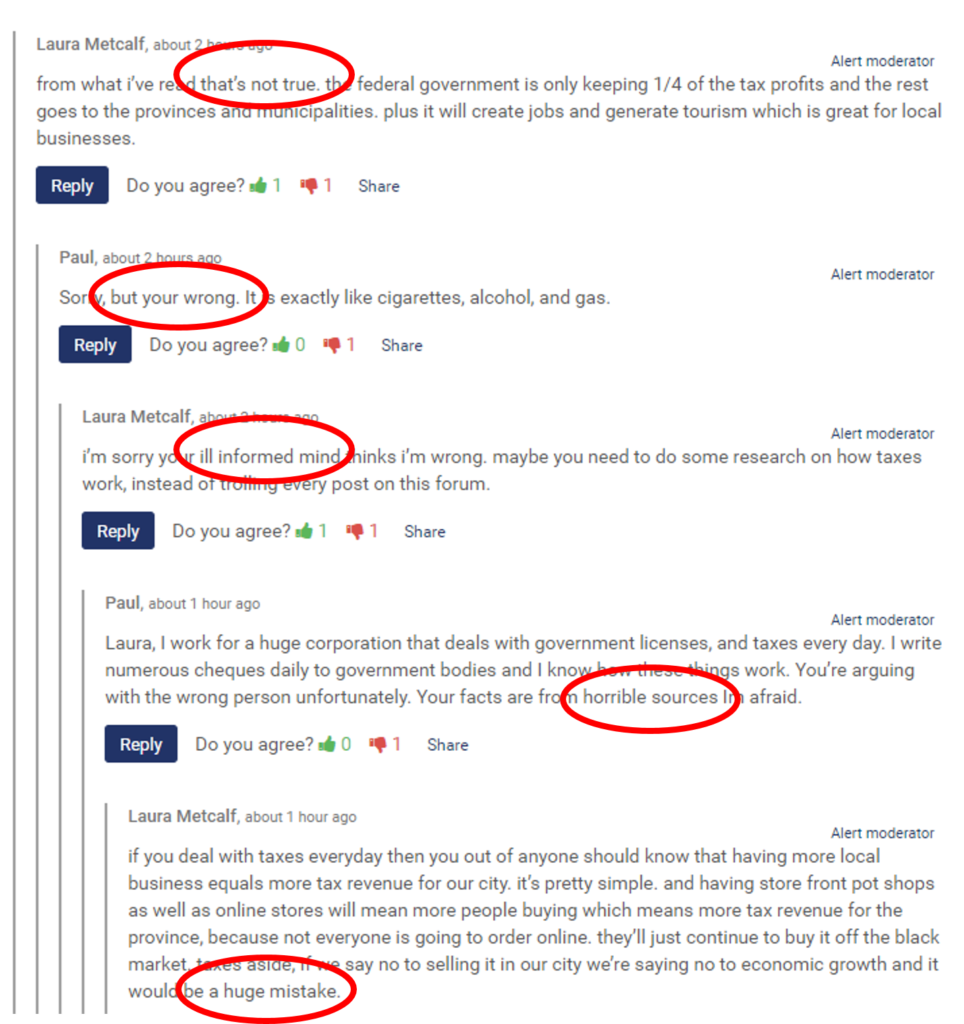
Online forums are an additional online engagement tool that can encourage community members to openly express opinions about local decisions or upcoming projects. Wix is a popular forum platform that encourage community discussions and action with features allowing members to like, comment and share posts. Please also find attached links to the 10 best forum softwares and the most popular third-party comment systems.
While forums can be useful for promoting dialogue within the community, we recommend using this type of platform only during the early stages of the planning process. The open-ended dialog on these platforms can provide insight into community priorities and concerns to inform planning solutions.
Similar to platforms such as virtual public meetings and social media, it is important to be aware of the drawbacks that accompany the open nature of these platforms. Open-ended comments can be useful to gauge the public’s opinions, but oftentimes can generate biased input as participants influence and often intimidate others. These solutions can also make it difficult for planners to summarize comments into data-driven or quantifiable results.
Using Online Surveys to Gather Informed Public Input
To defeat the shortcomings of solutions with open-ended comments, planners have turned to online surveys to better understand community priorities and concerns and obtain informed and data-driven results for all types of planning projects.
MetroQuest is the leading survey tool and the only public engagement solution purposed-designed for urban and transportation planning. By imbedding micro-learning moments and interactive features into its survey design, agencies and firms have proven that with MetroQuest you can increase public participation, gain informed input and collect actionable results.
To learn more about online public engagement, visit the MetroQuest resource library and explore MetroQuest’s sample surveys here.
Mapping and GIS Engagement Tools for an Interactive Online Experience
As discussed in our recent webinar, virtual public involvement (VPI) tools that have interactive mapping components are a great way to help the public visualize projects and provide spatial input on plans. Tools like MetroQuest that include mapping survey options help to identify exactly where community issues lie.
Alongside MetroQuest, additional mapping and geographic information system (GIS) tools that are utilized for community engagement include OpenPlans and Crowdmap.
Engaging Your Community with Social Media
Social media is commonly used by planners as an engagement tool to amplify and target project information and promote participation. It can increase the awareness of upcoming projects, allow planners to connect with a wide group of individuals and encourage open dialogue. Regardless of the platform, communicating frequently, posting information on a variety of platforms and maintaining transparency will help reach a wide and diverse demographic.
Two specific forms of social media that agencies have used for public engagement initiatives with great success are Facebook and Nextdoor.
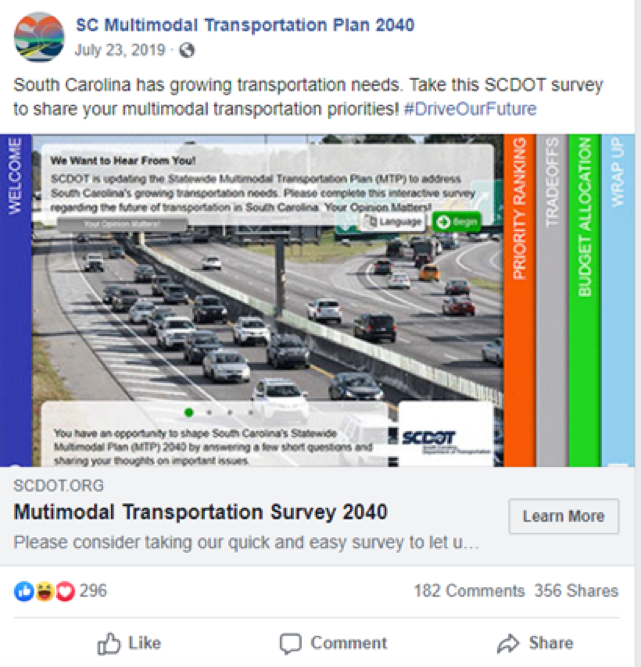
Facebook can be an effective platform for agencies to regularly provide updates on projects and communicate with the community by responding to comments and addressing key concerns. We also recommend using Facebook advertising as an inexpensive yet effective tool to promote your main online public engagement efforts. Agencies like SCDOT have utilized Facebook and a customized MetroQuest survey to collect informed input from over 13,000 residents. You can learn more about how you can effectively advertise your community engagement using Facebook boosted posts here.
Nextdoor is a popular platform to connect and exchange information with residents in specific areas and neighbourhoods. Agencies have the option to post text-based messages, polls, events and urgent alerts. And like Facebook, you can also utilize Nextdoor to effectively promote additional public engagement efforts, such as an upcoming virtual public meeting or online survey. Agencies have achieved great success using this platform. The City of Austin engaged over 5,000 local residents using a combination of Nextdoor and MetroQuest. You can check out these 6 tips to learn how you can achieve similar results.
Additional Resources for Online Public Engagement Success
Online public engagement is an ongoing process, and the tools for it are varied and can cater to your specific strategies and goals. Check out these additional resources to learn more about the top online public engagement tools and see what works for your agency:
[GUIDE] Promising Practices for EJ Methodologies
The Promising Practices report is a compilation identified by the EJ IWG as methodologies for EJ considerations in NEPA reviews.
![[METROQUEST MINUTE] Leveraging Community Groups to Increase Your Public Engagement](https://metroquest.com/wp-content/uploads/MQ-Min-805x366-1.png)





![[MEET METROQUEST] Simon Bourdeau, Software Development Team Lead](https://metroquest.com/wp-content/uploads/Simon-2021_header-image_805x366.png)