Category: [SUCCESS]

  • Increased Public Participation in Transit Planning Builds Support for Sustainable Transportation

    Increased Public Participation in Transit Planning Builds Support for Sustainable Transportation

    From the very beginning, we at MetroQuest have made it our mission to deliver great online public engagement experiences that broaden outreach to meaningfully include the public in planning more livable places and moving more people. We always love to see great online surveys used to engage the public in transit planning!

    After all, it’s perfectly logical to collect community input since transit is a public transportation system, by definition, designed to move the public. Indeed, community engagement is a critical aspect of the transit planning process, and we have some a few tips and success stories to inspire you.

    Tip #1: Increase public participation by engaging the public online.

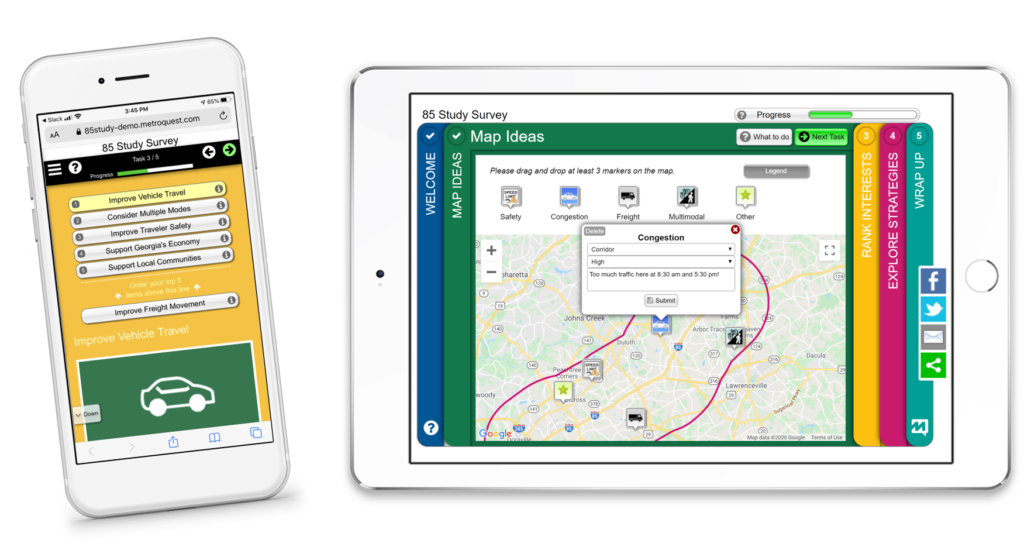
    Transit agencies are particularly brilliant at increasing public participation by extending their outreach programs online. They have a captive audience! While transit goers are not likely to get on the bus or subway to attend a public meeting, they will certainly give agencies five minutes of their time to take a survey from their mobile phone. Online surveys make it easy to engage the public where they are – on their devices, while riding on transit or from the comfort of their homes. We’ve seen transit agencies, from coast to coast, successfully engage thousands online, again and again.

    Tip #2: Collect public input early in the transit planning process.

    It’s important to engage the public early in the planning process, providing people with information and giving them the opportunity to offer feedback. In order to get buy in and gauge interest in a specific public transportation option, for example, it’s crucial that the community learns of its benefits, drawbacks, or tradeoffs before any major planning occurs. This allows planners and decision makers to understand the public’s needs, priorities, and interests to build alternative transportation scenarios.

    Tip #3: Use new ways to reach traditionally underrepresented groups.

    Transit agencies from LA Metro to New York’s MTA are successfully increasing equity and dramatically broadening outreach with online surveys and promotions. Using Facebook and other social media as a promotional channel helps agencies reach groups that aren’t likely to attend a public meeting.

    By engaging traditionally underrepresented groups – including all ages, ethnicities, and incomes – online surveys allow transit agencies to better understand public priorities and design transit to truly meet the needs of people who need it most.

    Broad public input is uncovering public preference for sustainable transportation options, including light rail.

    Perhaps what’s most interesting about public engagement is the results themselves – increased public support for transit and hundreds of thousands of data points to build data-driven transit plans. What public input tells agencies in turn helps planners and decision makers focus on the options that receive the most public support.

    Light rail, one of these options, is fast becoming a popular public transportation favorite and the benefits are wide ranging. According to the Federal Transit Administration, transit in general plays a vital role in contributing positively to sustainability efforts. Rail, more specifically, has a number of environmental benefits, including:

    1. Improved air quality, since most rail transit emits little or no pollution;
    2. Reduced greenhouse gas (GHG) emissions; in fact, light rail produces 62% less GHG than an average single occupancy vehicle;
    3. Overall energy savings due to a lower use of fuel;
    4. A decreased need for infrastructure for and manufacturing of vehicles;
    5. Reduced congestion, which makes life easier for travelers and positively contributes to improved air quality, reduced GHG emissions, energy savings, and fuel savings;
    6. More compact development, which leads to land conservation as well as decreased travel demand;
    7. Economic development; and,
    8. Greater access to affordable mobility.

    Sustainability is a hot topic for most communities. But if planners don’t ask, it’s difficult to uncover definitively what the public wants.

    Let’s look at a case study from the East Coast. Hillsborough MPO in Florida recently used a MetroQuest survey (you can try the demo here) to engage 9,575 residents, who provided nearly 236,000 data points of public input. This data was instrumental in uncovering new insights into local transportation needs and preferences. In an 4-minute interview, the agency’s Executive Director, Beth Alden, shared her delight in uncovering broad public support for light rail:

    “There was so much interest in passenger rail as an option in this survey. I was kind of surprised. And, what that means is we get to keep that kind of technology on the table as we move into our Long Range Transportation Plan.”

    By broadly engaging the public and gathering such amazing amounts of data, Hillsborough MPO discovered that their local community hugely supports light right as a public transit option. This information is allowing them to confidently create transit plans that reflect public opinion.

    In San Francisco, SFMTA increased public participation involving 8,100+ in support of its Central Subway Extension Alternatives Study.

    On the West Coast, San Francisco has already capitalized on the benefits of light rail with its extensive Muni Metro network, the third busiest light rail system in the United States. Faced with projected growth of nearly 1,000,000 residents by 2049, the need to expand their public transit system is becoming ever more critical.

    Recently, the San Francisco Municipal Transportation Agency (SFMTA) used MetroQuest as their digital community engagement survey to inform the public of a possible extension to the Central Subway route. The team needed to gauge the public’s priorities and support for the project. Their survey was part of the preliminary analysis of their forthcoming Central Subway Extension Alternatives Study.
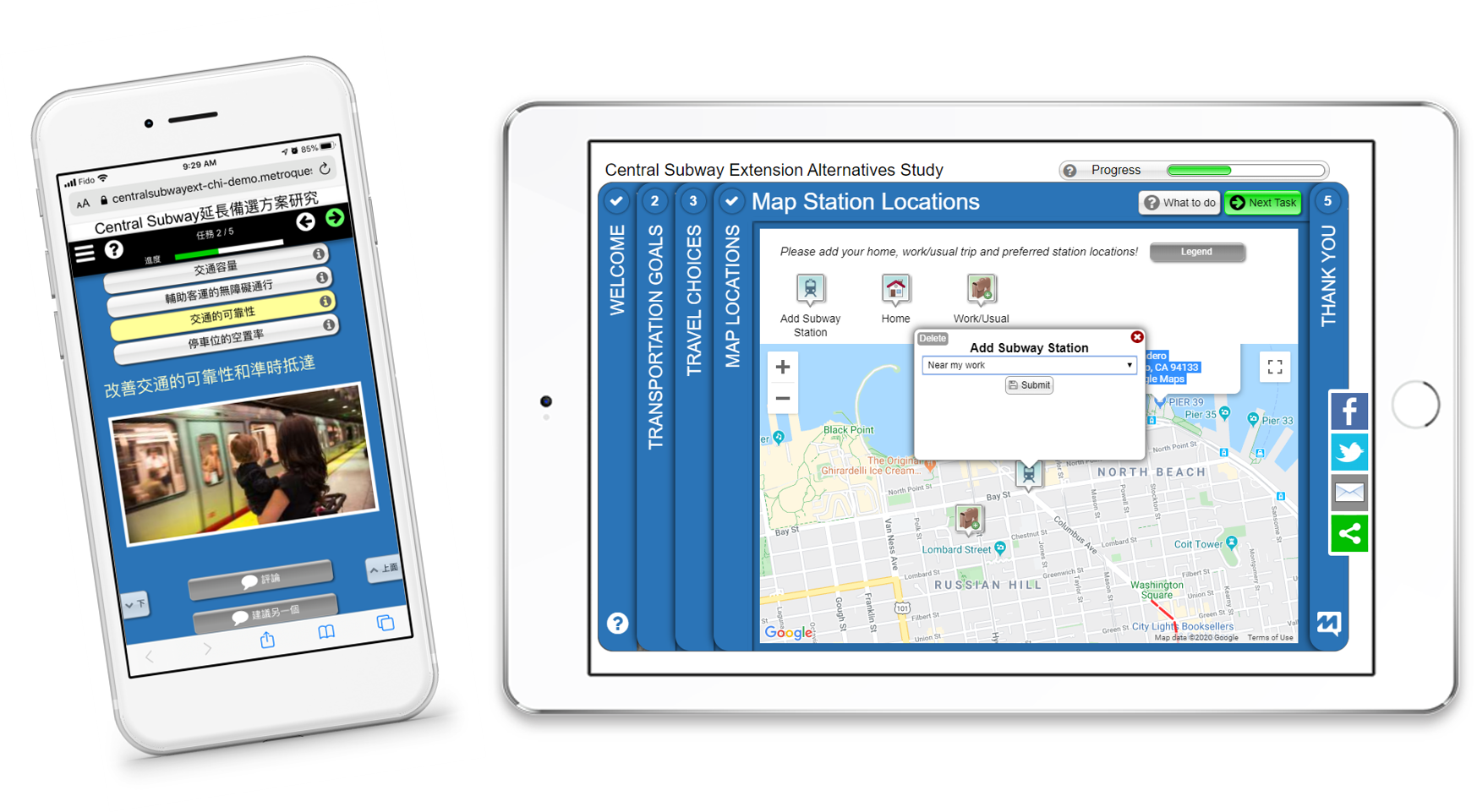
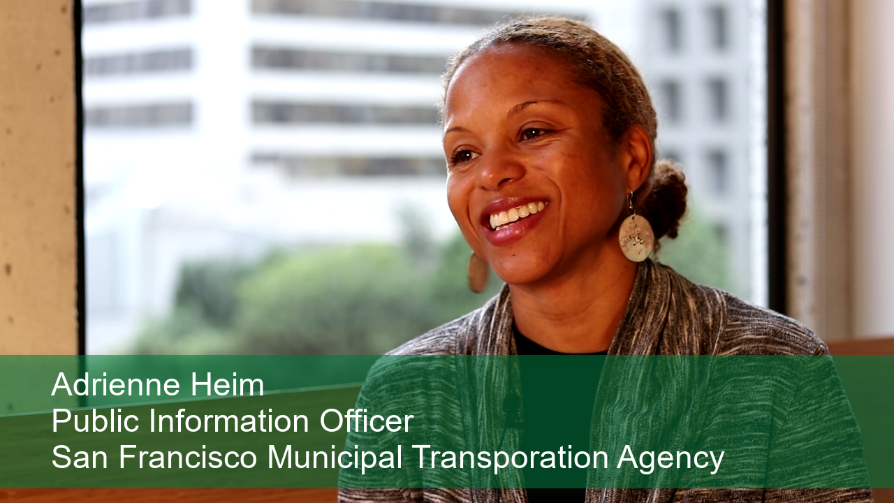
    The goal of SFMTA’s project team was to increase public participation beyond the initial on-the-ground community outreach. In a recent interview, Adrienne Heim, Public Information Officer at SFMTA, described the efforts, “Last year we went out to merchant and neighborhood groups to discuss the study, ask people how they got around the city of San Francisco, their transportation goals, and how the study could incorporate or support some of those goals. That included gathering ideas for routes and station locations.”
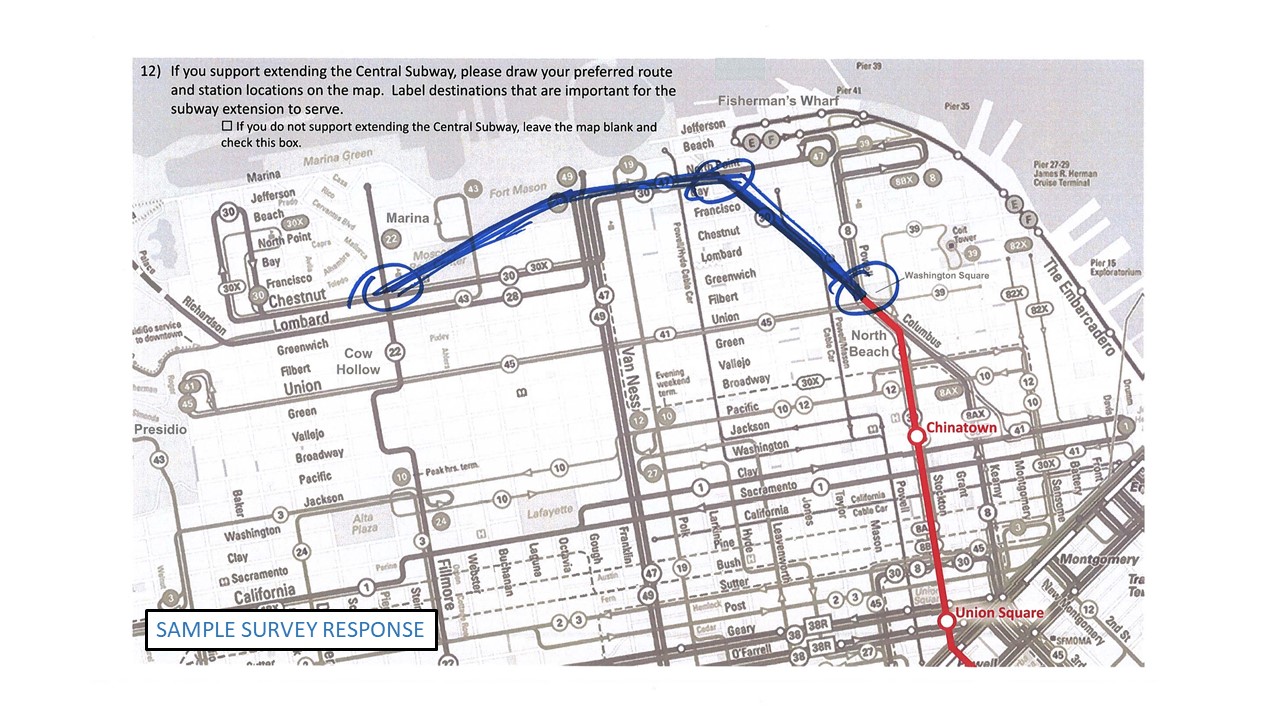
    On the ground efforts resulted in the completion of 129 paper surveys. Adrienne next described how going online increased public participation by over 62,000%,

    “The survey results were amazing and well beyond our expectations. Within three days of deploying MetroQuest, we received 1,000 responses, and towards the end of the survey, we received 8,137!”

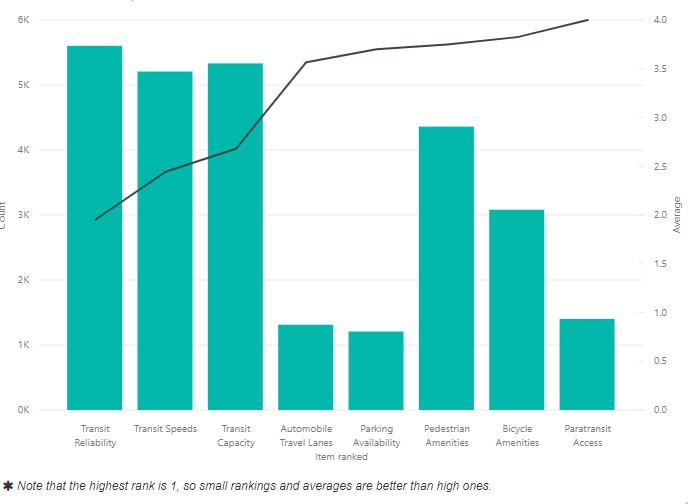
    The survey cleverly asked about transportation goals to get a picture of what the public valued. Respondents who supported travel reliability and capacity building to reduce crowding supported the extension. Fewer prioritized such investments as preserving on-street parking or car travel lanes – these respondent preferred more infrastructure for cars and personal vehicles. Additional goals included accessibility and active transportation, namely bicycle and pedestrian amenities. SFMTA was pleased to share the results with the public, with overwhelming support for transit:
     

    The survey continued to ask about travel choices, such as current travel modes, as well as questions about the extension itself and potential routes. It then provided a map for supporters to concretely identify their origins and destinations, as well as preferred new station locations before wrapping up with demographic questions and additional information about the project.

    “Having the ability to disperse our survey quickly and easily online was greatly beneficial to us,” explained Tracey Lin, Deputy Project Manager. “Our survey was also built for mobile engagement thanks to MetroQuest, and it was easily accessible to stakeholders from all over the city who are interested in our project.”

    All in all, SFTMA collected 148,405 insightful data points to inform their transit plan, and 13,737 public comments to give context to specific feedback.

    “The way that we could structure questions through MetroQuest allowed greater feedback and input, enabling a more robust planning analysis,” concluded Adrienne. “Those 8,137 survey responses allowed us to confirm that most respondents want a subway that goes beyond the Northern Terminus and a little bit towards the West.”

    The Central Subway will be a long-term investment in a transportation system that will meet the needs of growing populations in a sustainable way. It is estimated that the Central Subway will serve 35,000 customers daily when it opens!

    While a concept feasibility study from 2015 showed that an extension is technically possible, it didn’t show what the public preferred, which is why a four-step alternatives study is currently underway to understand the desirability of the extension, as well as to determine goals, possible routes, and station locations that will best serve the community. We’re thrilled MetroQuest could help.

    For more on this outstanding success story, play Adrienne’s 3-minute video interview here:
     

    If you’re looking for the best way to celebrate International Women’s Day 2020, you can also dive deeper into this success story with the webinar: Celebrating Brilliant Public Engagement by Women in Transit Planning with SFMTA. Thank you Adrienne and Tracey for celebrating #IWD2020 with us this year and congratulations on your outstanding achievements!

  • Climate Change – Engaging the Public to Improve Sustainability

    Climate Change – Engaging the Public to Improve Sustainability

    The climate is changing. Around the globe, incredibly important work is being done to address the effects of climate change on humans, animals, ecosystems – in fact, the entire planet. At MetroQuest, we’re thrilled to be a part of the solution, helping governments and planning firms to facilitate meaningful engagement with communities on climate change … to gather feedback as well as to foster buy-in for ways to respond.

    Many citizens still wonder, “how can we effectively respond to climate change?”  

    Engaging communities on climate change response policies is an important step towards informing the public as well as receiving support in pursuing adaptation and mitigation strategies to manage climate change. 

    Climate change response policies typically fall into two categories: adaptation and mitigation. Simply stated, mitigation aims to reduce and curb greenhouse gas (GHG) emissions. Mitigation measures include practicing energy efficiency, using renewable energy, and using efficient transportation like electric buses, shared cars or bicycles. Adaptation, on the other hand, means finding solutions to address current or future effects of climate change, like landscape restoration, flexible cultivation, and more secure infrastructure (source: www.activesustainability.com).  

    Even more, ensuring that the public is given opportunities to participate in making decisions towards a sustainable future and having a say in dealing with climate change seems logical – after all, it’s the general public who will be affected by climate change as well as the decisions made by their governments.

    The UNFCCC considered this important enough to specifically set it out in Article 6, which states that the signatory countries to the convention (including Canada and the United States) are to “promote and facilitate public participation in addressing climate change.”

    This, however, can fall into the category of ‘easier said than done.’ The published paper, Public participation and climate change adaptation: avoiding the illusion of inclusion, highlights some of the challenges of public participation in decision-making processes for managing climate change. It describes the difficulty of ensuring that a broad demographic is engaged, in part due to the modes employed and in part due to the scientifically complex and multi-generational nature of the subject matter. Climate change requires action now in advance of major climate impacts.

    While these challenges may be true for traditional public participation or engagement avenues – like public meetings – the world has made astonishing leaps in the public engagement space over the past decade.

    Online public engagement has entirely redefined our expectations for effective public participation in making more sustainable decisions as we plan our cities and transportation networks.

    At MetroQuest, we’ve again and again seen consultants and agencies use visually engaging online surveys to successfully distill these complex issues into manageable material, and with that, inform and engage the public online, and ultimately succeed in collecting informed input from communities to help shape more effective local and regional responses to climate change.

    In fact, particularly on the highly complex and hotly (excuse the pun) debated issue of climate change, online community engagement allows us to not only capture ideas, but to also assess the public’s willingness to implement changes, and therefore test the feasibility of possible solutions, all while providing much needed information to the community.

    While many community engagement activities are conducted for similar purposes, online community engagement also has the added benefit of being widely accessible and thereby able to reach a much wider and broader demographic. MetroQuest is helping reach all demographics, including the traditionally difficult to engage youth. These are the critical voices of the next generation … and now they can participate and impact climate change strategies from the convenience of their smart phones.

    Let’s take a look at a powerful example of how governments are using online engagement to engage the public in making their communities more sustainable. We’ll explore how our friends at Kim Lundgren Associates are working on this with San Antonio, Texas.

    The city is in the midst of developing a Climate Action and Adaptation Plan (CAAP) that touches on mitigation as well as adaptation elements. It includes both a roadmap to reducing GHG emissions and plans for adapting to climate change to ensure that the community stays the vibrant place it is today for future generations to come.

    San Antonio is taking a progressive approach to preparing itself by focusing on the three pillars of sustainability: economic, environmental, and social. This corresponds to the three imperatives of sustainable development, a term derived from the famous 1987 Bruntland Report, which formed the basis for most sustainability work undertaken over the past thirty years.

    San Antonio’s community engagement goals were progressive. The city aimed:

    1. to ensure that a diverse sample, both geographically and demographically, were engaged throughout the planning process and were subsequently represented; and,
    2. to “foster valuable engagement” on their climate mitigation as well as adaptation strategies.

    In addition to online community engagement with MetroQuest, public meetings and open houses were held, social media campaigns were launched, steering committees and technical work groups were formed, stakeholder meetings were held, and a project website and email campaign were launched. Earlier this year, San Antonio released an impressive first draft of the CAAP to the public and a revised draft was created after stakeholder input was gathered.

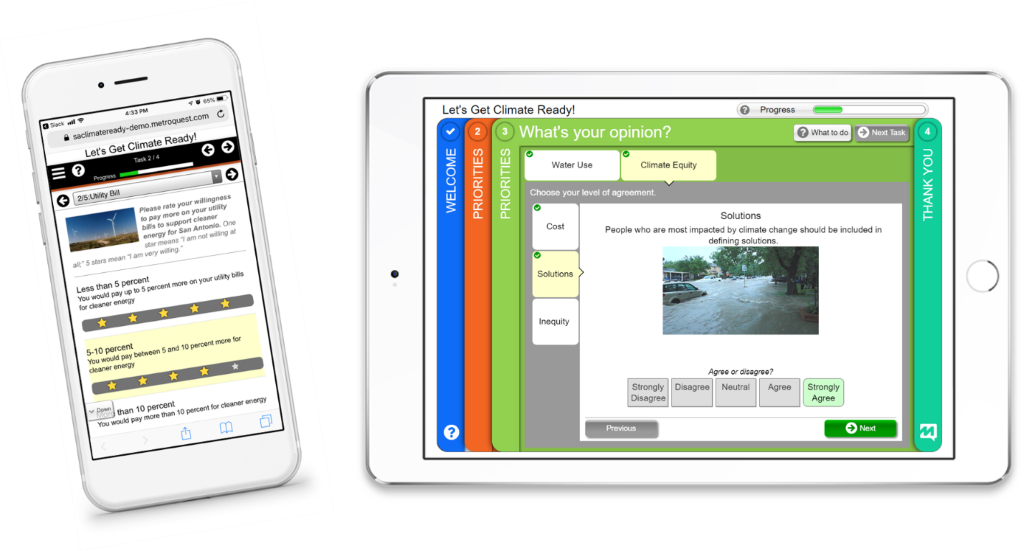
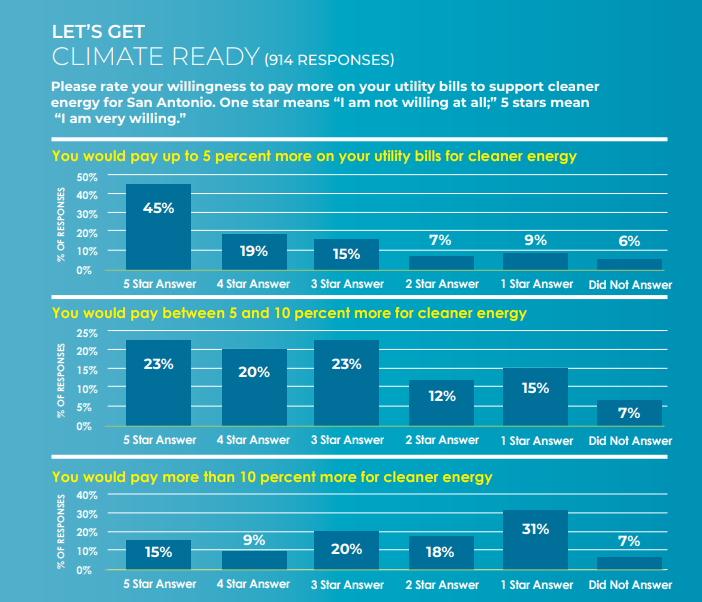
    The online community engagement through MetroQuest asked community members a number of questions, from rating their willingness to adopt cleaner energy choices to indicating the importance of specific factors in their decision-making process, such as cost or convenience.

    Their MetroQuest survey also asked what San Antonio should focus on with topics ranging from energy use and clean energy to questions about alternatives to driving GHG emitting cars including public transit, active transportation, and electric vehicles. It directly gauged the public’s willingness to adopt different strategies in each category as well as factors influencing their current and future decision making. You can try out a demo version of their survey here:

    Almost a thousand participants were engaged online and nearly 30,000 data points were collected with San Antonio’s MetroQuest survey!

    Not only did they receive buy-in from the community beforehand, but the participants actively helped to create the plan to move San Antonio forward. In the report that followed, the Mayor of San Antonio, Ron Nirenberg, stated:

    “Throughout the SA Climate Ready process, people from across the community have helped craft a sustainable community approach by examining best practices and policies around how we build; how we power our homes, cars and businesses; how we travel; how we conserve water and green space; how we reduce air pollution; and, perhaps most importantly, how we take care of our most vulnerable neighbors.”

    The results of the online community engagement through MetroQuest is reaffirming; almost 65% of people would be willing to pay 5% more on their utility bill for cleaner energy, almost 45% even up to 10% more. Cost of electric vehicles as well as availability of infrastructure such as charging stations were important factors for almost 2/3 of the respondents in their decisions to purchase a car-share or electric vehicle – both factors that a government could address with incentives or initiatives now that they are aware of these potential hindrances.

    As the report also notes, the “successful implementation of the CAAP will require participation from all members of San Antonio’s community.” So, it’s logical to include as many members of the community in creating the CAAP in the first place via effective public engagement.

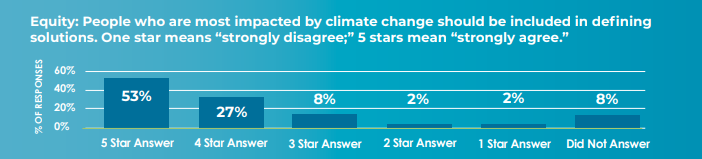
    The members of the community that were engaged using the MetroQuest survey clearly agree: in fact, 80% of people either chose ‘strongly agree’ or ‘agree’ with the statement that “people who are most impacted by climate change should be included in defining solutions.” The full results from the MetroQuest survey can be found in Appendix II.

    Online community engagement serves agencies who are looking for community input while satisfying the desire from the community to be a part of the solution. For the hot topics of today (there’s the pun again) that cannot succeed without the participation of the general public – like climate change adaptation and mitigation – online community engagement is a logical step to both inform and engage a community on possible strategies before embarking on implementing them. Public engagement early in the planning process is key to effective climate change action.

  • MTA New York City Transit Adopts MetroQuest to Enhance Engagement

    MTA New York City Transit Adopts MetroQuest to Enhance Engagement

    The Metropolitan Transportation Authority (MTA) operates New York City Transit, which is the busiest and largest transit system in North America and serves a staggering 8 million trips per day. Planning and maintaining a transit system of this magnitude requires effective community engagement. That’s why MTA has turned to MetroQuest to both broaden the reach of public engagement and collect informed and constructive input to support its planning efforts.

    MTA, like many agencies across the country, was seeking to boost participation rates to collect input from a broad and diverse demographic to inform its plans. Transit riders may be one of the most difficult to reach audiences and low participation rates are common. That’s why MTA turned to MetroQuest to take public engagement online.

    As Ryan Zatlin, Senior Transportation Planner at New York City Transit put it, “The goal with public outreach is always to receive feedback from a high number of participants that are representative of the community. For a variety of reasons, that doesn’t always happen. We’re hoping that MetroQuest’s unique interface and interactive features can help broaden our audience and increase participation from our regular customers.”

    Traditional methods like public workshops tend to attract only a select few participants, primarily those who have the extra time in the evenings. Looking to enhance participation, MTA tried a variety of other online survey platforms, but the results were disappointing.

    As Zatlin states, “Despite marketing efforts, we can often have less than 1,000 participants in a city of 8 million people, which is likely not representative of the demographic makeup of the population.”

    MTA was particularly aware of the narrow demographic that tends to participate in their outreach activities.

    Zatlin stated that MTA, “wanted broader demographic representation and greater participation from average citizens and regular transit users, who, perhaps, are unable to make it to public meetings, or find conventional online surveys time consuming and uninteresting.”

    With the launch of an ambitious series of Bus Network Redesigns for each of the City’s five boroughs, the agency chose MetroQuest to enhance online participation. The agency was seeking a highly interactive tool with plenty of opportunities for public input. They were also keenly aware of the complex choices and tradeoffs facing the agency and were looking for an engagement platform that was up to the task. They became inspired after seeing how LA Metro used a MetroQuest survey to engage over 6,000 participants on budgeting priorities, tradeoffs, and mapping out areas in need of transit improvements. MTA agreed that this type of highly visual and interactive approach was perfect for their needs.

    As Zatlin states, “A bus network redesign is a huge effort that can be difficult to clearly communicate to the public. While there is a time and place for conventional survey tools, we were looking for a platform that would allow us to educate our customers on important concepts, effectively communicate our plans to the public, and receive detailed feedback on the issues that matter most to them. MetroQuest does all this with one simple, intuitive interface.”

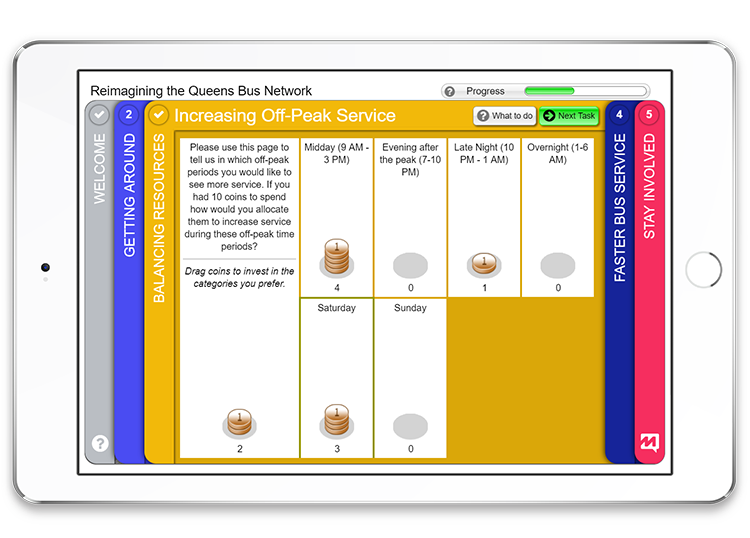
    The Bus Network Redesigns started with Bronx (see demo survey), then on to Queens (see demo survey), Brooklyn, Manhattan, and Staten Island. While it’s still early in the outreach process, the plan seems to be working with over 2000 participants already and climbing quickly.

    Each project will involve a series of 3 to 4 surveys coinciding with the phases of the planning process. The first surveys will start at a high-level, focusing on frequency versus coverage, more or less stops, and other key tradeoff questions to educate about constraints and collect input on public preferences. From there, as the planning process moves forward, the survey questions and the interactivity will hone in on increasingly specific planning options.

    Zatlin states, “Given that MetroQuest provides a variety of screens to communicate and collaborate with the public, we hope to use it throughout the different stages of our Bus Network Redesigns, as we move from borough to borough.”

    We are thrilled that MTA has adopted MetroQuest to enhance its online public engagement. Given the match between MetroQuest’s capabilities and the public engagement goals of the agency, we are confident that MetroQuest will quickly become a standard component of MTA’s outreach efforts.


  • How to Engage Residents in Sustainable Transportation Planning

    How to Engage Residents in Sustainable Transportation Planning

    With climate change becoming an increasingly important issue, we’ve seen several transportation planners use the dynamic features of MetroQuest to take action! We would like to acknowledge the San Diego Regional Planning Agency (SANDAG), Chicago Metropolitan Agency for Planning (CMAP), Southwestern Pennsylvania Commission (SPC), and the Office of Intermodal Planning and Investment (OIPI) for their sustainability planning initiatives and contributions to making the world a better place.

    San Diego Regional Planning Agency (SANDAG)

    SANDAG used their MetroQuest Site to gain feedback on their environmentally focused 2019-2050 Regional Plan. Each MetroQuest Site contains a Welcome Screen, a Wrap Up Screen, and three additional question screens to suit the needs of the project (selected from 14 available Screen templates). SANDAG selected the Priority Ranking Screen, the Scenario Rating Screen, and the Tradeoffs Screen in their MetroQuest Site allowing them to both educate and collect valuable input from the public!

    The Priority Ranking Screen allowed San Diego residents to rank five of the seven available priorities, such as climate change and public health, and to provide input on which they viewed as the most important issues to address. This allowed SANDAG to gain insight into the perspectives and preferences of the public, and learn what initiatives they should direct more attention to now and in the future.

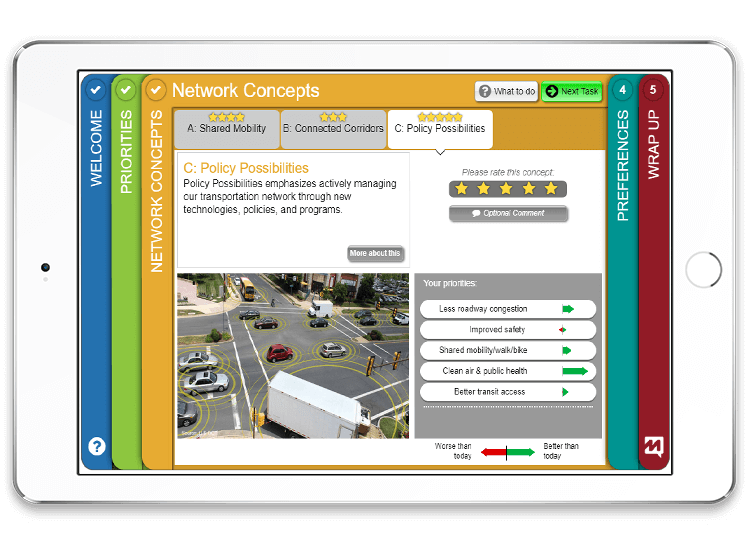
    The Scenario Rating Screen gave participants the ability to rate the three possible network concepts, and illustrate the extent to which each solution addressed their priorities on the Priority Ranking Screen. Residents were able to compare strategies, see the pros and cons of each, and then weigh in by rating each scenario.  This Screen let participants gain an understanding of each option in just a few minutes before they voiced their opinions. For SANDAG this meant trustworthy and actionable data!

    The Tradeoffs Screen was used to educate residents about critical decisions facing planners and collect feedback on the most preferable transportation options. Due to budget constraints implementing every project is simply not possible, but with their MetroQuest Site, SANDAG can better address the future needs of San Diego residents, all while minimizing harm to the environment.

    Chicago Metropolitan Agency for Planning (CMAP)

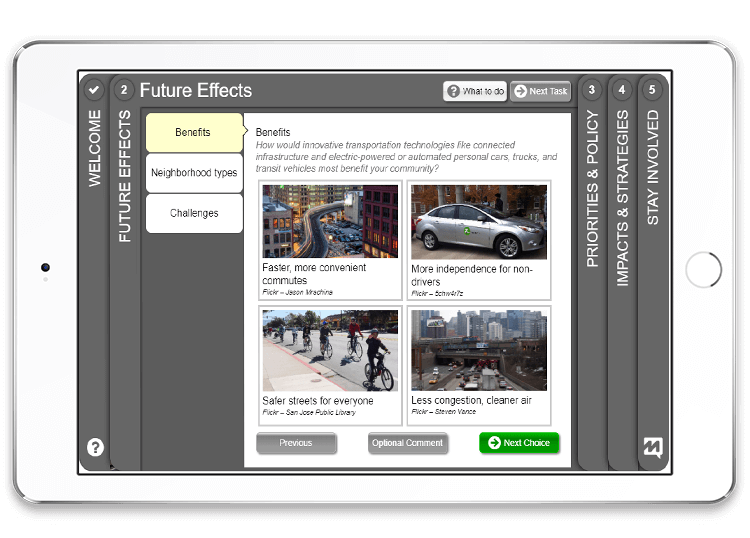
    CMAP project Alternative Futures: Innovative Transportation is another great example of environmentally friendly transportation planning! CMAP chose the Image Rating Screen and two Standard Survey Screens to gather informed input on how new transportation technologies will affect individual citizens.

    The dynamic Visual Preference Screen asked participants three crucial questions: 1. what technological advancements would benefit your community most? 2. where would you live if your commute was more convenient? and 3. what are your concerns with new transportation technologies? The Visual Preference Screen offered valuable insights into the technological advancements necessary and where they should be implemented.

    The two Standard Survey Screens allowed residents to share their preferences regarding future transportation options, and gave CMAP insight into how to ensure equitable access to technology, reduce congestion, and expand parking options. Additionally, the Standard Survey Screens aided CMAP in solving a problem that many of us in transportation planning face – how to keep public transit competitive with new technology.

    Southwestern Pennsylvania Commission (SPC)

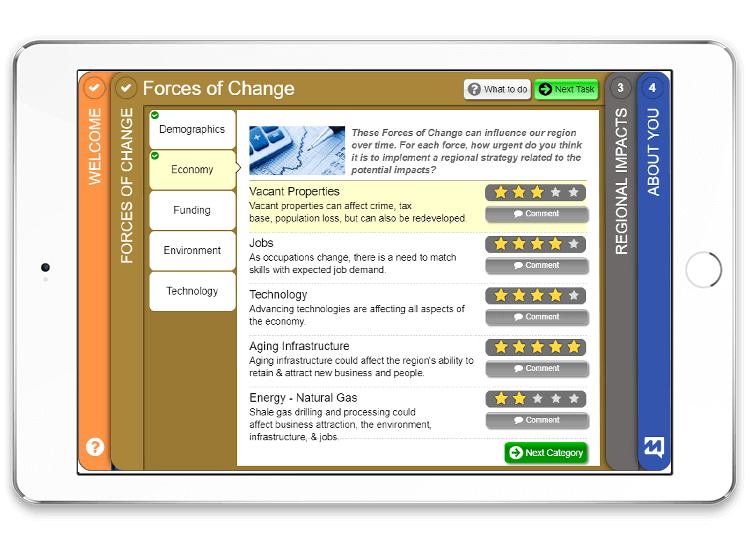
    SPC launched the innovative Forces of Change survey, which embraced change by asking the public’s input on how to best cope with the external forces facing their future. Their MetroQuest Site reviewed several different factors, such as: population changes, new energy, and aging infrastructure. With new technologies being one of the categories, this survey offered valuable data needed to construct a better future, and incorporated a Strategy Rating Screen and a Standard Survey Screen.

    The Strategy Rating Screen asked participants to examine a range of areas that many be impacted by external forces and weigh in on the urgency of each one using a quick star rating. On the Standard Survey Screen participants answered questions on which communities they believed will be most and least impacted by a range of external forces including the environmental and technological change.

    Office of Intermodal Planning and Investment (OIPI)

    OIPI used MetroQuest to enhance their knowledge of public preferences as they planned for the green future of transportation in their VTrans2040 survey. Vtrans2040 used two Priority Ranking Screens to ask residents what they believed were the three biggest opportunities and concerns with emerging transportation technologies, such as autonomous vehicles and mobility-on-demand services.

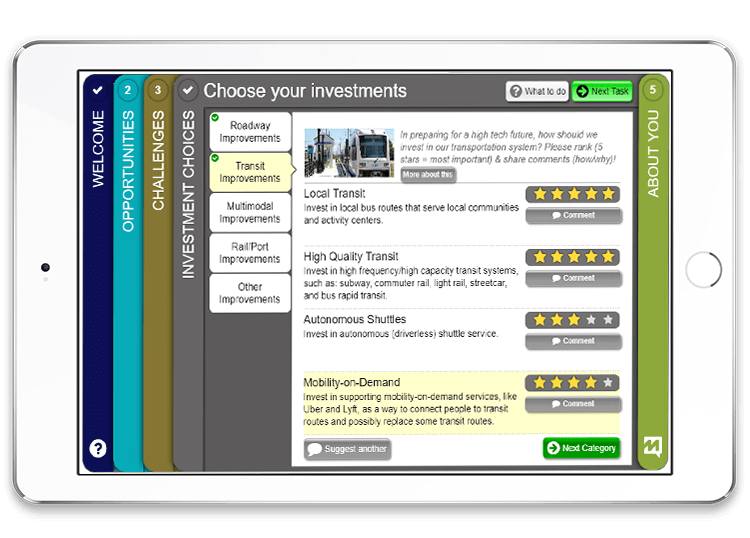
    The Strategy Rating Screen allowed OIPI to gain insight into how Virginia residents thought they should invest in the transportation system. Participants rated potential improvements on a scale of one to five, with “five” being the most important. Additionally, the Strategy Rating Screen gave OIPI a greater understanding of the wishes and needs of residents, which projects to prioritize, and where they should allocate resources.

    Thank you San Diego Regional Planning Agency, Chicago Metropolitan Agency for Planning, Southwestern Pennsylvania Commission, and the Office of Intermodal Planning and Investment for your proactive efforts to fight climate change and implement environmentally friendly transportation plans. We are looking forward to seeing the implementation of these innovative and environmentally friendly solutions. We’re confident that these public engagement efforts will help to support a bright future for your transportation systems.

  • Colorado DOT Launches MetroQuest Survey to Involve the Public in Statewide Transportation Planning

    Colorado DOT Launches MetroQuest Survey to Involve the Public in Statewide Transportation Planning

    We are thrilled to welcome the Colorado Department of Transportation (CDOT) as the newest member of the MetroQuest community.

    CDOT is responsible for the transportation network in the eighth fastest growing state. With so much change occurring, CDOT takes public involvement seriously and is wasting no time in making use of MetroQuest. The team has already collected informed input from over 1,225+ people in less than a week and anticipate that many more thousands will follow. The agency is seeking public input on how to spend taxpayer dollars to plan for rapid growth by prioritizing transportation investments that will move more people and goods, safely and efficiently.

    CDOT started its MetroQuest subscription with a BANG by launching its first public survey for a project called “Your Transportation Plan”

    Watch this 1-minute YouTube video to learn about agency’s new 10-year strategic transportation planning effort:

    Public input collected with this MetroQuest survey will help inform which investments are made over the next 10 years across all modes of transportation, including trains, planes, automobiles, bikes, pedestrians, freight, and more. CDOT Executive Director Shoshana M. Lew described the project in a press release:

    “This process builds on Colorado’s tradition of grassroots engagement to take a fresh look at our transportation investment priorities and ask people across Colorado what matters to their lives and what infrastructure can do to get them there … Thank you for joining us as we think broadly and build a plan that provides connections, choice, and a Colorado for all.”

    A clever video, press release, and press conference have kickstarted the promotional campaign. During the press conference, Lt. Governor Dianne Primavera addressed residents,

    “This is an incredible opportunity for Coloradoans to join us at the table, and identify specific transportation projects for CDOT to consider that will directly improve your community. With your engagement we can create your transportation plan, ensuring that Colorado has the connections and choice that help our state thrive.”

    Let’s take a look at the highly engaging public survey they customized using MetroQuest! You can either explore the screenshots that follow or try the DEMO survey here (note that your responses will not be included in final survey data).

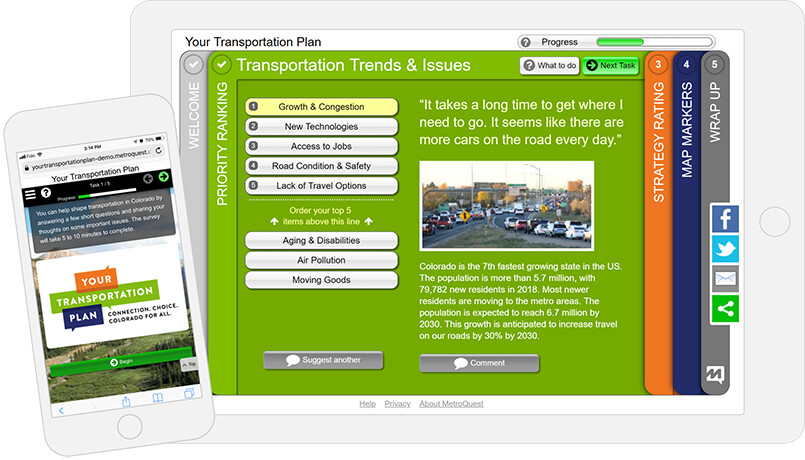
    After a short description of the project on the first Screen, CDOT is using the MetroQuest Priority Ranking Screen to educate the public about the state’s top transportation issues, while asking Coloradans which should be prioritized.


    “Part of the reason we’re doing this is to have an active conversation with people about the challenges they have and how you can solve them with different types of transportation,” said CDOT Executive Director Shoshana Lew at Friday’s press conference.


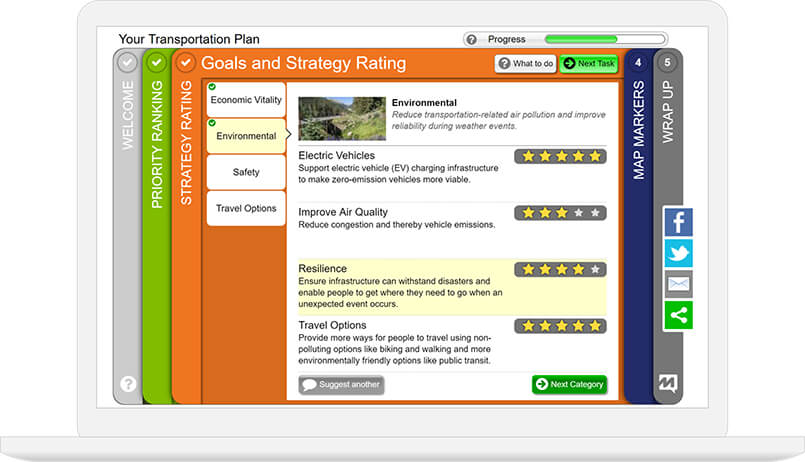
    In the next MetroQuest Screen, Coloradans are rating their preferred goals and transportation strategies. When the survey closes in August, CDOT will have a clear understanding of how residents across the state would like to see transportation options evolve. The CDOT team will know whether residents would like to see investments made in infrastructure to support electric vehicles, or to extend travel options for cyclists, pedestrians, transit users, or to fund a host of other transportation priorities.

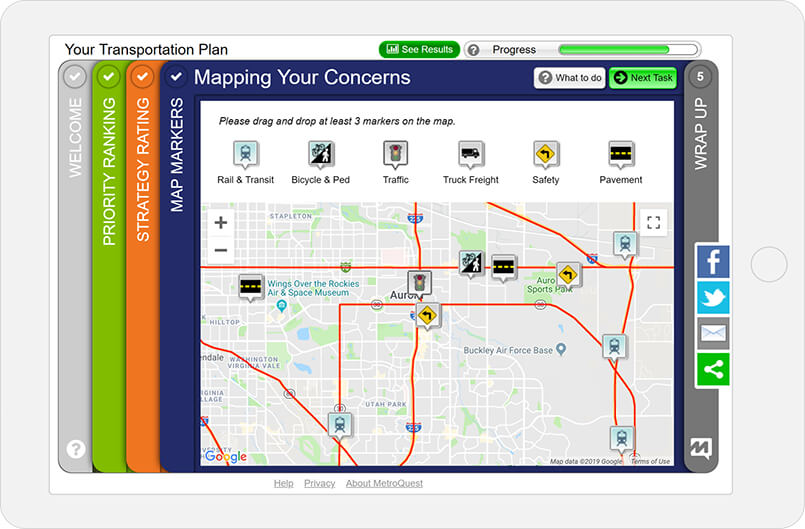
    On the last interactive Screen, participants are zooming into a map of Colorado and adding map markers to identify areas of concern. They are informing CDOT of safety issues, poor pavement conditions, missing rail or transit options, and areas that could benefit from bicycle and pedestrian options.


    The last MetroQuest Screen is collecting demographic information. This data will empower CDOT to ensure that it has reached a broad audience by age, ethnicity, and geography before the survey closes. We look forward to keeping an eye on the growing engagement numbers until then.

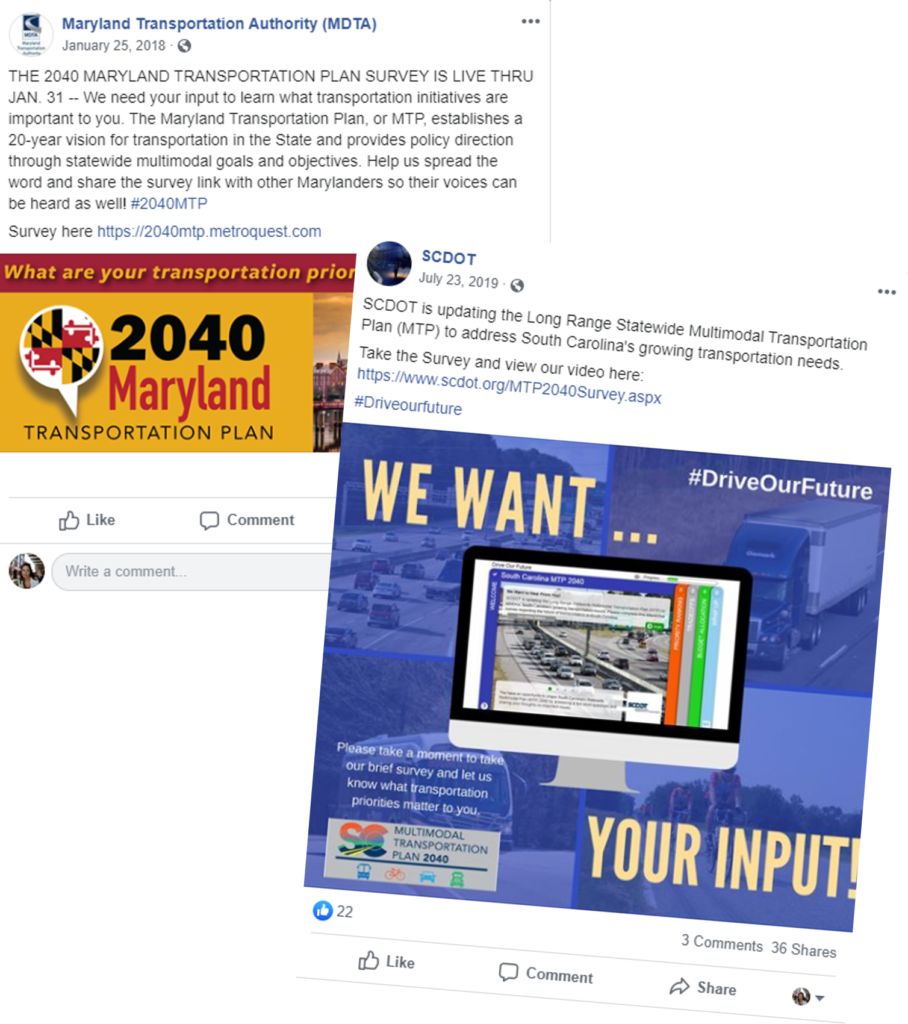
    CDOT joins a long list of State Department of Transportation (DOTs) that subscribe to MetroQuest to offer both educational and engaging online public involvement experiences. The list includes Texas, Maryland, Maine (and all its MPO’s), Oklahoma, South Carolina, Kansas, and North Carolina (with all 36 of its MPOs and RPOs).

    Our team at MetroQuest extends a warm welcome to the entire team at CDOT! We wish you outstanding public involvement success with this first survey and the many more to come.