Tag: public participation

  • Top Canadian Public Engagement Projects of 2020

    Top Canadian Public Engagement Projects of 2020

    The Planning Partnership Launched 7 MetroQuest Surveys in 2020

    The Planning Partnership Ltd. (TPP), a consulting firm located in downtown Toronto, launched 7 MetroQuest surveys this year for a wide range of projects for both their public and private sector clients. The firm knows the recipe for crafting engaging online surveys to drive high levels of public participation, facilitating a collaborative approach to planning and providing decision-makers with comprehensive input to develop effective solutions for their clients.

    Congratulations to TPP for launching so many effective online surveys over the last few months! Your efforts and success are a testament to the fact that great community engagement is possible with the right tools and expertise, even during a global pandemic with mandates preventing in-person public meetings.

    WSP Canada Helps the City of Ottawa Make Important Transportation Decisions

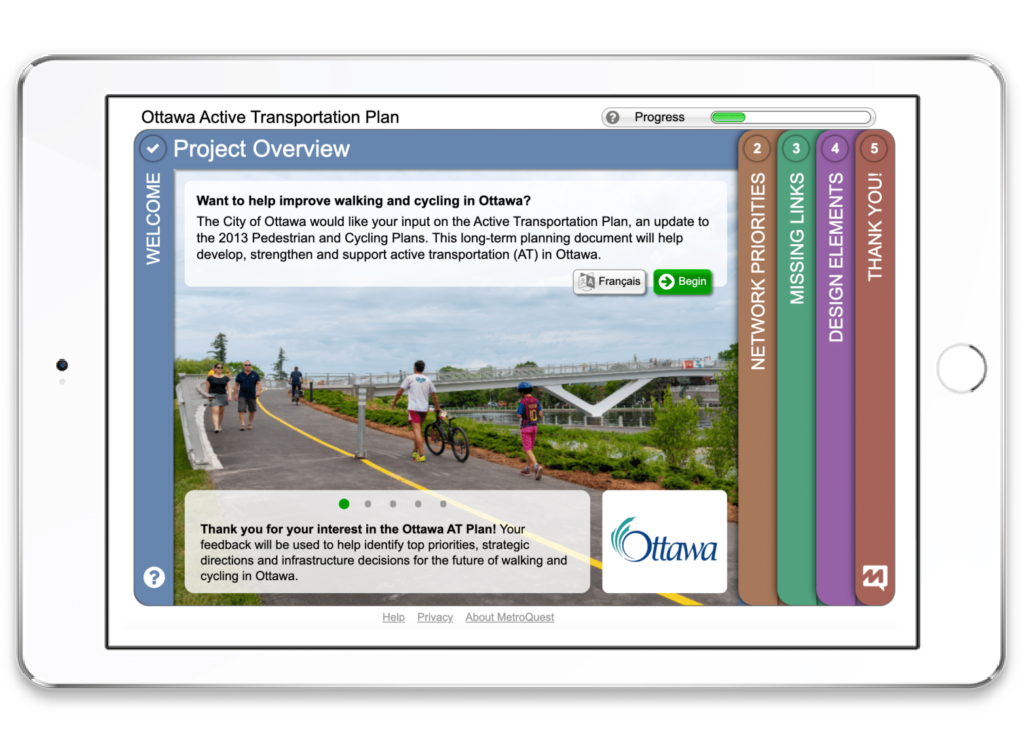
    WSP Canada, one of the country’s leading professional services consulting firms, has launched several MetroQuest surveys this year! One project that specifically stood out was their work for the City of Ottawa in helping them update their Active Transportation Plan. With a MetroQuest survey, available in both English and French, the firm engaged over 1,000 participants to help Ottawa set a direction for day-to-day transportation programs and become the most livable mid-sized city in North America.

    WSP Canada MetroQuest Survey

    Planners at WSP Canada did an incredible job crafting the online survey to ensure participants were both well-educated and engaged about important transportation decisions. The firm was able to gather thousands of data points as a result, which helped Ottawa identify the community’s top priorities, strategic directions and infrastructure decisions for the future of walking and cycling in the City. Congratulations to both WSP Canada and the City of Ottawa! We look forward to seeing more of your incredible public engagement accomplishments in 2021.


    These are just some of the incredible community engagement projects that Canadian planning firms and government agencies have led this year. If you would like to see more exceptional surveys, please feel free to reach out and let us know! We’d be happy to provide you with examples to help you get inspired for your upcoming projects. You can also explore some additional sample surveys here.

    In the meantime, and on behalf of everyone at MetroQuest, I want to say congratulations to ALL Canadian planners! We hope these examples inspire you. We wish you great engagement in the upcoming months and look forward to hearing about your public engagement success in 2021.

    At MetroQuest, we are consistently blown away by the exceptional community engagement results our clients report, especially this year when facilitating remote community engagement activities has essentially been the only option. We are very proud of the way government agencies and planning firms all over the nation have taken the complications of 2020 in stride!

    Today, we want to take some time to highlight some of the incredible public initiatives we’ve seen over the last few months, specifically in Canada! With our company roots in the ‘neighbor to the north’, we are elated when new Canadian customers come on board and when we receive public engagement success stories from our fellow ‘Canucks’.

    Join us as we explore some of the amazing planning projects our Canadian customers have led this year!

    The City of West Kelowna Sets Out Their Desired Destination for the Future

    To begin with, The City of West Kelowna recently crafted a number of delightful MetroQuest surveys to support #OURWK, the City’s community vision for 2040! After collecting input from thousands in the community with over 10 online surveys this year (and counting!), the City developed a preliminary vision that truly reflects the public’s vision for the future of West Kelowna.

    West Kelowna MetroQuest Survey

    The draft vision found on the City’s website says it wonderfully: “While we cannot predict every change that will come our way in the next 20 years – setting and sticking to a bold Community Vision gives us a powerful lens for making thoughtful decisions.” Congratulations to the City of West Kelowna for all your hard work. Your engagement efforts are inspiring, and we wish your community the best as you begin working together to make your vision for the future a reality!

    LURA Consulting Engaged Over 7,400 Participants for Yonge TOmorrow

    LURA Consulting, a Canadian leader in collaborative planning, consistently blows us away with their community engagement results. This year we are particularly thrilled to hear about their incredible success while working with the City of Toronto!

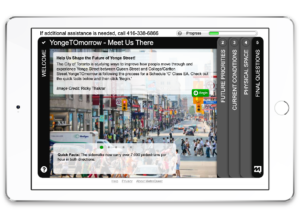
    Yonge Street in the heart of downtown Toronto is consistently booming with development, construction and pedestrian traffic. In an effort to find ways to increase space and improve the area, the team at LURA launched three MetroQuest surveys for ‘Yonge TOmorrow’ and engaged over 7,400 participants over the course of the project! The City is now working to bring the public’s recommendations into fruition thanks to the firm’s hard work in successfully engaging the community. You can check out one of the three interactive online surveys from the project below. Congratulations to LURA Consulting – keep up the incredible engagement! LURA Consulting Engaged Over 7,400 Participants for Yonge TOmorrow

    The Planning Partnership Launched 7 MetroQuest Surveys in 2020

    The Planning Partnership Ltd. (TPP), a consulting firm located in downtown Toronto, launched 7 MetroQuest surveys this year for a wide range of projects for both their public and private sector clients. The firm knows the recipe for crafting engaging online surveys to drive high levels of public participation, facilitating a collaborative approach to planning and providing decision-makers with comprehensive input to develop effective solutions for their clients.

    Congratulations to TPP for launching so many effective online surveys over the last few months! Your efforts and success are a testament to the fact that great community engagement is possible with the right tools and expertise, even during a global pandemic with mandates preventing in-person public meetings.

    WSP Canada Helps the City of Ottawa Make Important Transportation Decisions

    WSP Canada, one of the country’s leading professional services consulting firms, has launched several MetroQuest surveys this year! One project that specifically stood out was their work for the City of Ottawa in helping them update their Active Transportation Plan. With a MetroQuest survey, available in both English and French, the firm engaged over 1,000 participants to help Ottawa set a direction for day-to-day transportation programs and become the most livable mid-sized city in North America.

    WSP Canada MetroQuest Survey

    Planners at WSP Canada did an incredible job crafting the online survey to ensure participants were both well-educated and engaged about important transportation decisions. The firm was able to gather thousands of data points as a result, which helped Ottawa identify the community’s top priorities, strategic directions and infrastructure decisions for the future of walking and cycling in the City. Congratulations to both WSP Canada and the City of Ottawa! We look forward to seeing more of your incredible public engagement accomplishments in 2021.


    These are just some of the incredible community engagement projects that Canadian planning firms and government agencies have led this year. If you would like to see more exceptional surveys, please feel free to reach out and let us know! We’d be happy to provide you with examples to help you get inspired for your upcoming projects. You can also explore some additional sample surveys here.

    In the meantime, and on behalf of everyone at MetroQuest, I want to say congratulations to ALL Canadian planners! We hope these examples inspire you. We wish you great engagement in the upcoming months and look forward to hearing about your public engagement success in 2021.

  • How Maryland DOT used MetroQuest and Paid Social Media to Triple Public Engagement Numbers

    How Maryland DOT used MetroQuest and Paid Social Media to Triple Public Engagement Numbers

    Combining an engaging online survey with a social media strategy has proven to be a successful approach to promoting community engagement opportunities online and achieving exceptional results. Intriguing social media posts can help guide individuals to your project site and an engaging platform, like an online survey, converts site visitors into actual participants.

    The Maryland Department of Transportation (MDOT) has mastered both elements, excelling at both social media strategy and online survey creation! They continually engage thousands in their LRTPs and transit plans. In their recent public engagement outreach for the 2040 Maryland Transportation Plan, the team was able to gather public input from over 5,900 participants!

    Read on as we explore how the agency used an online MetroQuest survey and paid social media to engage 1000s across the State and uncover the public’s top priorities for an important State plan.

    MDOT’s Transition to Online Public Engagement

    Every 5 years, MDOT updates the Maryland Transportation Plan (MTP), which establishes a 20-year vision for multi-modal transportation in the State. The policy-based plan focuses on transportation needs, goals, objectives, policies and plans, and outlines transportation policies, priorities and investment decisions.

    In the past, MDOT used traditional public outreach methods and strategies to gather public input to update the transportation plan. Traditional, in-person engagement, however, proved to be expensive, time-consuming and ineffective. At some meetings, staff members outnumbered stakeholders 5 to 1! It was also very challenging to engage the public about conceptual and complex transportation issues during in-person meetings.

    For their most recent MTP update, MDOT revamped their outreach strategy and used a MetroQuest survey, available in both English and Spanish, and social media to significantly increase their online participation and enhance the public engagement experience for the community. Let’s dive into the strategies that led to their success with social media.

    How MDOT Designed an Effective Survey for the 2040 Maryland Transportation Plan

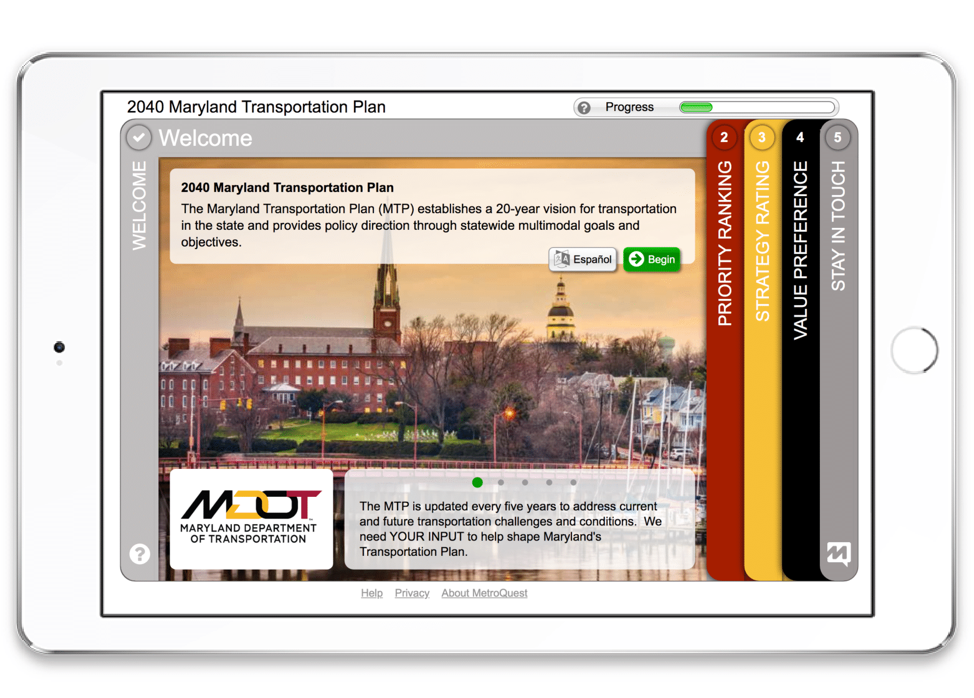
    Using a MetroQuest online survey, MDOT obtained informed community input about transportation to help update the 2040 MTP.

    Maryland DOT MetroQuest Survey Demo

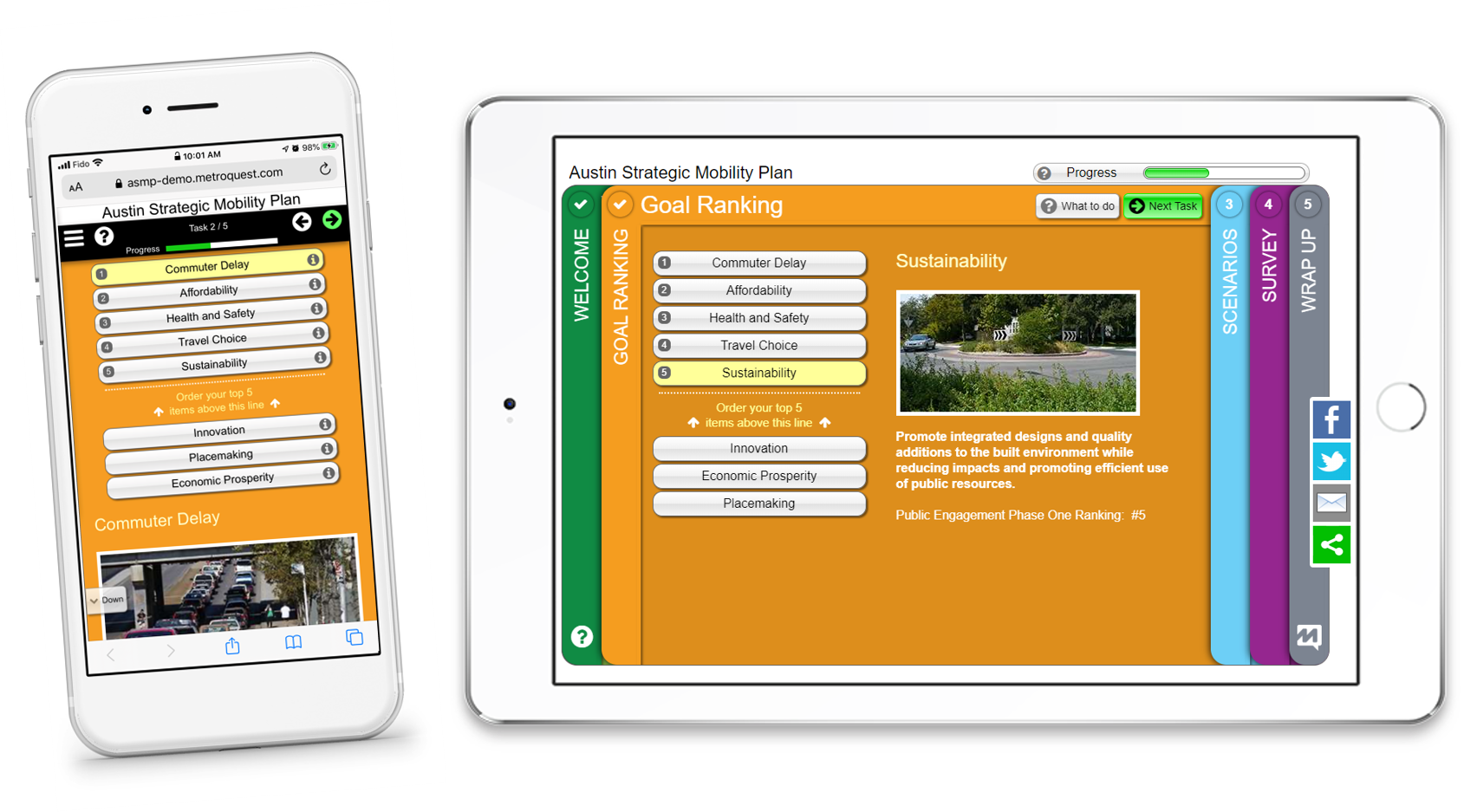
    Participants were asked to identify their top 5 transportation priorities out of a list of 8, and later rate strategies that directly corresponded to those priorities. As the survey states, “identifying the transportation priorities for Maryland helps MDOT set the strategic direction to preserve, maintain, and expand our multimodal transportation system”.

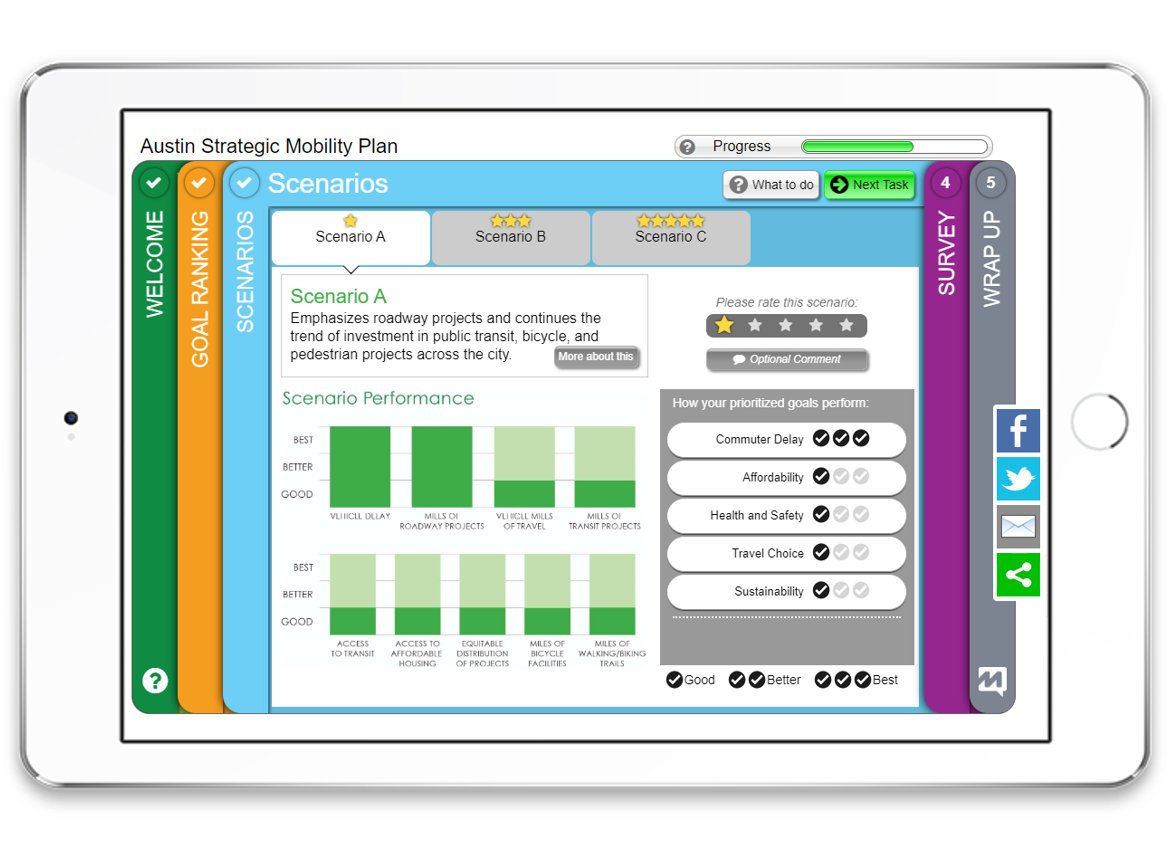
    MDOT identified the strategies as viable plans for improving the transportation system in the State. The team used a combination of the Priority Ranking Screen and the Strategy Rating Screen to provided respondents with a tailored online experience and allow MDOT to collect more meaningful data about whether or not the community agreed with prospective strategies.

    Compared to the traditional outreach strategies that were used previously to gather input and update the plan, the MetroQuest survey gave the community a safe and engaging online experience, providing the agency with quantifiable data and informed input they could trust to update the plan! Paired with social media, this provided MDOT with an effective combination of actionable public input and wide-reaching promotional strategy.

    Using Social Media to Boost Public Engagement for Maryland’s MTP

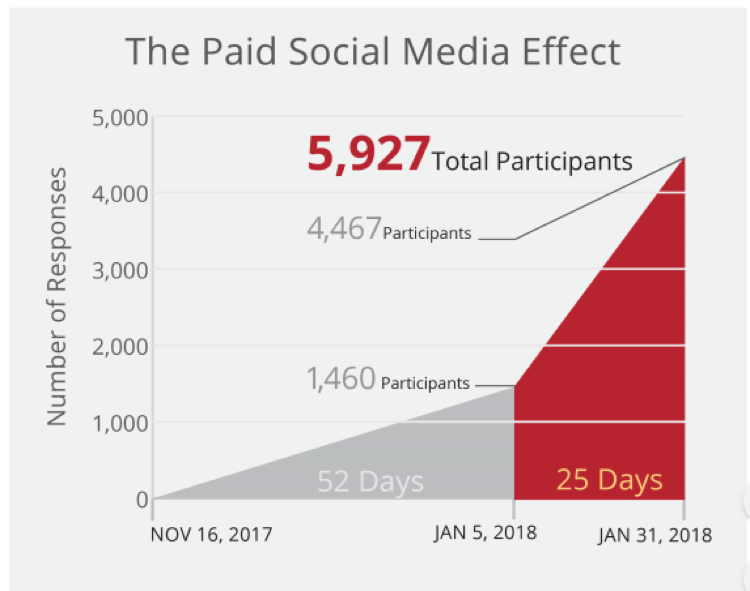
    To increase survey participation, MDOT integrated both organic and paid social media into their outreach strategy. Along with email blasts and posts on both the project site and MDOT’s website, the agency primarily used Facebook, Instagram and Twitter to share and promote the survey and encourage the public to participate in the plan. These efforts quickly proved to be successful, with nearly 1,500 participants providing feedback within the first 2 months!

    MDOT used targeted Facebook ads to increase survey participation throughout the State and received an incredible return. Let’s take a look!

    Using Social Media to Boost Public Engagement

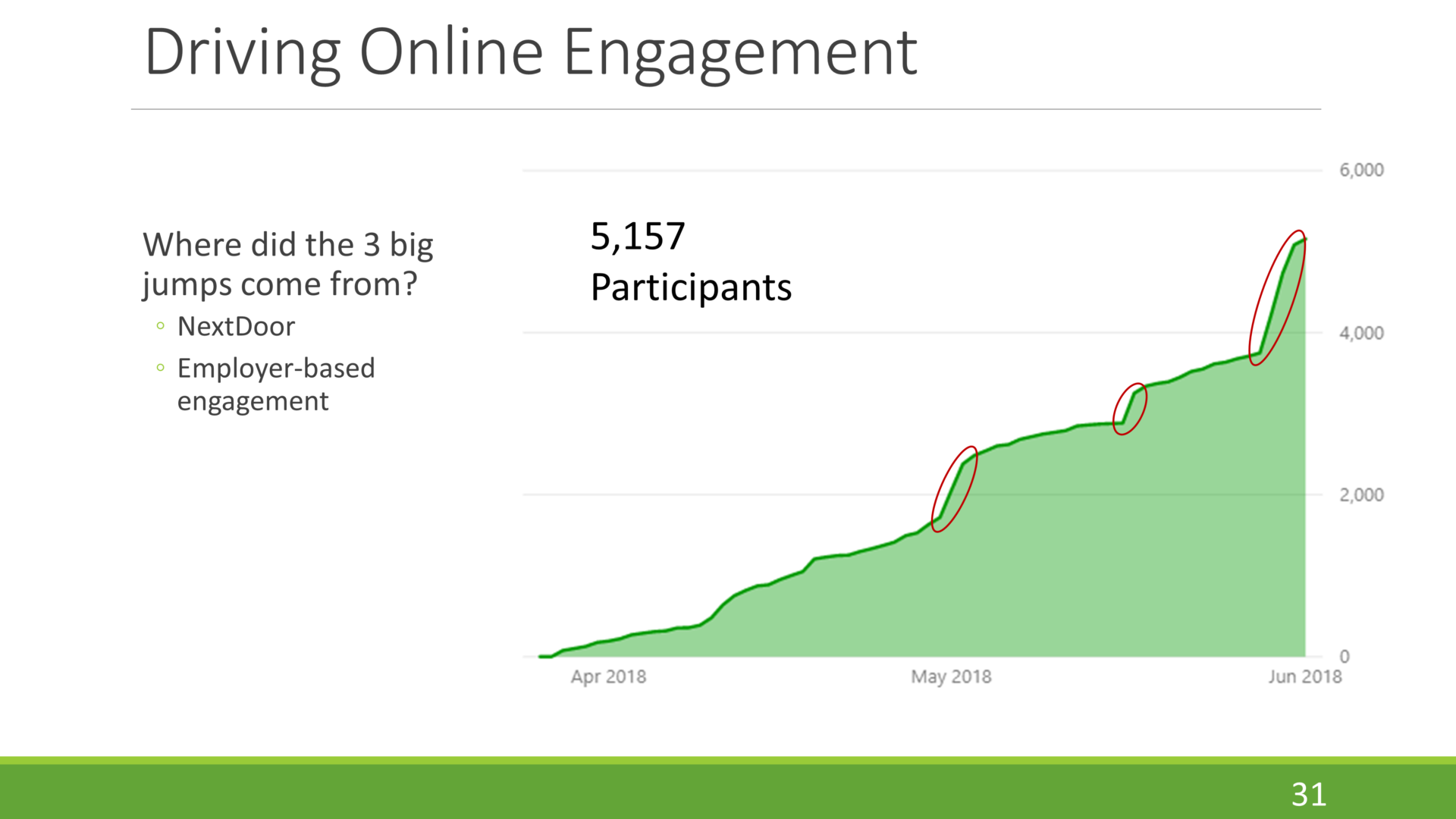
    As addressed in a webinar with MetroQuest, the agency was able to triple the number of survey responses in half the number of days by incorporating interactive Facebook ads into their outreach plan. The effectiveness of paid ads is very evident in the graphic above; the agency engaged over 3,000 participants in just 25 days by promoting their MetroQuest survey with Facebook.

    As the panel explains in the webinar, eye-catching ads intrigued social media users. The agency also targeted specific demographics and geographic areas to help convert more people into participants and attempt to match the State’s diverse demographics. To learn about the top tips of using Facebook to effectively promote your public engagement survey, check out our recent blog.


    By combining MetroQuest and social media, MDOT engaged nearly 6,000 survey participants, received over 500,000 total impressions online, reached over 190,000 people and obtained 300 shares on Facebook. The agency also was able to significantly grow participation in geographic and demographic areas where participation was traditionally very low.

    Congratulations to MDOT for cracking the code and achieving incredible public engagement results online!


    To learn more about MDOT’s project and outreach strategies for growing participation online and achieving engagement success, check out our on-demand webinar here.

    Webinar: Transit Plans to LRTPs – MDOT’s Formula for Engaging 1000s

    Transit Plans to LRTP – MDOT’s Formula for Engaging 1000s

    How do we engage the public to gather meaningful input? Maryland DOT has cracked the code! Learn how you can engage 1000s on a full range of public outreach projects.

  • Increased Public Participation in Transit Planning Builds Support for Sustainable Transportation

    Increased Public Participation in Transit Planning Builds Support for Sustainable Transportation

    From the very beginning, we at MetroQuest have made it our mission to deliver great online public engagement experiences that broaden outreach to meaningfully include the public in planning more livable places and moving more people. We always love to see great online surveys used to engage the public in transit planning!

    After all, it’s perfectly logical to collect community input since transit is a public transportation system, by definition, designed to move the public. Indeed, community engagement is a critical aspect of the transit planning process, and we have some a few tips and success stories to inspire you.

    Tip #1: Increase public participation by engaging the public online.

    Transit agencies are particularly brilliant at increasing public participation by extending their outreach programs online. They have a captive audience! While transit goers are not likely to get on the bus or subway to attend a public meeting, they will certainly give agencies five minutes of their time to take a survey from their mobile phone. Online surveys make it easy to engage the public where they are – on their devices, while riding on transit or from the comfort of their homes. We’ve seen transit agencies, from coast to coast, successfully engage thousands online, again and again.

    Tip #2: Collect public input early in the transit planning process.

    It’s important to engage the public early in the planning process, providing people with information and giving them the opportunity to offer feedback. In order to get buy in and gauge interest in a specific public transportation option, for example, it’s crucial that the community learns of its benefits, drawbacks, or tradeoffs before any major planning occurs. This allows planners and decision makers to understand the public’s needs, priorities, and interests to build alternative transportation scenarios.

    Tip #3: Use new ways to reach traditionally underrepresented groups.

    Transit agencies from LA Metro to New York’s MTA are successfully increasing equity and dramatically broadening outreach with online surveys and promotions. Using Facebook and other social media as a promotional channel helps agencies reach groups that aren’t likely to attend a public meeting.

    By engaging traditionally underrepresented groups – including all ages, ethnicities, and incomes – online surveys allow transit agencies to better understand public priorities and design transit to truly meet the needs of people who need it most.

    Broad public input is uncovering public preference for sustainable transportation options, including light rail.

    Perhaps what’s most interesting about public engagement is the results themselves – increased public support for transit and hundreds of thousands of data points to build data-driven transit plans. What public input tells agencies in turn helps planners and decision makers focus on the options that receive the most public support.

    Light rail, one of these options, is fast becoming a popular public transportation favorite and the benefits are wide ranging. According to the Federal Transit Administration, transit in general plays a vital role in contributing positively to sustainability efforts. Rail, more specifically, has a number of environmental benefits, including:

    1. Improved air quality, since most rail transit emits little or no pollution;
    2. Reduced greenhouse gas (GHG) emissions; in fact, light rail produces 62% less GHG than an average single occupancy vehicle;
    3. Overall energy savings due to a lower use of fuel;
    4. A decreased need for infrastructure for and manufacturing of vehicles;
    5. Reduced congestion, which makes life easier for travelers and positively contributes to improved air quality, reduced GHG emissions, energy savings, and fuel savings;
    6. More compact development, which leads to land conservation as well as decreased travel demand;
    7. Economic development; and,
    8. Greater access to affordable mobility.

    Sustainability is a hot topic for most communities. But if planners don’t ask, it’s difficult to uncover definitively what the public wants.

    Let’s look at a case study from the East Coast. Hillsborough MPO in Florida recently used a MetroQuest survey (you can try the demo here) to engage 9,575 residents, who provided nearly 236,000 data points of public input. This data was instrumental in uncovering new insights into local transportation needs and preferences. In an 4-minute interview, the agency’s Executive Director, Beth Alden, shared her delight in uncovering broad public support for light rail:

    “There was so much interest in passenger rail as an option in this survey. I was kind of surprised. And, what that means is we get to keep that kind of technology on the table as we move into our Long Range Transportation Plan.”

    By broadly engaging the public and gathering such amazing amounts of data, Hillsborough MPO discovered that their local community hugely supports light right as a public transit option. This information is allowing them to confidently create transit plans that reflect public opinion.

    In San Francisco, SFMTA increased public participation involving 8,100+ in support of its Central Subway Extension Alternatives Study.

    On the West Coast, San Francisco has already capitalized on the benefits of light rail with its extensive Muni Metro network, the third busiest light rail system in the United States. Faced with projected growth of nearly 1,000,000 residents by 2049, the need to expand their public transit system is becoming ever more critical.

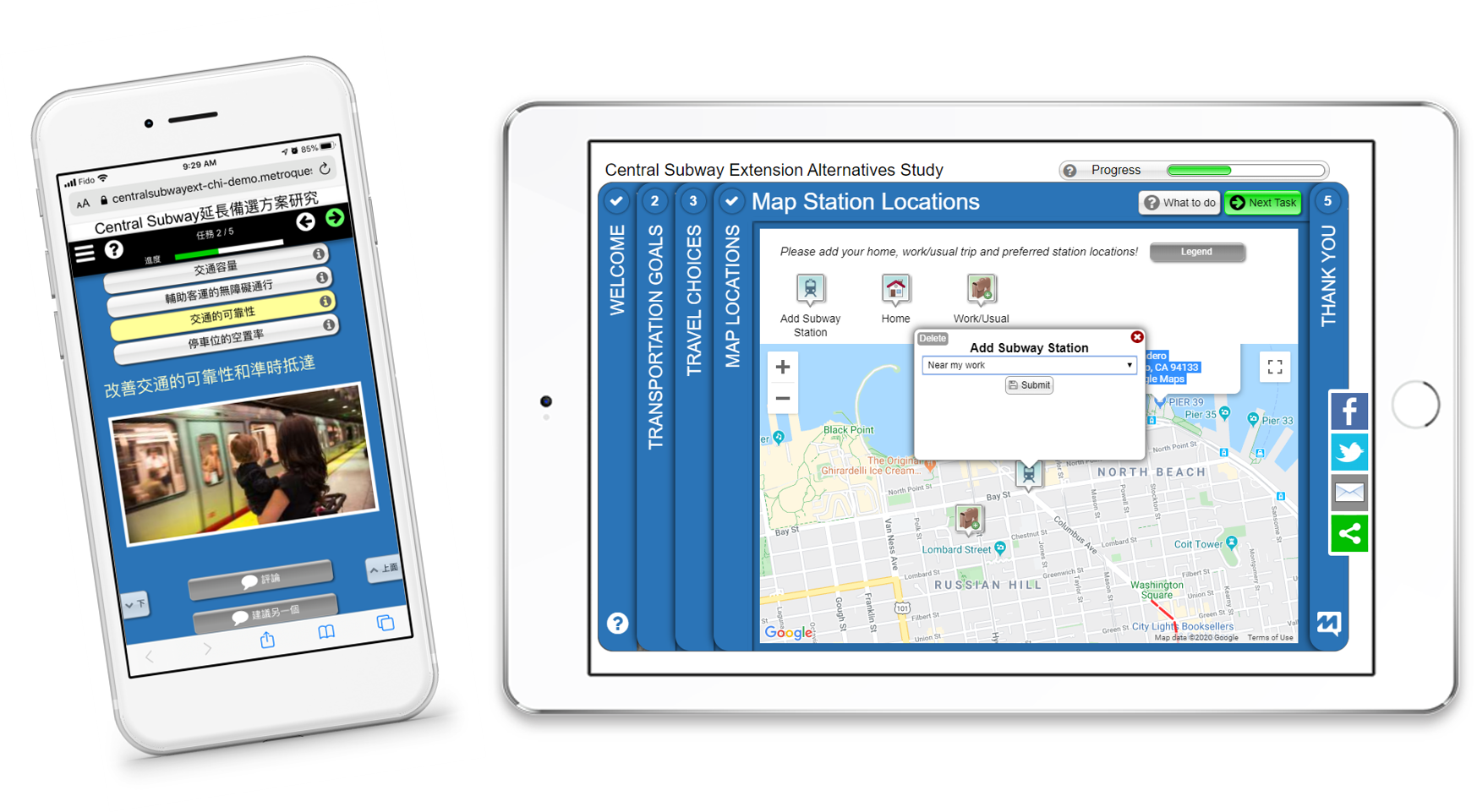
    Recently, the San Francisco Municipal Transportation Agency (SFMTA) used MetroQuest as their digital community engagement survey to inform the public of a possible extension to the Central Subway route. The team needed to gauge the public’s priorities and support for the project. Their survey was part of the preliminary analysis of their forthcoming Central Subway Extension Alternatives Study.

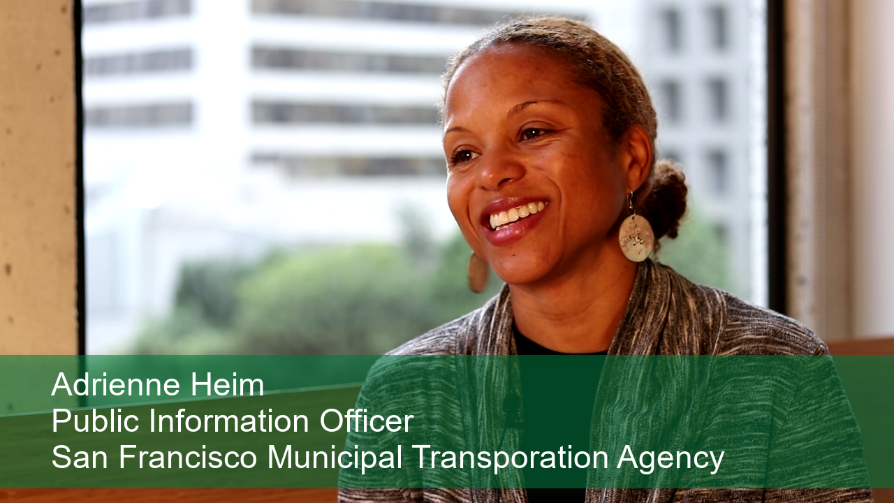
    The goal of SFMTA’s project team was to increase public participation beyond the initial on-the-ground community outreach. In a recent interview, Adrienne Heim, Public Information Officer at SFMTA, described the efforts, “Last year we went out to merchant and neighborhood groups to discuss the study, ask people how they got around the city of San Francisco, their transportation goals, and how the study could incorporate or support some of those goals. That included gathering ideas for routes and station locations.”

    On the ground efforts resulted in the completion of 129 paper surveys. Adrienne next described how going online increased public participation by over 62,000%,

    “The survey results were amazing and well beyond our expectations. Within three days of deploying MetroQuest, we received 1,000 responses, and towards the end of the survey, we received 8,137!”

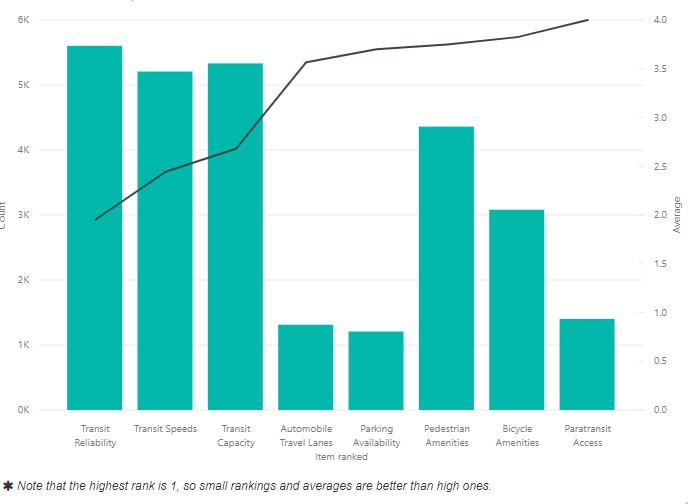
    The survey cleverly asked about transportation goals to get a picture of what the public valued. Respondents who supported travel reliability and capacity building to reduce crowding supported the extension. Fewer prioritized such investments as preserving on-street parking or car travel lanes – these respondent preferred more infrastructure for cars and personal vehicles. Additional goals included accessibility and active transportation, namely bicycle and pedestrian amenities. SFMTA was pleased to share the results with the public, with overwhelming support for transit:


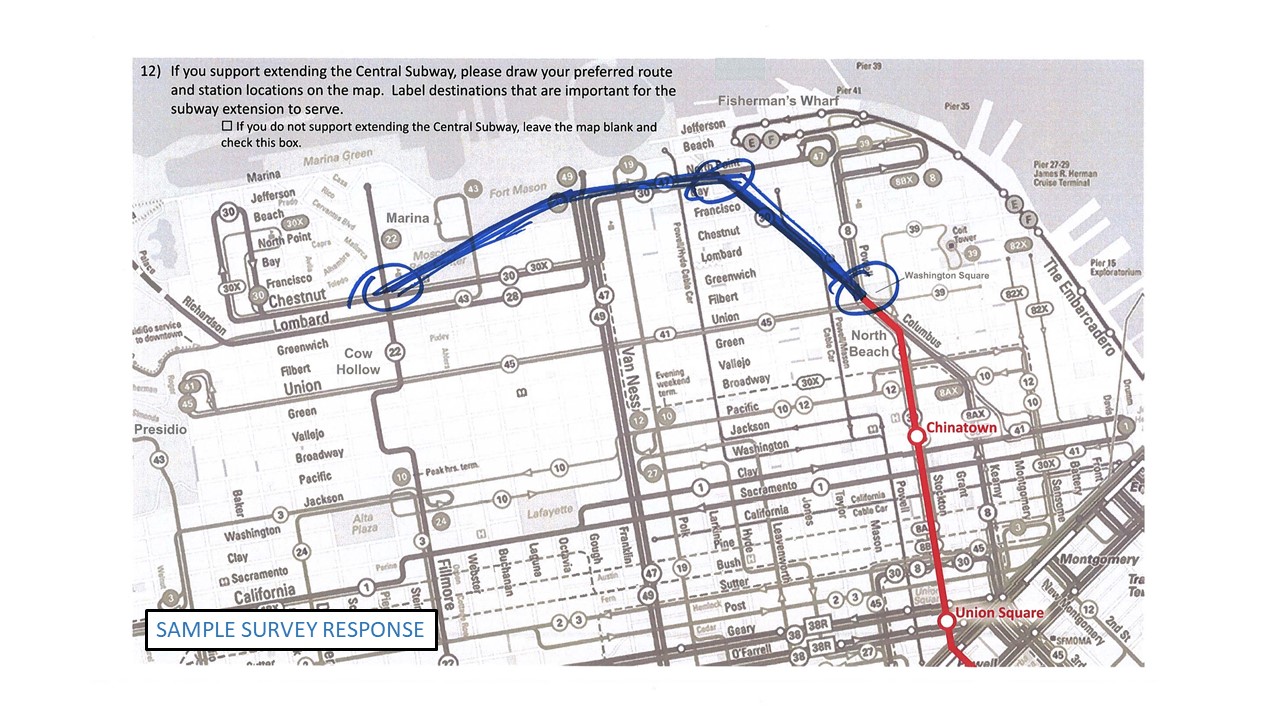
    The survey continued to ask about travel choices, such as current travel modes, as well as questions about the extension itself and potential routes. It then provided a map for supporters to concretely identify their origins and destinations, as well as preferred new station locations before wrapping up with demographic questions and additional information about the project.

    “Having the ability to disperse our survey quickly and easily online was greatly beneficial to us,” explained Tracey Lin, Deputy Project Manager. “Our survey was also built for mobile engagement thanks to MetroQuest, and it was easily accessible to stakeholders from all over the city who are interested in our project.”

    All in all, SFTMA collected 148,405 insightful data points to inform their transit plan, and 13,737 public comments to give context to specific feedback.

    “The way that we could structure questions through MetroQuest allowed greater feedback and input, enabling a more robust planning analysis,” concluded Adrienne. “Those 8,137 survey responses allowed us to confirm that most respondents want a subway that goes beyond the Northern Terminus and a little bit towards the West.”

    The Central Subway will be a long-term investment in a transportation system that will meet the needs of growing populations in a sustainable way. It is estimated that the Central Subway will serve 35,000 customers daily when it opens!

    While a concept feasibility study from 2015 showed that an extension is technically possible, it didn’t show what the public preferred, which is why a four-step alternatives study is currently underway to understand the desirability of the extension, as well as to determine goals, possible routes, and station locations that will best serve the community. We’re thrilled MetroQuest could help.

    For more on this outstanding success story, play Adrienne’s 3-minute video interview here:


    If you’re looking for the best way to celebrate International Women’s Day 2020, you can also dive deeper into this success story with the webinar: Celebrating Brilliant Public Engagement by Women in Transit Planning with SFMTA. Thank you Adrienne and Tracey for celebrating #IWD2020 with us this year and congratulations on your outstanding achievements!