On December 9th, public engagement superstars from WSP and North Carolina DOT join forces with MetroQuest to uncover the most effective community engagement strategies from the last 8 months, providing best practices and leading techniques to guide planning teams to success in the new year!
Vancouver, BC, November 30, 2020 – Events in 2020 have created a perfect storm for public engagement, leading to both new challenges and powerful innovations. In this free December 9th webinar, experts uncover national trends and regional variations around effective community engagement, offering a sneak peek into the most effective strategies and key technologies for successful planning in 2021!
Our ‘new normal’ has pushed public engagement beyond its typical routine, forcing planners across the nation to rise to unique challenges and establish new protocols for community engagement without public meetings. In this webinar, public involvement specialists with a combined 85+ years of community engagement experience explore how planning firms and government agencies have overcome obstacles this year, uncovering the tools and techniques that lead to exceptional public engagement, and recommending effective strategies for 2021.
Host Dave Biggs, Chief Engagement Officer at MetroQuest, leads the discussion. He is joined by Jamille Robbins, Public Involvement Group Leader for North Carolina Department of Transportation (NCDOT), who leads and educates 20+ divisions in public outreach. Joining them is Darrel Cole, Vice President of Communications & Public Involvement Practice at WSP, who leads a team of 45+ nationwide in pivoting to online public outreach. Rounding out the panel is Lisa Hummel, Communications & Public Involvement Specialist at WSP, who brings her expertise in online meetings and experience as a member of the WSP Crisis Communications Rapid Response Team.
Using real-life case studies of successful public engagement projects, including the City of Philadelphia’s Washington Avenue Improvement Project, the North Carolina Capital Area MPO’s Bikeway Study, a Long Range Transportation Plan from Pueblo Area Council of Government and more, the panel of public engagement superstars come together to share valuable insights!
Register to watch as they explore the leading trends from the last 8 months, from the techniques that have helped agencies and firms succeed, to key technologies for your online engagement toolbox and ongoing barriers and obstacles, uncovering what community engagement will look like in 2021 and what you need to succeed moving forward.
This webinar qualifies professional planners for 1.0 AICP Certification Maintenance credit.
About MetroQuest
MetroQuest is North America’s #1 online survey platform for public engagement in transportation and urban planning. Government agencies and planning firms of all sizes trust MetroQuest to engage thousands of people with delightful surveys that obtain informed input and actionable results to get plans approved. 1000s of public engagement practitioners attend MetroQuest’s webinars each month, gaining AICP CM Credit and driving forward the conversation around community involvement.
The Planning Partnership Launched 7 MetroQuest Surveys in 2020
The Planning Partnership Ltd. (TPP), a consulting firm located in downtown Toronto, launched 7 MetroQuest surveys this year for a wide range of projects for both their public and private sector clients. The firm knows the recipe for crafting engaging online surveys to drive high levels of public participation, facilitating a collaborative approach to planning and providing decision-makers with comprehensive input to develop effective solutions for their clients.
Congratulations to TPP for launching so many effective online surveys over the last few months! Your efforts and success are a testament to the fact that great community engagement is possible with the right tools and expertise, even during a global pandemic with mandates preventing in-person public meetings.
WSP Canada Helps the City of Ottawa Make Important Transportation Decisions
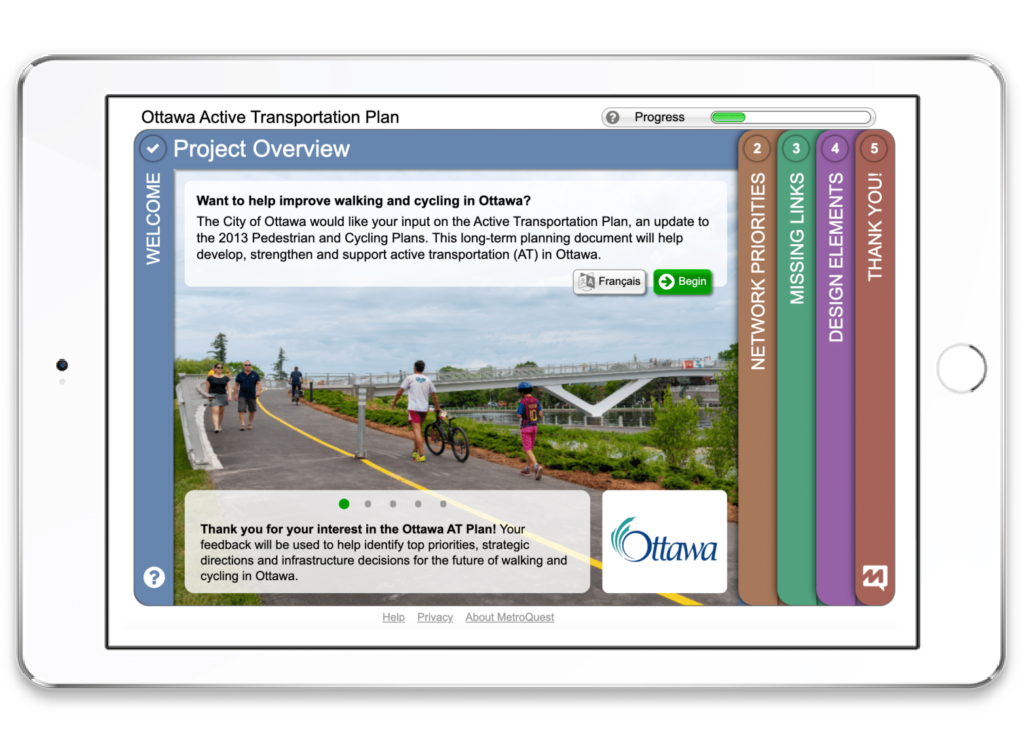
WSP Canada, one of the country’s leading professional services consulting firms, has launched several MetroQuest surveys this year! One project that specifically stood out was their work for the City of Ottawa in helping them update their Active Transportation Plan. With a MetroQuest survey, available in both English and French, the firm engaged over 1,000 participants to help Ottawa set a direction for day-to-day transportation programs and become the most livable mid-sized city in North America.
Planners at WSP Canada did an incredible job crafting the online survey to ensure participants were both well-educated and engaged about important transportation decisions. The firm was able to gather thousands of data points as a result, which helped Ottawa identify the community’s top priorities, strategic directions and infrastructure decisions for the future of walking and cycling in the City. Congratulations to both WSP Canada and the City of Ottawa! We look forward to seeing more of your incredible public engagement accomplishments in 2021.
These are just some of the incredible community engagement projects that Canadian planning firms and government agencies have led this year. If you would like to see more exceptional surveys, please feel free to reach out and let us know! We’d be happy to provide you with examples to help you get inspired for your upcoming projects. You can also explore some additional sample surveys here.
In the meantime, and on behalf of everyone at MetroQuest, I want to say congratulations to ALL Canadian planners! We hope these examples inspire you. We wish you great engagement in the upcoming months and look forward to hearing about your public engagement success in 2021.
At MetroQuest, we are consistently blown away by the exceptional community engagement results our clients report, especially this year when facilitating remote community engagement activities has essentially been the only option. We are very proud of the way government agencies and planning firms all over the nation have taken the complications of 2020 in stride!
Today, we want to take some time to highlight some of the incredible public initiatives we’ve seen over the last few months, specifically in Canada! With our company roots in the ‘neighbor to the north’, we are elated when new Canadian customers come on board and when we receive public engagement success stories from our fellow ‘Canucks’.
Join us as we explore some of the amazing planning projects our Canadian customers have led this year!
The City of West Kelowna Sets Out Their Desired Destination for the Future
To begin with, The City of West Kelowna recently crafted a number of delightful MetroQuest surveys to support #OURWK, the City’s community vision for 2040! After collecting input from thousands in the community with over 10 online surveys this year (and counting!), the City developed a preliminary vision that truly reflects the public’s vision for the future of West Kelowna.
The draft vision found on the City’s website says it wonderfully: “While we cannot predict every change that will come our way in the next 20 years – setting and sticking to a bold Community Vision gives us a powerful lens for making thoughtful decisions.” Congratulations to the City of West Kelowna for all your hard work. Your engagement efforts are inspiring, and we wish your community the best as you begin working together to make your vision for the future a reality!
LURA Consulting Engaged Over 7,400 Participants for Yonge TOmorrow
LURA Consulting, a Canadian leader in collaborative planning, consistently blows us away with their community engagement results. This year we are particularly thrilled to hear about their incredible success while working with the City of Toronto!
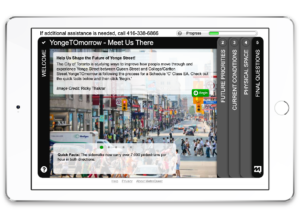
Yonge Street in the heart of downtown Toronto is consistently booming with development, construction and pedestrian traffic. In an effort to find ways to increase space and improve the area, the team at LURA launched three MetroQuest surveys for ‘Yonge TOmorrow’ and engaged over 7,400 participants over the course of the project! The City is now working to bring the public’s recommendations into fruition thanks to the firm’s hard work in successfully engaging the community. You can check out one of the three interactive online surveys from the project below. Congratulations to LURA Consulting – keep up the incredible engagement!
The Planning Partnership Launched 7 MetroQuest Surveys in 2020
The Planning Partnership Ltd. (TPP), a consulting firm located in downtown Toronto, launched 7 MetroQuest surveys this year for a wide range of projects for both their public and private sector clients. The firm knows the recipe for crafting engaging online surveys to drive high levels of public participation, facilitating a collaborative approach to planning and providing decision-makers with comprehensive input to develop effective solutions for their clients.
Congratulations to TPP for launching so many effective online surveys over the last few months! Your efforts and success are a testament to the fact that great community engagement is possible with the right tools and expertise, even during a global pandemic with mandates preventing in-person public meetings.
WSP Canada Helps the City of Ottawa Make Important Transportation Decisions
WSP Canada, one of the country’s leading professional services consulting firms, has launched several MetroQuest surveys this year! One project that specifically stood out was their work for the City of Ottawa in helping them update their Active Transportation Plan. With a MetroQuest survey, available in both English and French, the firm engaged over 1,000 participants to help Ottawa set a direction for day-to-day transportation programs and become the most livable mid-sized city in North America.
Planners at WSP Canada did an incredible job crafting the online survey to ensure participants were both well-educated and engaged about important transportation decisions. The firm was able to gather thousands of data points as a result, which helped Ottawa identify the community’s top priorities, strategic directions and infrastructure decisions for the future of walking and cycling in the City. Congratulations to both WSP Canada and the City of Ottawa! We look forward to seeing more of your incredible public engagement accomplishments in 2021.
These are just some of the incredible community engagement projects that Canadian planning firms and government agencies have led this year. If you would like to see more exceptional surveys, please feel free to reach out and let us know! We’d be happy to provide you with examples to help you get inspired for your upcoming projects. You can also explore some additional sample surveys here.
In the meantime, and on behalf of everyone at MetroQuest, I want to say congratulations to ALL Canadian planners! We hope these examples inspire you. We wish you great engagement in the upcoming months and look forward to hearing about your public engagement success in 2021.
Equitable, transparent, meaningful and inclusive are all common words that are used to characterize great public engagement. In a recent webinar, Dave Biggs, MetroQuest’s Chief Engagement Officer, and Melissa Holguin, Arellano Associates’ Senior Project Manager, explored the proven strategies behind diverse community engagement. They uncovered the ROI of equitable outreach, common barriers leading to poor public participation and a 4-step formula to achieve true diversity and equity when engaging the public!
After exploring the initial element, ‘getting the digital right’, and sharing leading techniques to achieve exceptional results with virtual tools, our expert panel explored targeted promotions: the second and a very important component of the 4-step formula.
You can check out the full details from the webinar in the on-demand recording here! In the meantime, let’s take a deeper dive into one of the promotional techniques that was recommended within the discussion of the second step: using an audience-based communications strategy to increase and diversify your reach in the community.
Diverse Communications Strategies to Reach a Diverse Audience
Once you’ve prepared an engagement opportunity, leveraging compelling, targeted promotions is a leading strategy that agencies and firms of all sizes use. Without promotion, your public engagement will only reach ‘the same ten people’. With an effective communications strategy, you can help elevate exposure of your outreach efforts and encourage more individuals to engage and provide feedback on various plans for the future of their community.
Despite spending great lengths of time and money to craft public engagement promotions, however, several planners still report back that they receive input from the same handful of individuals, resulting in public opinion data that doesn’t truly match the diversity of the area. But why?
It is oftentimes the case that when organizations use a one-off communications approach, they fail to reach a wide and diverse audience. This can be because they fail to initially develop strategies that make sense for and meet the needs of different stakeholder groups, or weren’t able to adapt and adjust communication efforts according to interim results. As Holguin expanded on during the discussion, it’s critical that we take on an integrated approach to reaching our communities. Agencies and firms must understand that a diverse group of individuals exists within the community and a one-size-fits-all promotional effort isn’t going to cut it.
So What is an Audience-Based Communications Strategy?
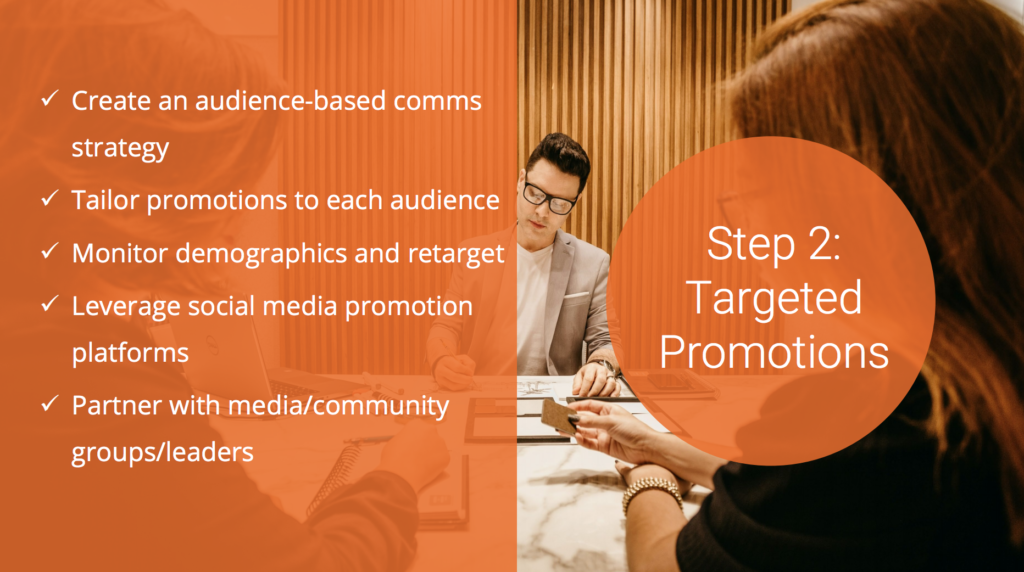
In essence, developing an effective communications strategy must start from a focus on the audience that the strategy intends to reach. Planners must consider the various audiences and adapt both the message and the media outlet to develop communication strategies that make the most sense for each audience. It’s also important to develop opportunities to sustain communication both before, during and after the public engagement process.
An audience-based communications strategy, as the name suggests, is tailoring your promotional efforts to different groups. Where does your audience spend their time, and how can you tailor your promotions to find them where they already are?
Single parents, students, or young professionals, for example, likely won’t be able to attend scheduled meetings, virtual or otherwise, during business or school hours. But many of them will be on social media, or reachable through email—can you use a targeted Facebook ad that leads them to an online survey that can be taken in just five minutes, while they’re on the bus or waiting in line at the store?
This line of thinking can lead to techniques that help you reach distinct stakeholders, encourage a more diverse group of participants to engage in your outreach efforts and reduce barriers that lead to poor participation within various demographic groups.
Understanding your audiences and crafting promotions that help engage each stakeholder group is a critical part of achieving diverse engagement in planning. In the webinar, Holguin and Biggs unpack several strategies: check out the on-demand recording to learn how you can effectively craft promotions that overcome barriers to participation and achieve true diversity and equity in community engagement here!
How to Achieve True Diversity and Equity in Community Engagement
Learn about the best practices and techniques for going beyond the usual suspects to engage even the most difficult to reach audiences and achieve true diversity and equity in your community engagement.
Combining an engaging online survey with a social media strategy has proven to be a successful approach to promoting community engagement opportunities online and achieving exceptional results. Intriguing social media posts can help guide individuals to your project site and an engaging platform, like an online survey, converts site visitors into actual participants.
The Maryland Department of Transportation (MDOT) has mastered both elements, excelling at both social media strategy and online survey creation! They continually engage thousands in their LRTPs and transit plans. In their recent public engagement outreach for the 2040 Maryland Transportation Plan, the team was able to gather public input from over 5,900 participants!
Read on as we explore how the agency used an online MetroQuest survey and paid social media to engage 1000s across the State and uncover the public’s top priorities for an important State plan.
MDOT’s Transition to Online Public Engagement
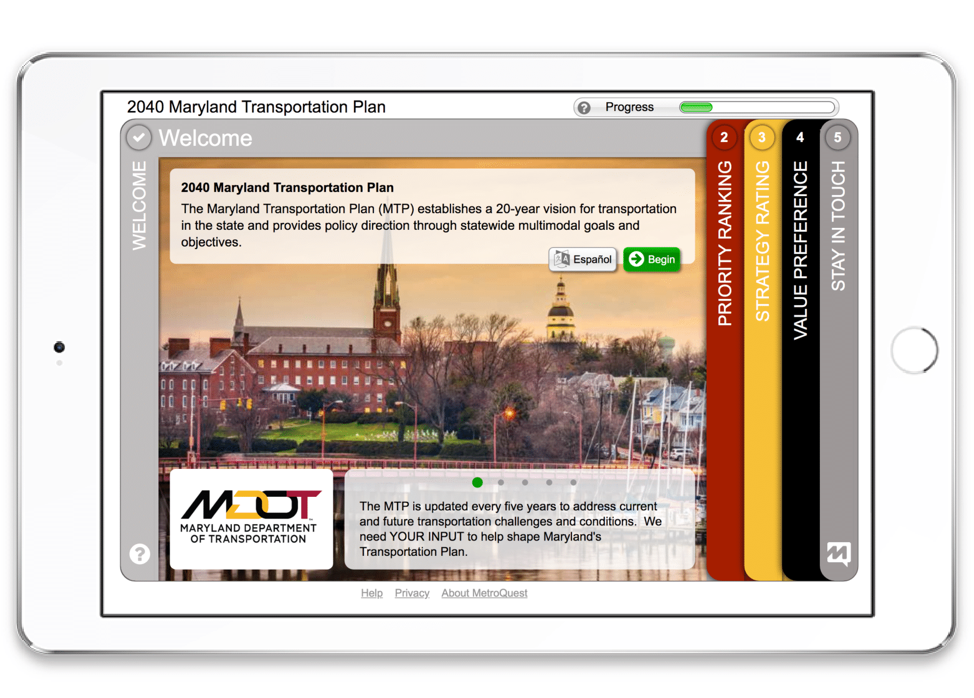
Every 5 years, MDOT updates the Maryland Transportation Plan (MTP), which establishes a 20-year vision for multi-modal transportation in the State. The policy-based plan focuses on transportation needs, goals, objectives, policies and plans, and outlines transportation policies, priorities and investment decisions.
In the past, MDOT used traditional public outreach methods and strategies to gather public input to update the transportation plan. Traditional, in-person engagement, however, proved to be expensive, time-consuming and ineffective. At some meetings, staff members outnumbered stakeholders 5 to 1! It was also very challenging to engage the public about conceptual and complex transportation issues during in-person meetings.
For their most recent MTP update, MDOT revamped their outreach strategy and used a MetroQuest survey, available in both English and Spanish, and social media to significantly increase their online participation and enhance the public engagement experience for the community. Let’s dive into the strategies that led to their success with social media.
How MDOT Designed an Effective Survey for the 2040 Maryland Transportation Plan
Participants were asked to identify their top 5 transportation priorities out of a list of 8, and later rate strategies that directly corresponded to those priorities. As the survey states, “identifying the transportation priorities for Maryland helps MDOT set the strategic direction to preserve, maintain, and expand our multimodal transportation system”.
MDOT identified the strategies as viable plans for improving the transportation system in the State. The team used a combination of the Priority Ranking Screen and the Strategy Rating Screen to provided respondents with a tailored online experience and allow MDOT to collect more meaningful data about whether or not the community agreed with prospective strategies.
Compared to the traditional outreach strategies that were used previously to gather input and update the plan, the MetroQuest survey gave the community a safe and engaging online experience, providing the agency with quantifiable data and informed input they could trust to update the plan! Paired with social media, this provided MDOT with an effective combination of actionable public input and wide-reaching promotional strategy.
Using Social Media to Boost Public Engagement for Maryland’s MTP
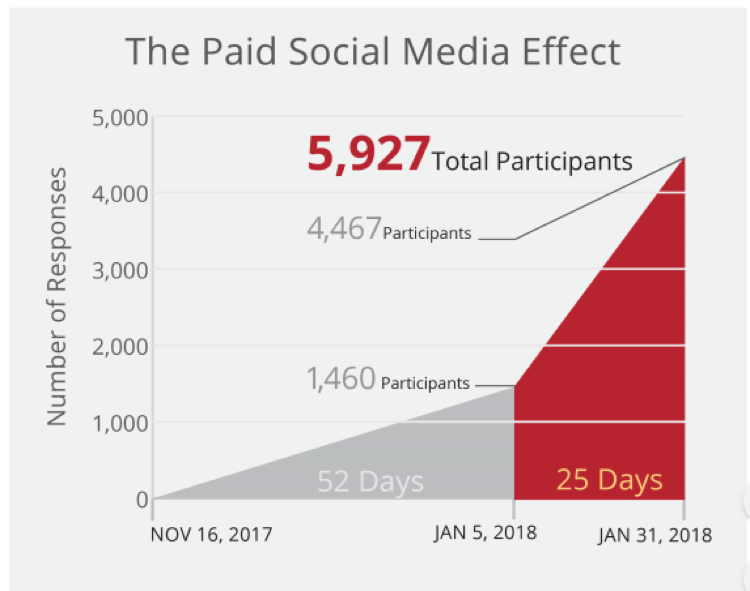
To increase survey participation, MDOT integrated both organic and paid social media into their outreach strategy. Along with email blasts and posts on both the project site and MDOT’s website, the agency primarily used Facebook, Instagram and Twitter to share and promote the survey and encourage the public to participate in the plan. These efforts quickly proved to be successful, with nearly 1,500 participants providing feedback within the first 2 months!
MDOT used targeted Facebook ads to increase survey participation throughout the State and received an incredible return. Let’s take a look!
As addressed in a webinar with MetroQuest, the agency was able to triple the number of survey responses in half the number of days by incorporating interactive Facebook ads into their outreach plan. The effectiveness of paid ads is very evident in the graphic above; the agency engaged over 3,000 participants in just 25 days by promoting their MetroQuest survey with Facebook.
As the panel explains in the webinar, eye-catching ads intrigued social media users. The agency also targeted specific demographics and geographic areas to help convert more people into participants and attempt to match the State’s diverse demographics. To learn about the top tips of using Facebook to effectively promote your public engagement survey, check out our recent blog.
By combining MetroQuest and social media, MDOT engaged nearly 6,000 survey participants, received over 500,000 total impressions online, reached over 190,000 people and obtained 300 shares on Facebook. The agency also was able to significantly grow participation in geographic and demographic areas where participation was traditionally very low.
Congratulations to MDOT for cracking the code and achieving incredible public engagement results online!
To learn more about MDOT’s project and outreach strategies for growing participation online and achieving engagement success, check out our on-demand webinar here.
Transit Plans to LRTP – MDOT’s Formula for Engaging 1000s
How do we engage the public to gather meaningful input? Maryland DOT has cracked the code! Learn how you can engage 1000s on a full range of public outreach projects.
As a result of declining participation at traditional public meetings and nationwide mandates that still prohibit nearly all face-to-face events, planners have turned to online tools to conduct their community engagement virtually. Fortunately, digital public engagement transcends the need to gather in person, enabling organizations to bridge the gap among stakeholders in the community and collect input from a very wide and diverse audience to support important plans.
Online surveys, in particular, have become a leading tool in the realm of digital engagement. Not only do they create a safe online experience for participants and educate the public about complex planning issues in a fun and engaging way, they also significantly enhance the data collection process: an integral component for achieving great community engagement.
Informed, unbiased and quantifiable public input gives planners the insight to develop plans that truly meet the needs of the community. Let’s explore why agencies and firms nationwide rely on online surveys to gather data for all types of planning projects!
Instantaneously Capture Accurate Data with Online Surveys
Planners use online surveys to quickly gather reliable public input. Immediately after a participant submits a survey response, it is processed and sent directly to an online database. Compared to traditional engagement strategies, public input gathered through an online survey is available a lot quicker as the data is inputted electronically, rather than manually.
The data collected in an online survey is also more accurate and reliable. Online surveys eliminate human error, making each participant’s response quantifiable and relevant. They also limit the impact that opinionated and outspoken individuals at in-person meetings may have on a participant’s choices and opinions. With an online survey, the community input experience is safe and private for participants, ensuring answers, suggestions and feedback for plans is a lot more informed and a lot less biased!
Using Surveys to Analyze Public Insight with Ease
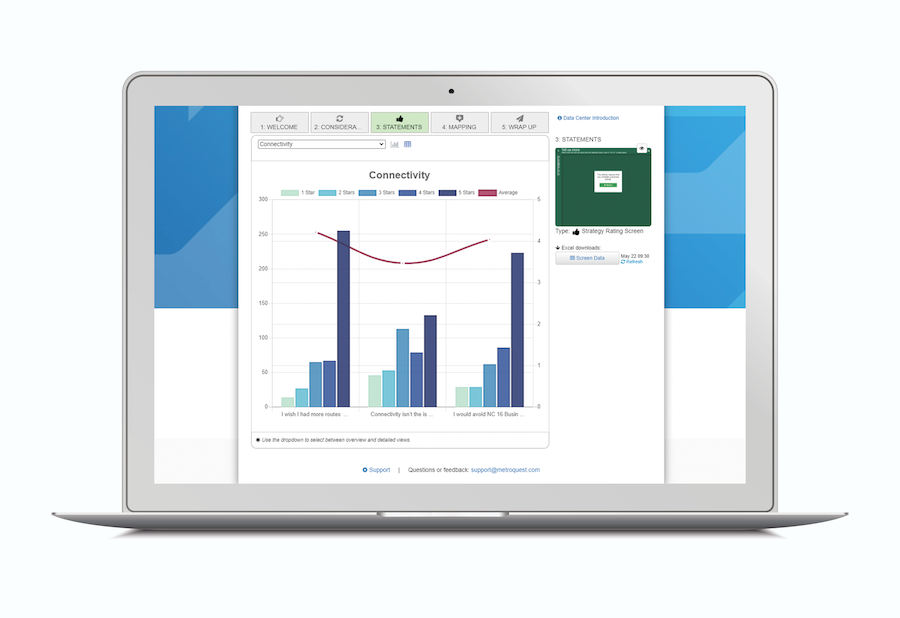
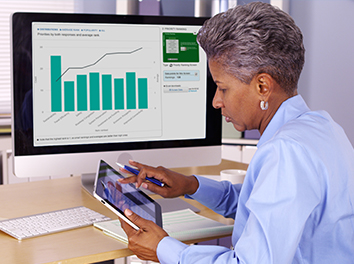
The instantaneous survey responses also mean that the results are available in real-time, providing planners with accessible data that they can analyze at their convenience. With MetroQuest, for example, all participant responses are automatically inputted into the Data Center, which automatically creates clear and comprehensive graphics that help contextualize and visualize thousands of data points.
These colorful and clear visualizations simplify the gathered input to help planners analyze the data and build reports. The charts and graphs are also a great way to impress decision makers as well as the public. You can effortlessly show the community the data that was collected from the surveys and how their input was valued and used in the decision-making process, closing the feedback loop and helping to generate trust among the community.
Gather Demographic Data About Your Survey Participants
Planners also need a high level of public input across a broad demographic. Online surveys are a very accessible solution for capturing the demographic data from your participants. Depending on what’s important to your organization, survey questions can be tailored to gather specific data ranging from a participant’s age and gender to their ethnicity, income, location and so on.
MetroQuest’s Data Center presents this demographic data in the same, intuitive dashboards where the additional data is stored. This allows you to break down your survey results to determine whether you are reaching a broad and diverse demographic. This data also gives your organization more insight into where you can increase or target your efforts to reach specific groups and geographic areas, for instance.
Case Study: Using Online Surveys to Collect Data at Multiple Points of the Planning Process
In a recent webinar on the Essential Online Public Engagement Toolbox, community engagement experts from Freese and Nichols revealed why online surveys are a leading tool for capturing data at multiple points during the planning process.
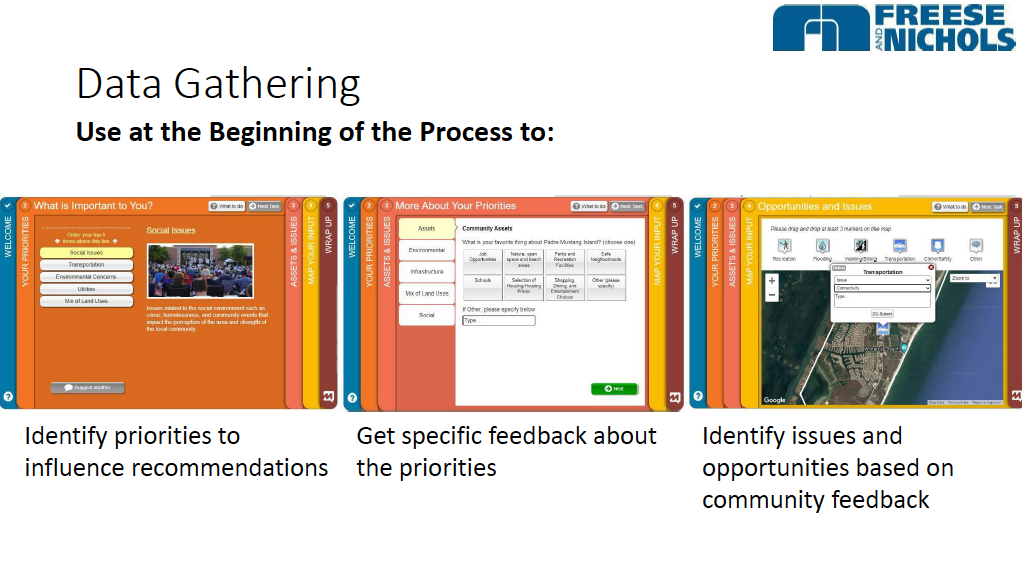
The firm used a MetroQuest survey for a project with the City of Midlothian during the initial stages of planning to identify the public’s top priorities, receive specific feedback about preferences around the plan and uncover various issues and opportunities in the community. The survey gave the firm insightful data from a wide range of participants to influence recommendations for the project and, subsequently, develop a preliminary project proposal that reflected the community’s needs and top priorities.
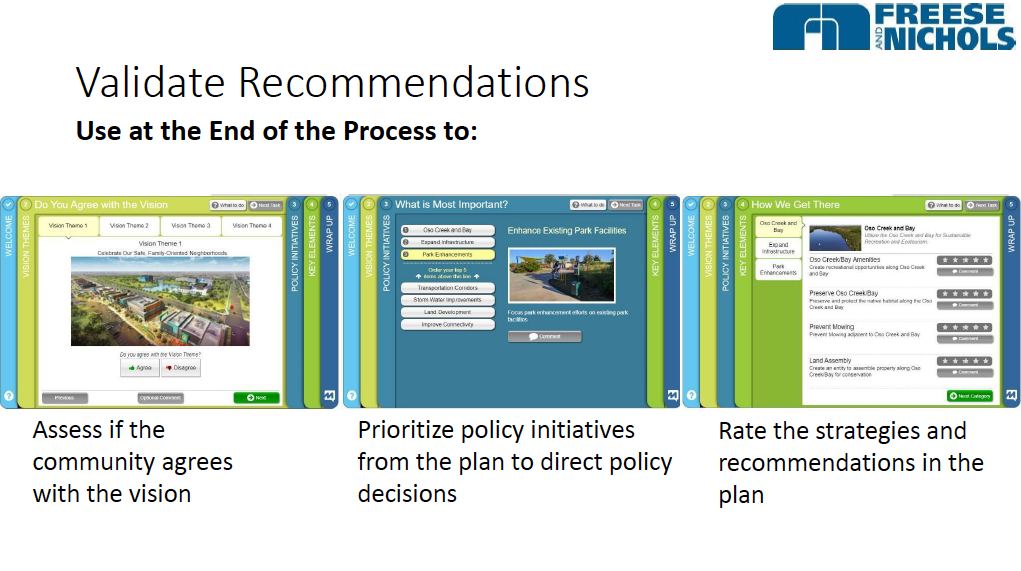
After developing an initial plan, the firm used a follow-up survey to present a draft to the public and gather additional feedback and input about the prospective plan.
This additional MetroQuest survey allowed participants to assess whether they agreed with the proposed vision, prioritize various policy initiatives for the plan and rate a number of strategies and recommendations. Not only did this provide the public with the opportunity to validate the initial recommendations and help direct important policy decisions, it also gave the firm insightful data that revealed whether the public was in favor of the proposal. From here, they tailored the plan according to the community’s feedback.
The survey responses at two distinct points during the planning process translated into insightful, quantifiable data to help measure the public priorities, develop a plan that reflected the community’s needs and validate recommendations to the proposed plan. Compared to traditional outreach strategies or alternative digital engagement tools, the tailored MetroQuest surveys helped the firm uncover what truly matters to the community, provide the local government agency with data they could trust and, subsequently, the confidence to develop a well-informed plan that reflected the community it served.
This case study is a great example that demonstrates how agencies and firms can use online surveys throughout the planning process. To learn more about Freese and Nichols’ success with MetroQuest, you can check out our blog here or watch the on-demand webinar here.
Successful online engagement requires a strategy to engage the public and a method to collect data from participants. Planners can rely on online surveys to collect informed and data-driven input in real-time to understand what participants truly value in order to envision the future of their communities.
To learn more about how to collect data using an online survey, contact us today or check out our recent on-demand webinar.
Essential Online Public Engagement Toolbox for Planning
Safe, effective online engagement for your plans starts with the right toolkit. Let’s explore tools that build public support and trust!