Each year at the American Planning Association’s National Planning Conference, when I’m not presenting a session, I can be found in the crowd at any public engagement related session. And each year, I share my thoughts and lessons learned following the conference.
Compared with past years, on the surface, public engagement seemed less prominent at NPC19. A deeper dive reveals that the dialog about public engagement was woven into a sophisticated treatment of equity and inclusion. This trend was first noticeable at NPC18 in New Orleans. This year’s NPC took it to the next level.
There are too many sessions to cover comprehensively, so I will focus on the sessions that inspired me the most. The first session that got me scribbling notes featured Kim Lundgren of Kim Lundgren Associates, Inc. (KLA) in her talk, “Beyond the Usual Suspects: How to Deliver Ongoing, Equitable Engagement.” She described KLA’s approach to reaching beyond the usual suspects using a toolbox approach in recognition that each audience group may require a different tool or engagement technique. This session was a refreshing move away from the one size fits all solutions we’ve seen in past years.
My second inspiration came from the description of the role that the City of Loveland, Colorado’s Youth Advisory Commission (YAC) was playing in the city’s transit planning. The most exciting takeaway for me was the part of the process where YAC conducted peer-to-peer engagement to influence the city’s transportation master plan. I’ll be following the YAC carefully as this demographic is so critical and has been the most challenging to reach for many communities.
I darted out mid-session to catch Darlene Flynn, from the City of Oakland, California, talk about “Strategies Toward Racial Equity in Planning.” I’m glad I did. Her powerful presentation about her work in Seattle and later in Oakland on racial equity in planning and city policy made it clear that it plays a central role in some of the most challenging issues facing cities and regions. She, and her co-presenters, encouraged the audience to look at the legacy of historical policies and planning decisions whose affects still linger across the country. The session dove deep into displacement, gentrification, economic inequality, criminal justice, and health disparities and connected these issues to historical planning policy so clearly that it changed the way I see cities. She made quite a few new fans that day, myself included.
I rushed from there to my own presentation on “Community Engagement Therapy” based on Pecha Kucha talk I gave at the Rail~Volution conference in Denver.
I offered a lighthearted and self-deprecating look at how vulnerable public engagement processes can be to vocal minorities and how new technologies can play a role in creating more balanced and safe ways for meaningful community dialog.
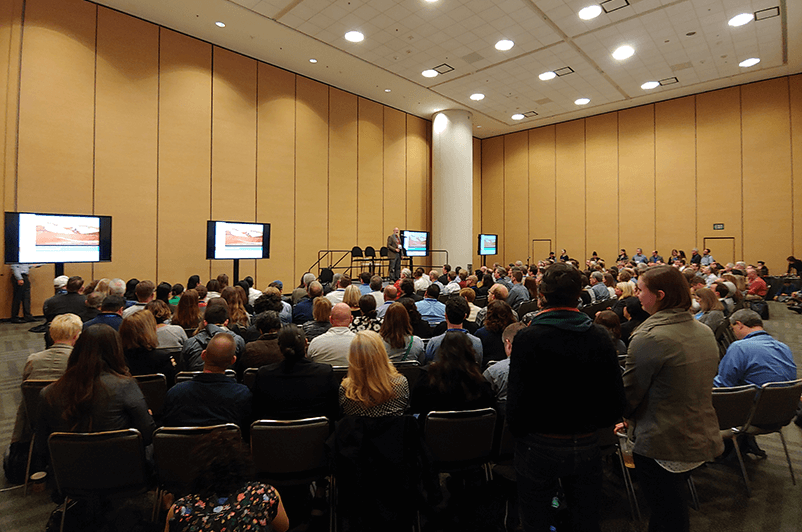
This “Fast, Funny, and Passionate” session was part of a series that the APA has been offering for a few years at the NPC and it is clear that they need larger rooms for these popular sessions. Our room seated 250 and organizers had to close the doors after well over 300 people crowded in!
Next up was an inspiring story about Akron, Ohio who is collaborating with community members to co-create public spaces to develop trust and inspire healing in this mid-size Rust Belt city. Citing increased polarization, segregation, social isolation, and economic inequality, this partnership with the national Reimagining the Civic Commons initiative is reinvigorating a civic pride and engagement in a way that can serve as a model for cities across the country.
Gabrielle Lyon of Lyon Strategies talked about the Chicago Architectural Foundation’s (CAF) Meet Your City initiative to engage with youth. As part of this initiative, CAF hosted a design competition and published a 144-page color graphic novel to help youth understand their role as city stewards and to encourage active participation in the planning process.
The passion and creativity of these planners to deeply understand and address the needs of all demographic groups in the communities where they work is inspiring.
I’ll use this inspiration to look more deeply into online engagement case studies to reveal best practices for reaching traditionally underrepresented populations. I’ve already found three excellent examples, so stay tuned for upcoming articles, case studies, and webinars.
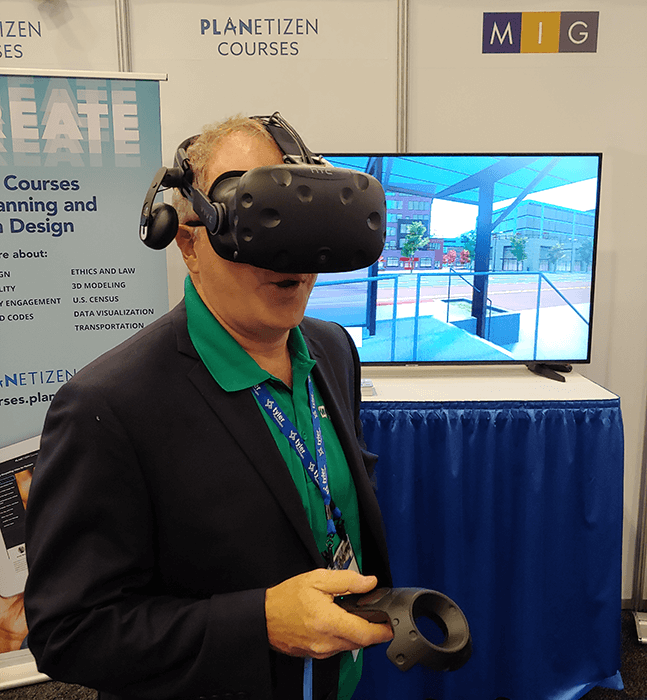
I did manage to sneak in some fun time in the mist of all these amazing sessions. I had a great time playing with the Planetizen/MIG virtual reality setup.
![[SUCCESS] MetroQuest Success Team Welcomes Oklahoma DOT](https://metroquest.com/wp-content/uploads/2019-04-03-Mike-Throne-of-cones-blogv2.png)